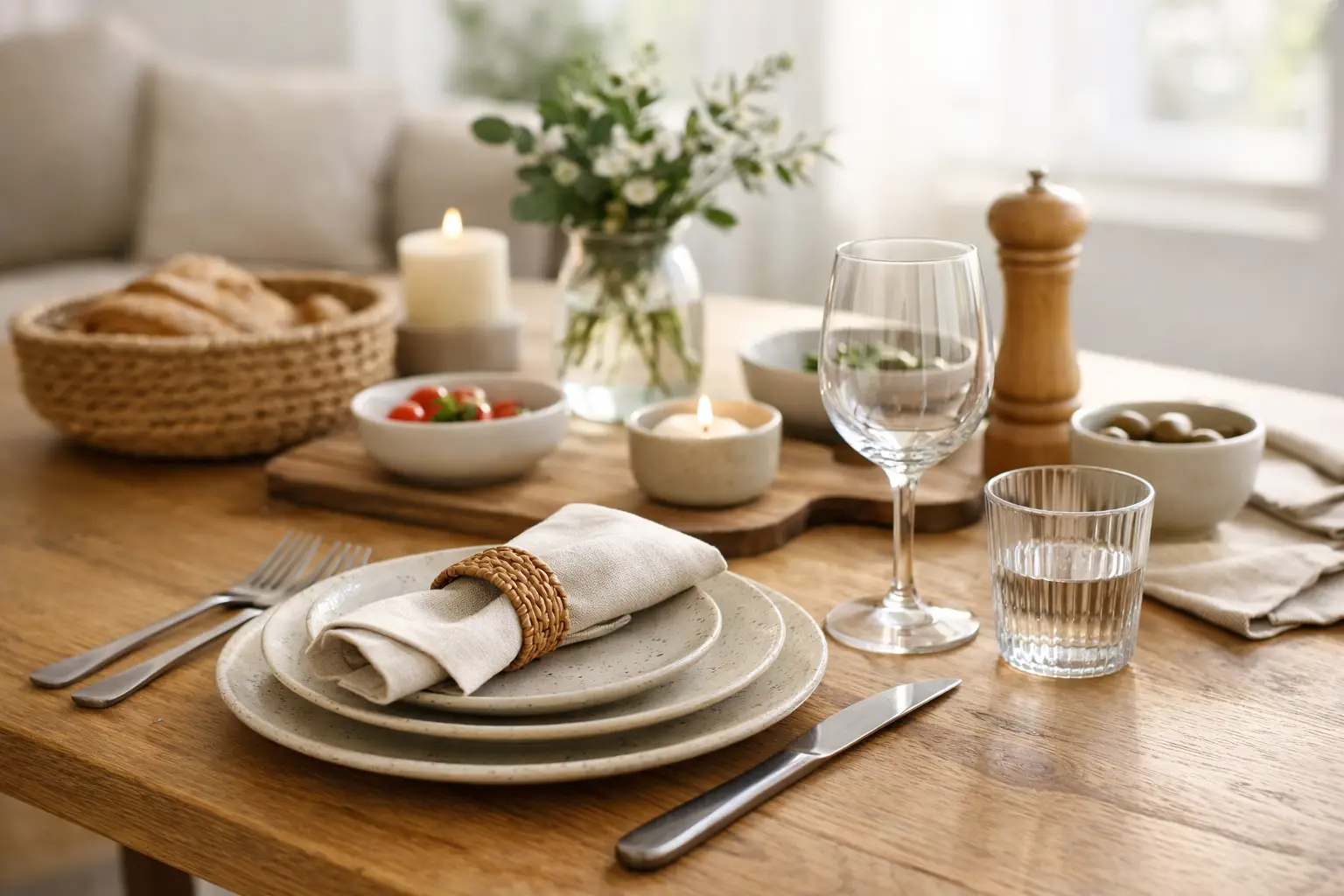
A casual table should feel easy, not accidental. If you’re wondering how to set a casual table, the goal is simple: create a setup that looks welcoming and pulled together without feeling stiff, fussy, or reserved for holidays only.
That balance matters more than people think. A table can be practical enough for weeknight pasta and still look like you cared. In many homes, that sweet spot is exactly what makes everyday meals feel better – not formal, not overstyled, just comfortable and considered.
The foundation of a casual table setting is straightforward. Each place setting usually starts with a dinner plate in the center. The fork goes on the left, while the knife and spoon go on the right, with the knife blade facing inward toward the plate. Your drinking glass sits above the knife.
That is the core setup, and for most breakfasts, lunches, and weeknight dinners, it is all you need. If you’re serving salad before the main meal, you can add a salad plate on top of the dinner plate or place it to the left if space allows. If the meal does not call for a spoon, leave it off. Casual dining is not about following rules for the sake of rules. It is about setting the table in a way that supports what you’re actually serving.
Napkins can go to the left of the fork, under the fork, or centered on the plate. All three options work. If you want the table to feel a little more styled without becoming formal, placing the napkin on the plate is an easy upgrade.
The easiest mistake is trying to decorate before the table is actually useful. A casual table works best when every item earns its place. Before you think about color, texture, or seasonal accents, make sure guests have enough room to eat comfortably, reach their drink, and pass shared dishes if needed.
Once the basics are covered, style can do the rest. A placemat instantly gives each setting structure and helps the whole table look organized. It also protects the surface and makes cleanup easier, which is one reason casual tables often look best when they include pieces that are both attractive and hardworking.
A tablecloth creates a softer, more gathered look. Placemats feel a bit more modern and flexible. Neither is better in every situation. If you’re serving a quick family dinner, placemats may feel easier. If you’re hosting a relaxed brunch or a larger meal, a tablecloth can make the table feel more intentional with very little effort.
When people search for how to set a casual table, they often assume they need more pieces than they do. In reality, the best casual settings are edited.
For most meals, you need only a plate, flatware, a glass, and a napkin. From there, you can layer in a few extras depending on the occasion. A bowl can sit on the plate if you’re serving soup, chili, grain bowls, or pasta. A mug can replace a water glass at breakfast. Cloth napkins make the table feel elevated, but paper napkins are completely fine for low-key gatherings, especially outdoors or with messy foods.
Serving pieces also matter. A casual table feels more complete when the center of the table is handled thoughtfully. A pitcher of water, a salad bowl with serving utensils, or a small tray for condiments can make the meal feel hosted rather than improvised. Even simple dinners look better when the extras are contained and easy to reach.
There is a difference between relaxed and random. A casual table can absolutely mix materials, finishes, and colors, but it still needs some visual rhythm.
One easy way to get there is to repeat one element across the table. That could be woven placemats, clear drinkware, white plates, or linen-look napkins in the same color family. Repetition is what makes a table feel styled, even if the individual pieces are simple.
This is especially useful if you’re working with what you already have. Maybe your plates do not perfectly match, or your glasses are a mix of old and new. That is fine. If the shapes are similar or the tones work together, the table can still look cohesive. Casual settings are often more charming when they feel collected instead of overly coordinated.
When guests are coming over, the setup can stay relaxed while gaining a little polish. Keep the same basic place setting, then add one or two details that make the meal feel special.
A cloth napkin is one of the fastest ways to do that. So is adding a salad plate or a small bowl if the menu includes courses. If you are serving bread, placing a small bread plate above the forks can work, but it is optional for casual entertaining. If your table is small, skipping extra plates may actually make the meal feel more comfortable.
Lighting changes everything too. If you’re hosting in the evening, a simple candle or a soft lamp nearby can make the table feel warm without taking up precious room. A small centerpiece works best when it is low enough for conversation. Fresh greenery, a compact bowl of citrus, or a few stems in a short vase usually look better than anything too tall or elaborate.
The key is restraint. Guests notice when a table feels welcoming, but they also notice when they have no room for their elbows or water glass. Casual hosting should feel generous, not crowded.
A well-set casual table is rarely about perfection. It is usually about texture and contrast. A smooth ceramic plate on a woven placemat, clear glass next to matte flatware, or a crisp striped napkin on a wooden table creates visual interest without much effort.
Color can help define the mood. Neutrals keep things versatile and calm. Soft greens, warm terracotta, and muted blues feel easy to live with and easy to mix through the seasons. If you love bolder colors, use them in smaller ways, like napkins, drinkware, or a runner, so the table still feels adaptable for everyday use.
This is where practical tabletop pieces really shine. The best ones make your table look better while fitting into real life. They should be easy to wash, easy to store, and flexible enough to use more than once a year. That is often the difference between items you admire and items you actually reach for.
Most table-setting problems come down to overthinking or underthinking. One is piling on too many decorative pieces, and the other is skipping the small details that make a setup feel intentional.
A table often looks better when the center is not overloaded. If you are using serving bowls, water pitchers, candles, and a centerpiece, something should probably go. Leave enough open space so the meal has room to land.
Spacing is another issue. Place settings should not be squeezed together unless you truly have no other option. If the table is tight, simplify. Use fewer layers, smaller glasses, or a serving cart or nearby counter for extra dishes.
Then there is the napkin question. A wrinkled napkin or a paper stack left in the package can make an otherwise pretty table feel unfinished. You do not need elaborate folds. Just take the extra few seconds to place napkins neatly.
The best answer to how to set a casual table depends on what kind of meal you are serving. Taco night, pancakes, takeout sushi, and roast chicken do not all need the same setup.
For a quick family dinner, a plate, fork, knife, water glass, and placemat may be perfect. For brunch, you might swap in mugs, juice glasses, and a lighter color palette. For a relaxed dinner with friends, layered plates, cloth napkins, and a shared serving board can make the table feel festive without pushing it into formal territory.
That flexibility is what makes casual dining so appealing. You are not trying to impress with rules. You are creating a setting that helps people settle in and enjoy themselves.
A good table does not require a special occasion. It just needs a little intention, a few well-chosen basics, and the confidence to keep things simple. If you build your table around comfort and usefulness first, the style tends to follow naturally – and that is usually what makes people want to linger a little longer.








Leave a comment