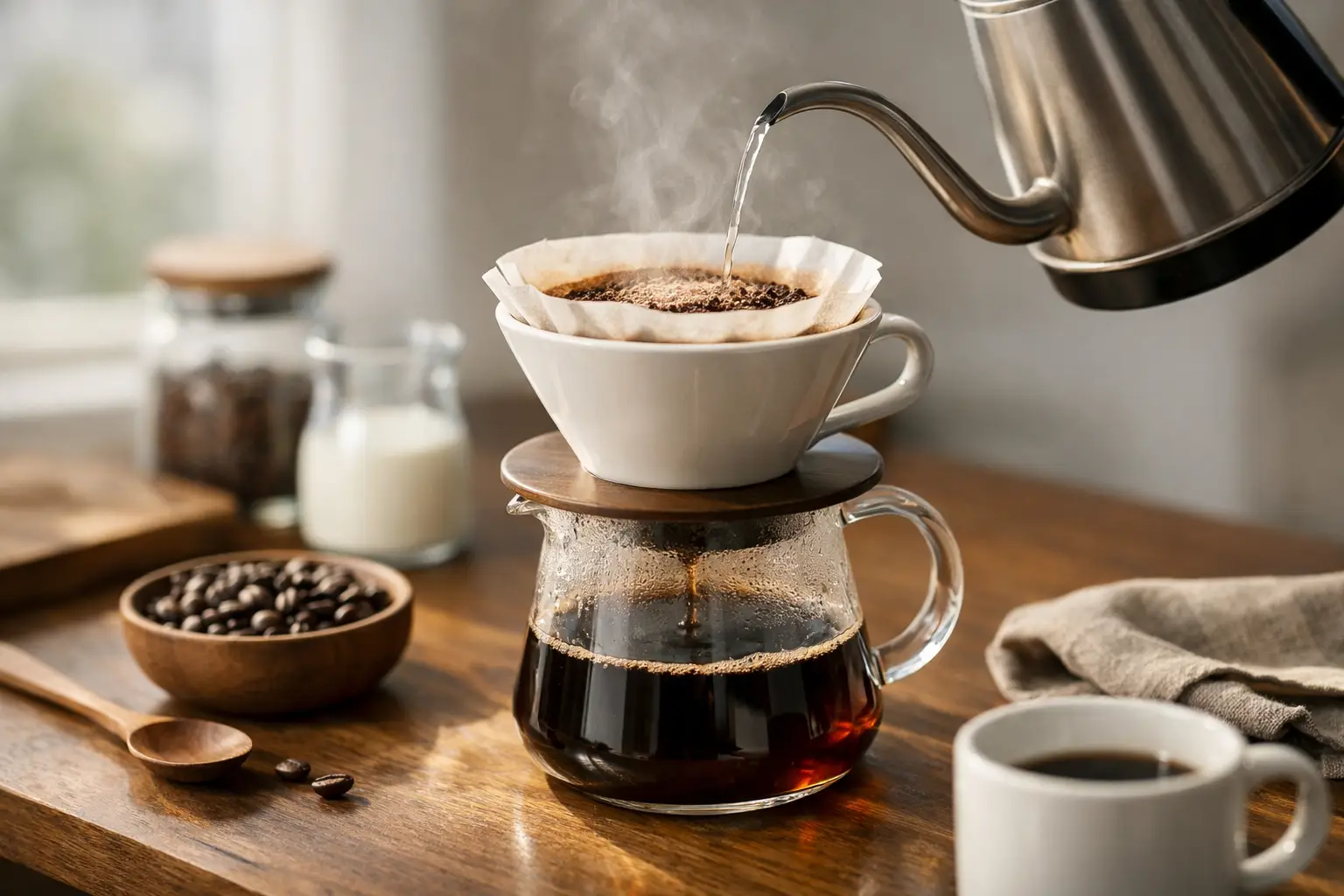
That first cup can set the tone for the whole kitchen. A good pour over coffee guide is not about turning your counter into a lab – it is about making a simple morning ritual taste better, look better, and feel more satisfying with a few smart choices.
Pour over coffee has earned its place in home kitchens because it balances flavor, control, and ease. You do not need a commercial espresso machine or a complicated setup. If you enjoy the idea of slowing down for five minutes and brewing a cleaner, brighter cup, pour over is one of the best ways to upgrade your daily routine.
For many home coffee drinkers, the appeal starts with flavor. Pour over brewing highlights clarity, which means you can taste more of the coffee’s natural character instead of getting a cup that feels muddy or overly heavy. Lighter roasts often show more floral, citrus, or fruit notes, while medium roasts tend to come through as balanced and sweet.
The second reason is control. You choose the water temperature, the speed of the pour, the coffee-to-water ratio, and the brew time. That might sound technical, but in practice it simply means you can adjust the cup to fit your taste. If your coffee tastes too sharp, you can grind a little finer or pour more slowly. If it feels too strong, you can use slightly less coffee or a coarser grind.
There is also the visual side of it, which matters in a well-loved kitchen. A beautifully shaped dripper, a gooseneck kettle, and a favorite mug can make an ordinary weekday feel more pulled together. For shoppers who want useful tools that also look at home on the counter, pour over gear has real appeal.
You only need a few essentials to get started. The core setup is a dripper, paper filter, coffee, hot water, a mug or carafe, and a way to pour steadily. A gooseneck kettle is especially helpful because it gives you better control over where and how fast the water lands.
A scale helps too, even if you are not trying to be precise down to the decimal every morning. Measuring by weight gives you much more consistent results than scooping by eye. If convenience matters most, you can still make good pour over coffee without a scale, but consistency gets harder.
Freshly ground beans make the biggest difference after the brewer itself. Pre-ground coffee can work in a pinch, but it loses aroma and complexity faster. If you brew pour over several times a week, a grinder is usually a better investment than chasing lots of accessories.
A medium grind is the usual starting point for pour over. Think of it as somewhere around the texture of sand. If the grind is too fine, water moves too slowly and the cup can taste bitter or overly intense. If it is too coarse, water runs through too quickly and the coffee may taste thin or sour.
Bean choice depends on what you want from the cup. If you like a softer, chocolatey profile, start with a medium roast. If you want more brightness and a tea-like finish, try a lighter roast. Dark roasts can work, but pour over tends to emphasize detail, so very dark beans sometimes taste more ashy or one-note than they do in other brew methods.
This is where personal preference matters more than rules. A brighter coffee that one person finds lively might taste too acidic to someone else. A richer roast that feels comforting on a busy morning may not show as much nuance, but that does not make it the wrong choice.
This pour over coffee guide works best when the process stays simple. Start with a ratio around 1 gram of coffee to 16 grams of water. For one generous mug, 20 grams of coffee to 320 grams of water is a dependable place to begin.
Heat your water to just off the boil, ideally around 195 to 205 degrees Fahrenheit. Place the filter in the dripper and rinse it with hot water first. This helps remove any papery taste and warms the brewer and mug at the same time. Discard that rinse water before brewing.
Add your ground coffee and gently shake the dripper so the bed looks level. Start by pouring a small amount of water, just enough to saturate the grounds. This first pour is called the bloom. Let it sit for about 30 to 45 seconds. During this stage, trapped gas escapes from fresh coffee, which helps the rest of the brew extract more evenly.
Then continue pouring in slow circles, starting near the center and moving outward without hitting the filter too aggressively. The goal is a steady, controlled pour rather than dumping all the water at once. You can break the remaining water into two or three pours if that feels easier.
Most single-cup pour overs finish in about 2 1/2 to 4 minutes, depending on the dripper, filter, coffee, and grind size. If the brew finishes much faster, the grind may be too coarse. If it drags on too long, the grind may be too fine.
When pour over coffee goes wrong, the issue is usually small. Sour coffee often means under-extraction, which can happen when the grind is too coarse, the brew time is too short, or the water is not hot enough. Bitter coffee usually points to over-extraction, often caused by a grind that is too fine or a brew that runs too long.
If your coffee tastes weak, try using a little more coffee before changing everything else. If it tastes harsh but also heavy, your pouring may be uneven, creating channels where water rushes through some grounds and overworks others. A steadier kettle and a slower hand can help more than people expect.
Some inconsistency comes from the coffee itself. A fresh bag from one region may behave differently than another, even when you keep the same recipe. That is normal. Pour over rewards small adjustments, not perfection.
If you are building a setup from scratch, focus on the pieces that genuinely improve the experience. A good dripper gives you the brew style you like, a gooseneck kettle improves control, and a dependable grinder improves flavor. A scale makes repeatability easier, especially when mornings are rushed.
Not every upgrade has the same value. A beautiful server or glass dripper can make the ritual feel more elevated, and that has its own worth, but flavor usually improves more from better grinding and pouring than from decorative extras. The best setup is the one you will actually enjoy using on a regular basis.
For style-conscious kitchens, this is where function and appearance can happily meet. Thoughtfully chosen coffee tools do not need to hide in a cabinet. They can become part of the counter setup, right alongside the mugs, canisters, and breakfast essentials that make the room feel welcoming.
A lot of people love the idea of pour over but worry it is too slow for weekdays. Sometimes that is true. If you are juggling school drop-off, emails, and breakfast cleanup, there may be mornings when convenience wins. But pour over does not have to be reserved for lazy weekends.
Once your routine is set, the process can feel surprisingly manageable. Measure beans the night before, keep filters within reach, and fill the kettle while the toaster runs. Small habits turn the method into something easy rather than fussy.
That is part of the appeal for modern home kitchens. Better coffee does not always come from doing more. Often it comes from using a few well-designed tools that make ordinary tasks smoother and more enjoyable. Kitchen Bay understands that kind of upgrade well – practical pieces that also make the everyday feel a little more polished.
The best part of pour over is that it gives you room to shape the cup around your preferences. You might like a lighter, brighter brew in the afternoon and a richer, fuller cup with breakfast. You may prefer one dripper because it feels forgiving, while someone else likes another because it offers more control.
There is no prize for making coffee the most technical way possible. The goal is a cup you want to come back to, brewed with tools that fit your space and a process that feels good in your hands. Start simple, adjust one variable at a time, and let the ritual become your own.
A better morning does not always require a full kitchen makeover. Sometimes it starts with hot water, fresh grounds, and a few quiet minutes spent making something worth slowing down for.









Leave a comment