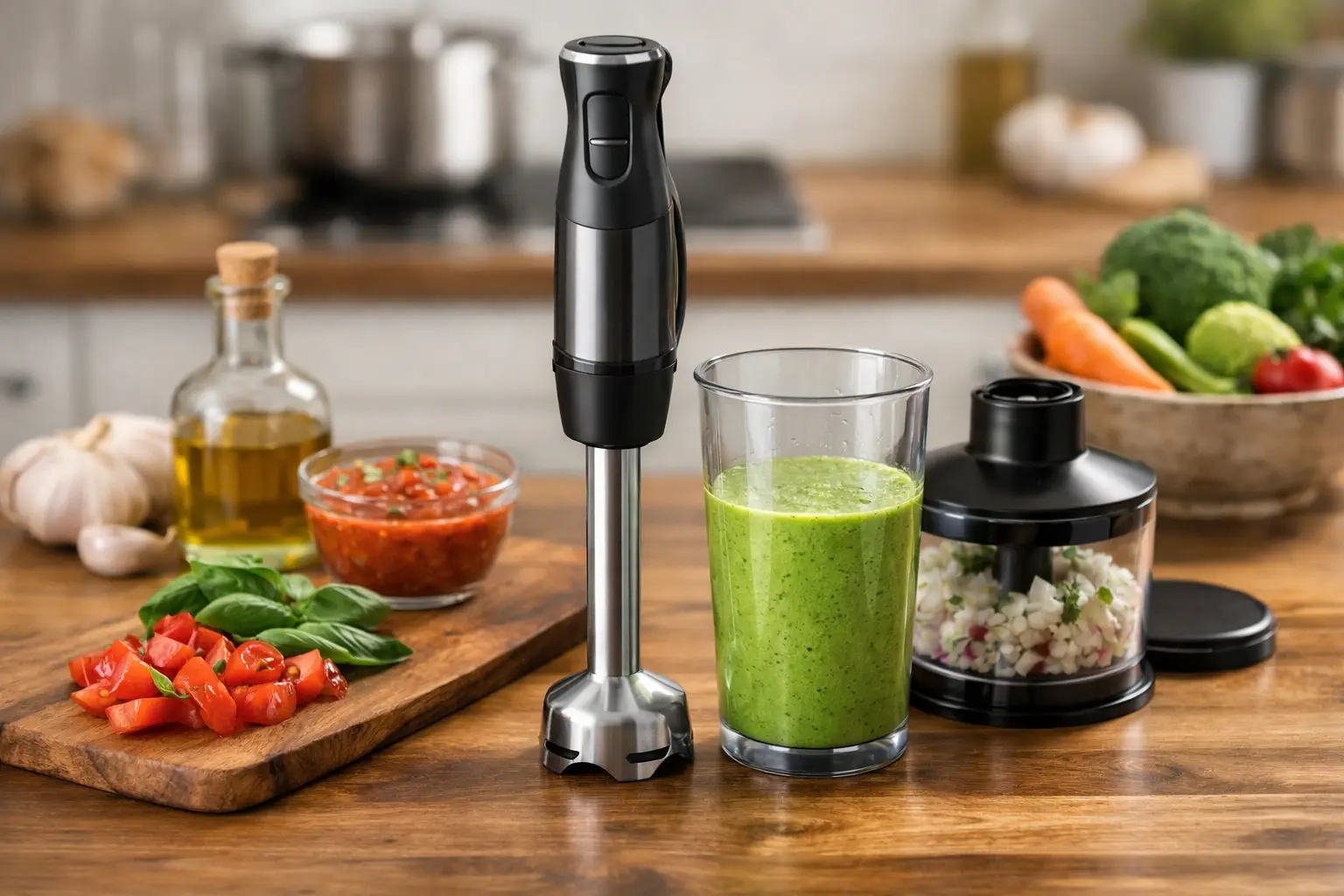
A countertop blender is great until you are balancing a hot pot of soup, a sink full of dishes, and a recipe that only needs 30 seconds of blending. That is where an immersion blender earns its keep. In this immersion blender review, we are looking at what really matters for everyday kitchens – not restaurant specs, not flashy extras, but the features that make weeknight cooking easier and cleanup far less annoying.
If you make creamy soups, quick sauces, smoothies for one, whipped cream, or baby food, an immersion blender can feel like one of those tools you reach for more often than expected. It is compact, easy to store, and generally less fussy than dragging out a full-size blender. But not every model delivers the same experience, and the differences show up fast when you are working with thick ingredients or trying to blend without splattering tomato soup across the stove.
For most home cooks, the right immersion blender is not the one with the longest feature list. It is the one that feels comfortable in your hand, powers through common tasks without stalling, and cleans up quickly enough that you do not regret using it.
That means four things deserve the most attention: motor strength, blade guard design, weight and grip, and whether the attachments are useful or just box-fillers. A polished finish or trendy color is always nice, especially in a kitchen that doubles as a gathering space, but performance has to come first.
A stronger motor usually handles tougher jobs better. If you plan to puree roasted root vegetables, blend nut-based sauces, or mix thicker batters, extra wattage can help. It tends to create a smoother texture faster, and it is less likely to bog down in dense ingredients.
Still, more power is not automatically better for everyone. If your main goal is blending soups, scrambling eggs, whisking cream, or making simple smoothies, a mid-range model is often enough. Very high-powered units can also be heavier, louder, and more expensive. For many kitchens, the sweet spot is a blender that feels capable without turning every small task into a premium purchase.
This detail gets overlooked, but it affects both results and mess. A well-designed blade guard helps pull food toward the blades while reducing suction at the bottom of the pot or cup. That means smoother blending and less frustration.
A poor guard design can create splatter, especially with thinner liquids like pureed tomatoes or broth-based soups. It can also leave you chasing unblended chunks around the pan. If you have ever tried to blend hot soup while holding the pot steady with your other hand, you know how quickly this becomes the only feature you care about.
An immersion blender makes the most sense if you cook in smaller batches, live in an apartment with limited storage, or prefer tools that do one job simply and well. It is especially helpful for people who like cooking from scratch but do not want extra cleanup after every meal.
It is also a smart fit for anyone who entertains casually. You can blend dips, dressings, whipped toppings, and party soups without transferring ingredients between containers. That kind of convenience is easy to appreciate when guests are on the way and counter space is already full.
On the other hand, it may not replace a countertop blender if you regularly make frozen drinks, large family-size smoothies, or ultra-smooth nut butters. Immersion blenders are versatile, but they do have limits. If your recipes depend on crushing lots of ice or processing very hard ingredients, a full-size blender still has the edge.
A model can look impressive online and still feel awkward after two minutes of use. Since immersion blenders are hand-operated, grip shape, button placement, and overall balance matter a lot. A comfortable handle reduces strain, especially when blending thicker foods that require a little patience.
Variable speed control can also be genuinely useful. A low setting helps with lighter tasks and gives you more control at the start, while higher speeds finish thicker mixtures faster. But there is a trade-off here too. Some users prefer simple one-touch controls because they are quicker and easier to manage with messy hands.
Cord length is another practical detail worth checking. A short cord can be surprisingly limiting, particularly in kitchens where outlets are not exactly where you want them. Cordless options exist, and they can be convenient, but they tend to cost more and may not offer the same runtime or power consistency as corded models.
Many immersion blenders come with a whisk, chopper bowl, measuring beaker, or frothing accessory. These can be helpful if you will actually use them. A whisk attachment is great for whipped cream, vinaigrettes, pancake batter, and eggs. A small chopper can save time on onions, herbs, nuts, and garlic.
But attachments are only valuable if they fit your routine. If you mostly want to blend soup in the pot, paying extra for a mini food processor you will never reach for is probably not the best use of your budget. The most satisfying purchase is often the one that fits your cooking style cleanly instead of trying to cover every possible use.
This is where immersion blenders often shine. The blending shaft is usually detachable, which makes it much easier to rinse or place in the dishwasher, depending on the model. That simple setup is a big reason people end up using these more often than larger appliances.
Still, not every design is equally easy to clean. Deep seams, awkward attachments, or blade areas that trap food can turn a convenient tool into a mild nuisance. Stainless steel shafts tend to feel more durable and are a solid choice if you blend hot foods often. Plastic can be lighter and less expensive, but it may not feel as sturdy over time.
Storage is usually simple, which makes this tool particularly appealing in smaller kitchens. If cabinet space is precious, an immersion blender offers a lot of utility without demanding a dedicated corner of the counter.
When comparing options, think about how you actually cook during a normal week. Do you want better soup nights, easier sauces, and less cleanup? Or are you hoping one tool will replace three appliances at once? The answer changes what counts as good value.
A reliable pick for most households should feel easy to hold, have enough power for soups and sauces, include only the attachments you will use, and clean up with very little effort. Quiet operation is a bonus. So is a storage-friendly design that does not make your kitchen feel crowded.
Price matters too, but this category has a wide middle ground where you can get solid performance without overspending. For everyday home cooks, that is usually the best place to shop. Paying more can make sense if you want premium materials or more accessories, but the leap in performance is not always dramatic.
Kitchen Bay shoppers often look for that balance between useful and polished, and an immersion blender fits that mindset well. It is a practical tool, but it also supports the kind of cooking that makes daily meals feel a little more effortless and a little more enjoyable.
For many households, yes. It is one of those kitchen tools that quietly improves your routine. You use fewer dishes, move faster through prep, and can handle simple blending tasks without turning cooking into a project.
The best choice depends on what you make most often. If you want something compact for soups, sauces, and small-batch blending, an immersion blender is easy to recommend. If you need heavy-duty performance for frozen drinks or large-volume prep, it may be better as a supporting tool rather than your main blender.
A good immersion blender does not need to be flashy. It just needs to work well, feel easy to use, and earn a spot in your kitchen week after week. Choose one that fits your real habits, not your most ambitious recipe mood, and you will probably wonder why you waited so long.







Leave a comment