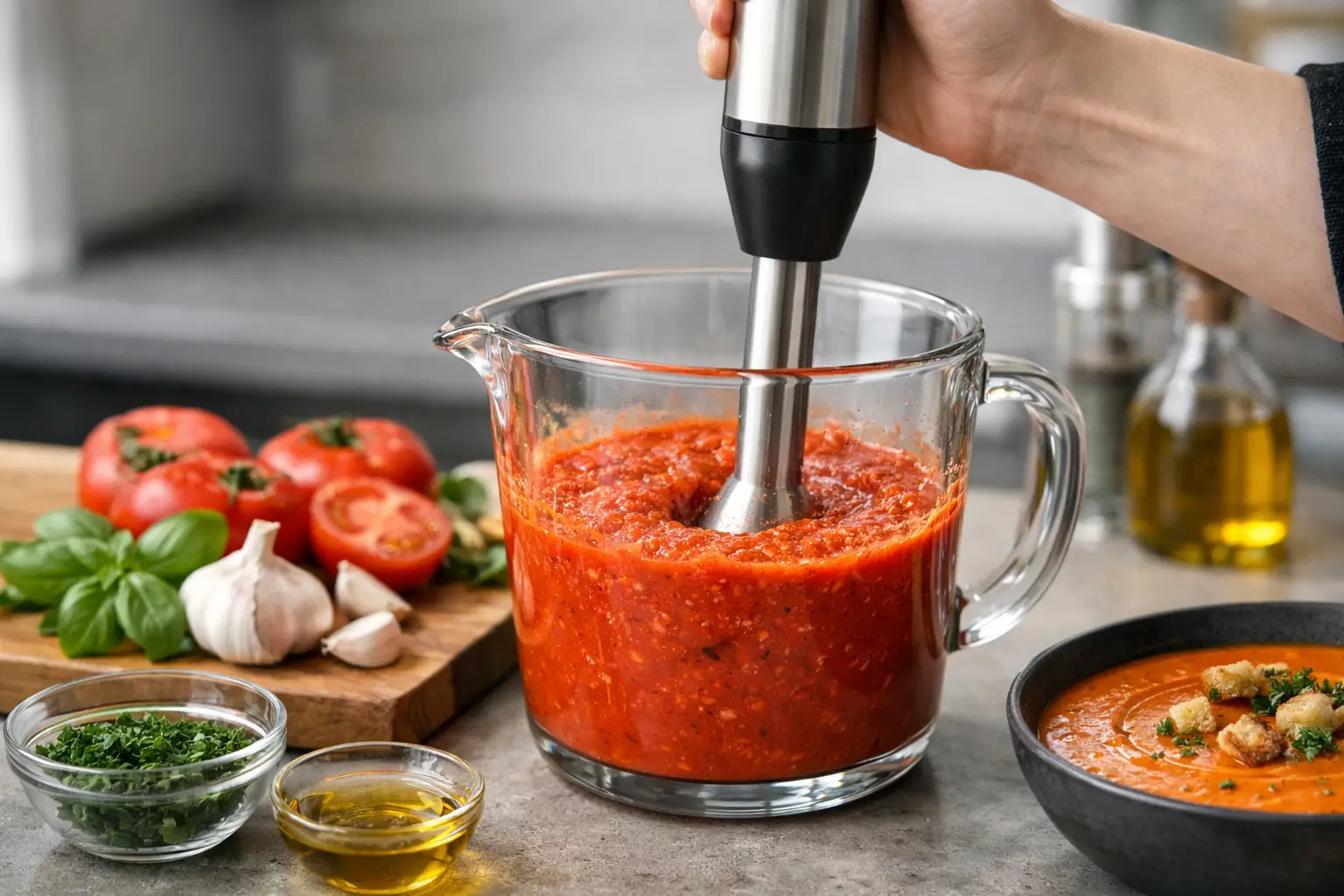
A pot of hot soup does not need to become a countertop project. If you have ever tried pouring steaming vegetables into a full-size blender and hoped for the best, learning how to use immersion blender tools the right way can feel like a small kitchen upgrade with a big payoff. It is quicker, less messy, and surprisingly versatile for everyday cooking.
An immersion blender, sometimes called a stick blender or hand blender, is one of those tools that earns its space fast. It helps with silky soups, smooth sauces, quick smoothies, whipped cream, pancake batter, and even small-batch dips. For home cooks who want less cleanup and more ease, it fits right into a kitchen that looks good and works hard.
Before you blend anything, make sure the blade end is fully submerged. This is the single easiest way to avoid splatter, especially with hot liquids. Turn the blender on only after it is in the food, and switch it off before lifting it out.
If your model has variable speeds, start low. A gentle start gives you more control and helps ingredients blend evenly instead of spraying up the sides of the bowl or pot. When blending hot soup, use a deep pot and avoid filling it all the way to the top. Steam and movement need some room.
It also helps to keep the cord away from the stove and from any wet area on the counter. If your immersion blender has detachable parts, confirm the blending arm is locked into place before you begin. A secure fit matters for both safety and performance.
The container you use changes the result more than many people expect. For soup, blend directly in a deep pot. For smoothies, dressings, or whipped cream, use a tall narrow cup or jar. Narrow containers keep ingredients close to the blade, which helps the blender catch everything quickly.
Wide bowls can work, but they often require more movement from your hand and can create more splashing. If you are blending a small amount, a container that is too wide makes the blade chase ingredients around instead of pulling them in. This is one of the main reasons some people think their immersion blender is weak when the real issue is the shape of the container.
If the mixture is very thick, add a small amount of liquid first. Broth, milk, cream, or even water can help the blade move more freely. You can always blend more and adjust later, but an overly stiff mixture tends to strain the motor and blend unevenly.
When people ask how to use immersion blender tools well, the answer is usually about movement. You do not need to aggressively stir or jab the blender around the pot. A slower, steadier motion works better.
Start by placing the blade at the bottom of the container. Blend for a few seconds, then gently tilt or lift the blender slightly to help circulate ingredients. Move it around in small circles if needed. Think controlled movement, not speed.
For soups, let cooked ingredients soften fully before blending. Tender vegetables turn smooth much faster and give you a better texture. For sauces, break large pieces up with a spoon first if needed. An immersion blender is powerful, but it is still best at finishing and refining rather than forcing its way through big hard chunks.
If you want an ultra-silky texture, blend in stages. First, process the mixture until mostly smooth. Then pause, scrape down the sides if needed, and blend again. This second pass often makes the difference between rustic and velvety.
This is where the tool becomes more than a soup gadget. Yes, creamy tomato soup and butternut squash soup are obvious favorites, but there is plenty more you can do.
An immersion blender is excellent for sauces like marinara, enchilada sauce, or gravy that needs a smoother finish. It works well for salad dressings because it emulsifies oil and vinegar quickly. Homemade mayo is another classic use, especially in a tall jar where the blade can pull ingredients together efficiently.
It can also handle soft smoothie ingredients, protein shakes, baby food, mashed sweet potatoes, hummus, pancake batter, and whipped cream. Some models include whisk or chopper attachments, which add even more flexibility. That said, it is smart to keep expectations realistic. Very tough ingredients, large amounts of ice, or thick nut butters may be better suited to a countertop blender or food processor.
That trade-off is what makes an immersion blender so appealing for daily use. It may not replace every appliance, but for quick prep and small-to-medium batches, it is hard to beat.
Blending hot foods is one of the biggest reasons people buy an immersion blender, and it is also where good habits matter most. Let boiling food settle for a minute before blending. You want it hot, not violently bubbling.
Keep the blade fully below the surface and angle the blender slightly if needed to encourage circulation. Short blending bursts are often better than one long run, especially if your soup is thick. This protects the motor and gives you more control over texture.
If you like a soup with character, blend only part of the pot. Leave some beans, potatoes, corn, or vegetable pieces whole for contrast. If you prefer a restaurant-style finish, blend longer and add a splash of cream or broth near the end. Small choices like this let you shape the final dish to suit the moment, whether dinner is casual or company-worthy.
The most common mistake is lifting the blender while it is still running. That is the fastest route to splatter on your backsplash, your shirt, and sometimes the ceiling. Always turn it off first.
Another mistake is using the wrong speed from the start. High speed can be useful, but not as the opening move. Starting slow gives the blade time to catch and break down ingredients.
Overfilling the pot or cup causes problems too. Food needs space to move. If your container is packed to the top, blend in batches or use a larger vessel.
Finally, do not force the blender through mixtures that are too dense or ingredients that are too hard. If the motor sounds strained, stop and adjust. Add liquid, reduce the batch size, or switch tools. A better result usually comes from working with the appliance, not against it.
One of the nicest things about this tool is cleanup. In many cases, you can rinse the blending arm right after use before food has a chance to dry on. For a quick clean, fill a cup or deep measuring container with warm water and a drop of dish soap, then run the blender in it for a few seconds. After that, rinse thoroughly.
If your model has a detachable blending arm, remove it before washing and follow the care instructions for that specific piece. Some parts may be dishwasher safe, while the motor body should only be wiped clean with a damp cloth. Never immerse the motor housing in water.
Cleaning right away keeps the blade area from collecting dried bits of sauce or soup, and it makes the next use feel just as easy as the first.
For many kitchens, yes. It is especially useful if you cook often, make soups or sauces regularly, or want a tool that handles everyday blending without adding a lot of setup and cleanup. It is also easier to store than a full-size blender, which makes a difference in apartments, smaller kitchens, or busy households where counter space matters.
The real appeal is convenience. A tool that helps you blend right in the pot, move faster through prep, and keep cleanup simple tends to get used more often. That is exactly the kind of kitchen upgrade that makes weeknight cooking feel a little smoother and a little more polished.
At Kitchen Bay, that balance of function and everyday ease is part of the appeal. The best kitchen tools are not just nice to own. They make cooking feel more inviting, more efficient, and more enjoyable.
Once you get comfortable with the motion and rhythm, an immersion blender starts to feel less like a specialty gadget and more like a quiet favorite you reach for without thinking.







Leave a comment