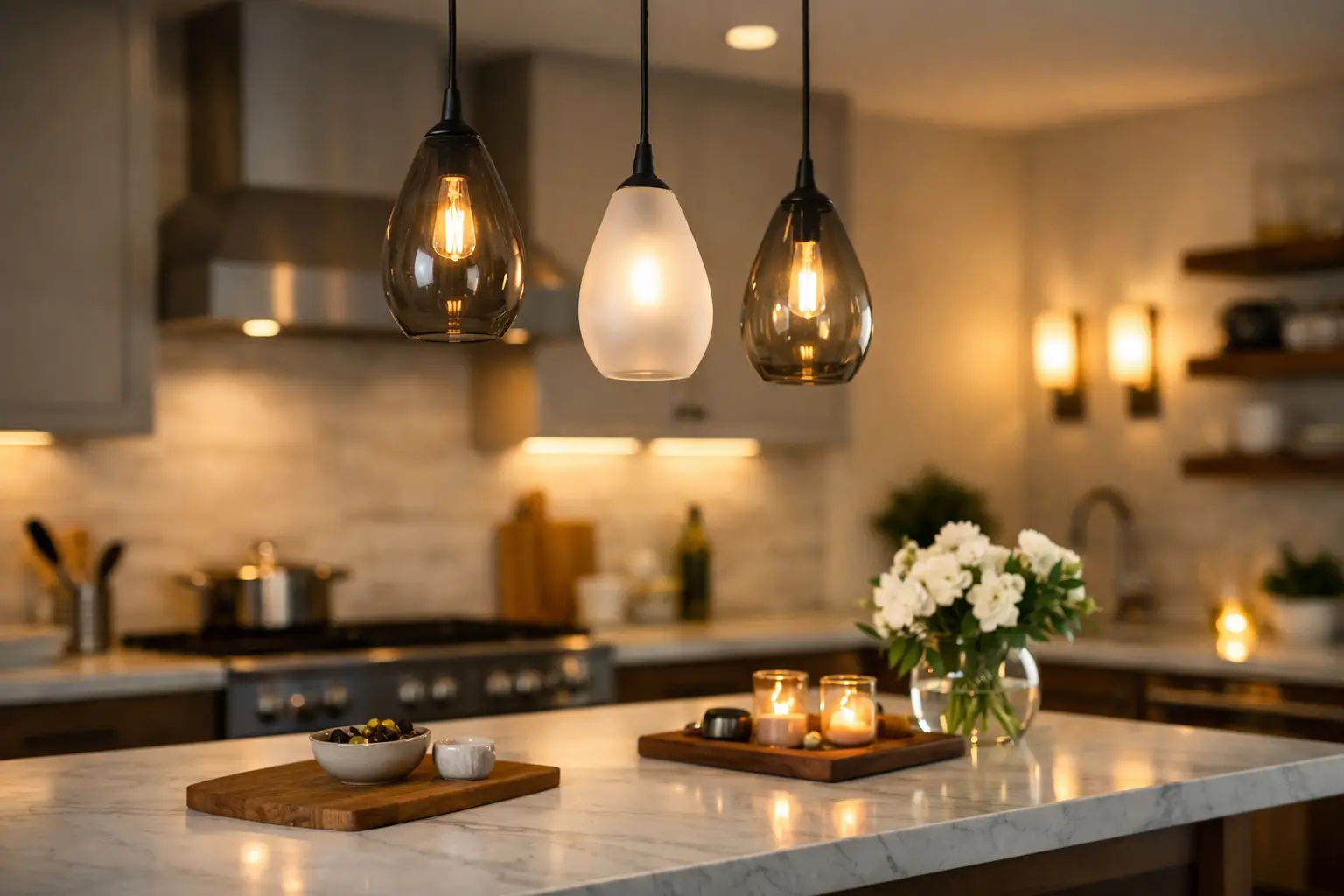
The kitchen can look perfectly finished on paper – good cabinets, a clean backsplash, a table set for dinner – and still feel a little flat the moment the lights turn on. That is usually not a decorating problem. It is a lighting problem. The right indoor lighting for kitchen ambiance changes how the whole room feels, from rushed weekday breakfasts to slower evenings with friends.
Good kitchen lighting is rarely about choosing one pretty fixture and calling it done. It is about shaping the room so it works when you are chopping vegetables, packing lunches, helping with homework, or pouring a glass of wine after dinner. A kitchen should feel bright where you need clarity and softer where you want comfort. That balance is what gives the room atmosphere instead of glare.
Most kitchens have to do more than one job, which is exactly why lighting deserves more thought than a single overhead bulb. You need visibility on the counters, but you also want the room to feel welcoming once the cooking is done. If the light is too harsh, the kitchen feels clinical. If it is too dim, even a beautiful kitchen starts to feel impractical.
Ambiance is what makes a kitchen feel lived in and well loved. It softens hard surfaces like stone, tile, metal, and glass. It adds depth at night, when natural daylight is gone and the room depends entirely on your fixtures. It also helps connect the kitchen to nearby dining and living spaces, which matters even more in open-concept homes and smaller apartments where one light source can affect the whole mood.
This is where layering comes in. A kitchen with ambiance almost always uses more than one type of light, each with a specific purpose.
The easiest mistake is aiming for maximum brightness everywhere. More light does not always mean better light. For ambiance, the goal is layered illumination that lets you move from task mode to relaxed mode without making the room feel dark.
Ambient lighting is your general room light. It may come from flush-mount ceiling fixtures, recessed cans, or a central statement piece. This layer should make the kitchen feel evenly lit without washing everything out. If your overhead lighting feels intense, the fixture itself may not be the only issue. The bulb color, beam direction, and ceiling reflection all affect how hard the room feels.
For many homes, warm white bulbs create the most inviting result. They tend to flatter wood tones, painted cabinetry, and tabletop décor better than cool, stark lighting. If your kitchen is mostly white or gray, warm lighting can also keep it from feeling too icy at night.
Task lighting does the practical work. Under-cabinet lighting is one of the best examples because it puts light exactly where you prep food, read recipes, or clean up. It reduces shadows from overhead fixtures and makes countertops look more polished at the same time.
Pendant lights over an island can also do double duty. They bring focus to the center of the room while giving you useful light for meal prep, casual dining, or serving snacks during gatherings. The trade-off is that pendants need the right scale and placement. Too large, and they dominate the room. Too small, and they look more decorative than helpful.
Accent lighting is where the ambiance really starts to show up. This might include a small table lamp on a side counter, interior cabinet lighting behind glass doors, or subtle shelf lighting that adds glow without demanding attention. Accent lighting is not essential for every kitchen, but it often makes the biggest difference in how finished the room feels after sunset.
If you like your kitchen to feel cozy in the evening, this is the layer that helps. It turns the room from a workspace into part of the home’s social atmosphere.
Different kitchens need different lighting mixes, but some fixture types are especially good at adding atmosphere without making the room less functional.
Pendant lights are often the first choice because they combine style and purpose. Over an island or dining nook, they draw the eye downward and make the space feel more intimate. Glass pendants feel airy and easy to blend into many styles, while metal or woven shades bring more character. If your kitchen is compact, slimmer pendants usually feel cleaner than oversized statement pieces.
Under-cabinet lighting is one of the smartest upgrades for everyday life. It is practical, flattering, and low-profile. It can make laminate counters look better, brighten darker corners, and give the kitchen a more custom feel without a major renovation.
Wall sconces can work beautifully in kitchens with a breakfast corner, open shelving, or a nearby bar area. They are especially useful when you want softer light at eye level instead of relying only on the ceiling. This can make the room feel less flat and more inviting.
Decorative table lamps are an underrated choice, especially in kitchens that open into dining or family spaces. A small lamp on a console, sideboard, or unused corner of the counter adds instant warmth. It is not the main source of light, but it often becomes the detail that makes the kitchen feel styled rather than simply lit.
A fixture can look great and still give the wrong effect if the bulb is off. When people say their kitchen lighting feels harsh, the issue is often color temperature or brightness rather than the fixture design.
For ambiance, warm to soft white bulbs usually feel best. They create a welcoming glow that works well for cooking, casual meals, and evening entertaining. Daylight-toned bulbs may be useful in some task-heavy spaces, but in a kitchen they can feel a little sharp, especially at night.
Brightness matters too. If every bulb is high output, the room can feel overlit and tiring. If everything is low output, you may struggle to cook comfortably. This is why dimmers are such a strong choice. They let you keep the kitchen bright for prep work and lower the intensity later when you want a calmer mood.
A family kitchen that handles school lunches, weeknight dinners, and weekend baking needs a different approach than a small city apartment where the kitchen mainly serves one or two people. The most effective indoor lighting for kitchen ambiance fits your routine, not just a showroom image.
If you cook often, prioritize strong task lighting first and build ambiance around it. If you host regularly, think about how the kitchen looks from the dining table or living area. If your kitchen is small, avoid fixtures that visually crowd the ceiling line and focus on lighting that adds depth without taking up space.
Open shelving, reflective backsplashes, and glossy finishes all bounce light differently, so your kitchen may need less brightness than you think. Dark cabinets and matte finishes tend to absorb more light, which may call for extra layering to keep the room from feeling heavy.
You do not always need a full lighting overhaul to improve the mood of your kitchen. Swapping cool bulbs for warmer ones can change the tone almost immediately. Adding under-cabinet lights can make the room feel brighter and more upscale in one move. Replacing a basic flush mount with a fixture that has more shape or texture can give the room personality without changing the layout.
If you are decorating on a budget, start with the areas you notice most at night. That may be the island, the sink wall, or the dining corner. A few well-placed changes usually do more for ambiance than one expensive fixture trying to do everything.
This is also where a curated shopping experience helps. Rather than piecing together random styles, look for lighting that works with the rest of your kitchen accessories, tabletop pieces, and décor. A kitchen feels more elevated when the details connect, even subtly.
It is easy to get pulled toward dramatic fixtures, especially when scrolling inspiration photos. But the best kitchen lighting is not just photogenic. It supports daily life. It should make the room easier to use, nicer to gather in, and more enjoyable to come home to.
A beautiful pendant that casts awkward shadows will get old fast. So will a bright ceiling setup that makes every late-night snack feel like a trip to the office break room. The sweet spot is lighting that looks polished and feels easy to live with.
Kitchen Bay understands that the most loved kitchens are not only functional. They are the ones that help ordinary routines feel a little more special, whether you are setting out coffee mugs in the morning or lighting the room for a relaxed dinner at home.
The best place to start is simple: look at your kitchen tonight, not in daylight, and notice where it feels too harsh, too dim, or a little unfinished. The right light does more than help you see – it helps the room feel like where everyone wants to be.










Leave a comment