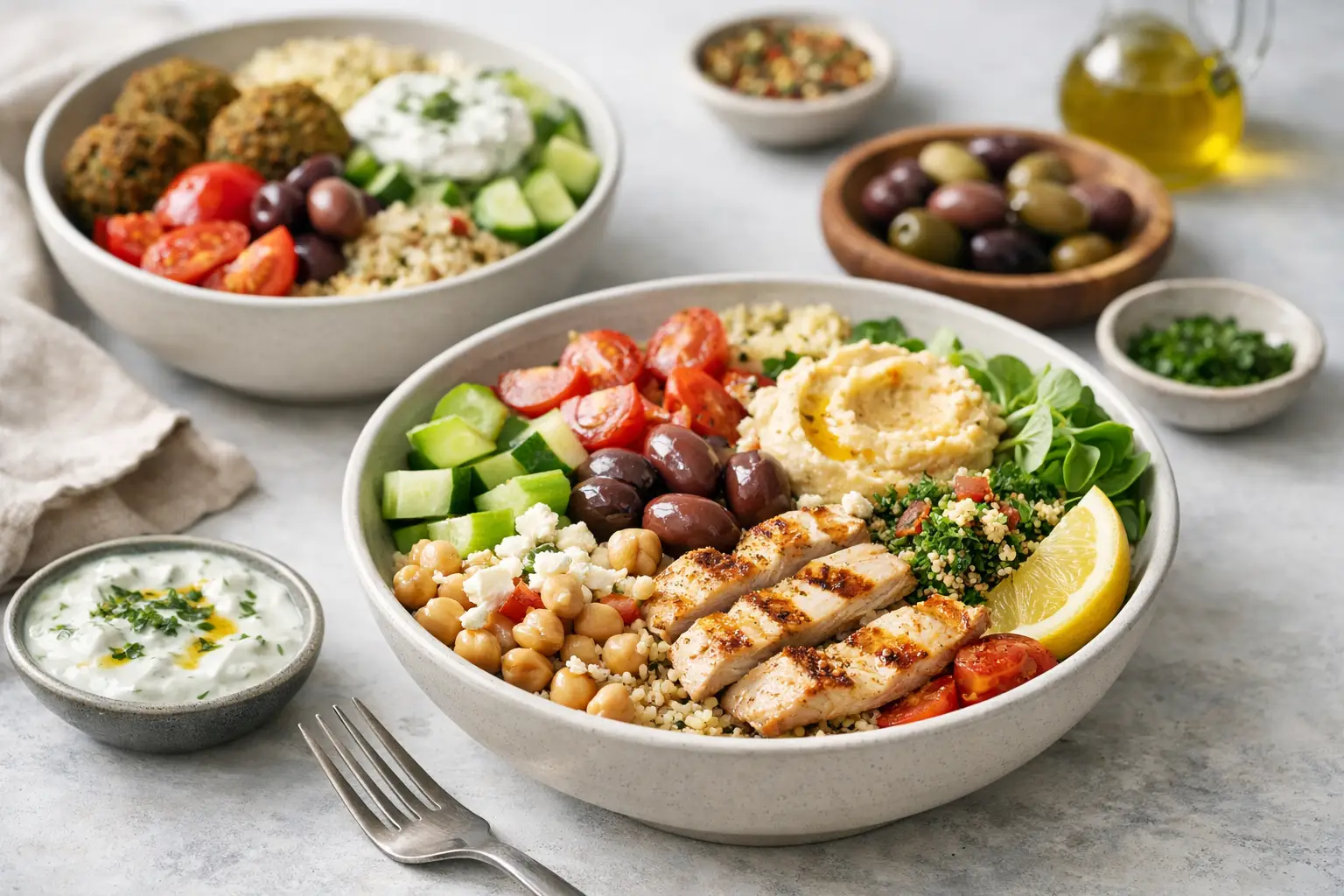
A good lunch bowl should make noon feel less rushed, not create another decision to solve. With crisp vegetables, creamy dips, hearty grains, and bright dressings, easy Mediterranean lunch bowls turn a few refrigerator staples into something colorful, satisfying, and worth looking forward to.
They also work beautifully for real life. You can build one from leftovers, pack one for the office, or set out ingredients family-style for a relaxed work-from-home lunch. The key is not following a strict formula. It is keeping a few flavorful basics on hand and combining them in ways that suit your appetite.
Mediterranean-style meals are especially bowl-friendly because they balance ingredients that hold well, taste great at room temperature, and offer plenty of variety without complicated cooking. Think lemony grains, crunchy cucumbers, roasted vegetables, beans, olives, feta, herbs, and a spoonful of hummus or tzatziki.
The best part is that every element has a job. Grains and beans make lunch filling. Vegetables add freshness and color. A creamy sauce or dressing brings everything together. A little salty, briny flavor from feta, olives, or pickled onions keeps each bite interesting.
This approach is flexible, too. If you are vegetarian, lean into chickpeas, lentils, and roasted vegetables. If you want more protein, add chicken, salmon, shrimp, tuna, or a jammy egg. If you are avoiding grains, use greens, cauliflower rice, or extra vegetables as the base.
You do not need a new recipe every day. Build easy Mediterranean lunch bowls around four simple components: a base, a protein, fresh and cooked vegetables, and a finishing element with plenty of flavor.
For the base, choose couscous, farro, quinoa, brown rice, or shredded romaine. Couscous is a smart choice when time is tight because it cooks quickly with hot water and a cover. Farro and quinoa are ideal for meal prep since they keep their texture for several days. Greens make a lighter bowl, especially when paired with warm roasted vegetables or chicken.
Next, add protein. Canned chickpeas and lentils are pantry heroes here – simply rinse, drain, and season with olive oil, lemon juice, salt, pepper, and dried oregano. Rotisserie chicken offers another fast option, while leftover grilled chicken or roasted salmon can make a simple lunch feel polished.
Then bring in contrast. Add cool cucumber, cherry tomatoes, shredded carrots, or baby spinach alongside roasted zucchini, eggplant, peppers, or sweet potatoes. You do not need five vegetables in every bowl. Two or three are enough when they offer different textures.
Finish with something memorable: crumbled feta, toasted pita, olives, fresh dill, chopped parsley, toasted nuts, or a tangy dressing. That final layer is often what makes a practical lunch taste like one you would happily order out.
Keep one small jar of dressing in the refrigerator, and your bowl ingredients will feel new all week. Whisk together olive oil, lemon juice, a little minced garlic, dried oregano, salt, and black pepper. For a creamier finish, stir in a spoonful of Greek yogurt or tahini.
A pour-over kettle can be surprisingly useful for meal prep, too. Use it to heat water for couscous or to quickly thin tahini with warm water until it becomes smooth and drizzle-ready. Store the dressing in a tightly sealed container and shake before serving.
Start with fluffy couscous and add lemon-seasoned chickpeas, cucumber, cherry tomatoes, red onion, and a generous spoonful of hummus. Finish with feta, parsley, and a drizzle of olive oil. This is an excellent meatless option, but it is still substantial enough for a busy afternoon.
For extra crunch, tuck in a handful of pita chips right before eating. Pack them separately if you are taking lunch to work.
Use cooked quinoa or brown rice as your base, then add sliced chicken seasoned with cumin, paprika, garlic powder, and oregano. Pair it with chopped romaine, tomatoes, cucumber, pickled red onions, and tzatziki.
This bowl is great for using up leftover chicken. The spice blend gives plain cooked chicken a fresh direction, while the cool sauce keeps the flavors balanced. If you prefer a lighter meal, skip the grain and double the greens.
Roast zucchini, bell peppers, red onion, and eggplant until tender and lightly caramelized. Spoon them over farro with baby spinach, white beans, feta, and lemon-herb dressing. The warm vegetables gently soften the spinach without making it wilt completely.
This is a particularly good bowl for cooler months, when a refrigerator-cold salad may not sound appealing. Roast a sheet pan of vegetables on Sunday, then use them in lunches, wraps, and simple dinner sides throughout the week.
Flake leftover salmon over rice or quinoa and add cucumber, tomatoes, arugula, sliced olives, and a few capers. A lemony yogurt sauce or simple olive oil dressing works well here. Fresh dill makes it especially inviting, but parsley is a perfectly good substitute.
Canned salmon can work when fresh salmon is not on the menu. The flavor will be a little different, but the bowl still delivers satisfying protein and bright, coastal-inspired character.
Combine cooked lentils with roasted sweet potato cubes, kale or arugula, cucumber, feta, and toasted pumpkin seeds. Add a tahini-lemon drizzle for a creamy, nutty finish. It is earthy, colorful, and filling without feeling heavy.
This bowl benefits from a little advance planning, but the payoff is a lunch that holds up beautifully for several days. Keep the greens and dressing separate until you are ready to eat.
The easiest way to keep lunch interesting is to prep components rather than fully assembled bowls. Cook one grain, roast one tray of vegetables, wash and chop a few fresh vegetables, and choose two proteins. Then switch the sauces and toppings as the week goes on.
For example, chickpeas with couscous and cucumber can become a hummus bowl on Monday, while the same ingredients can be tossed with greens, feta, and lemon dressing on Wednesday. Add chicken on another day, and it feels like a different meal without requiring a second round of cooking.
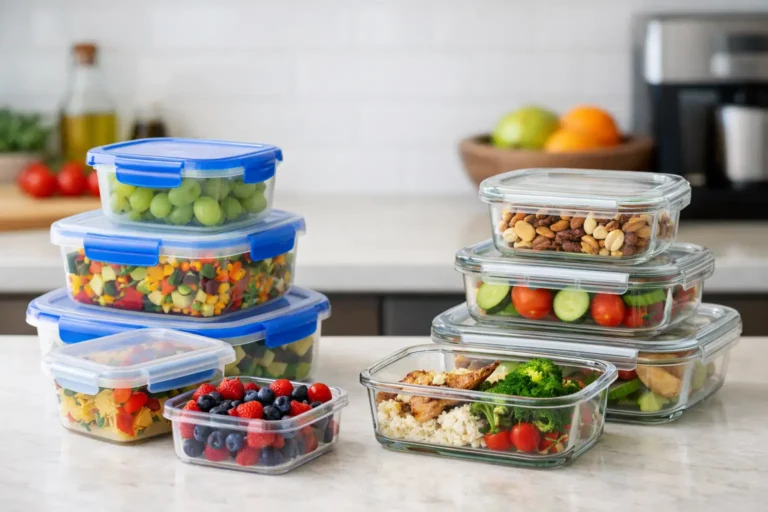
Storage matters. Clear storage canisters and containers make it easier to see what is ready to use, which can prevent beautiful ingredients from getting forgotten at the back of the refrigerator. Keep delicate herbs dry and loosely wrapped, store dressings in small jars, and wait to add crunchy toppings until serving time.
If you are packing lunch for later, choose a container with enough room to keep ingredients distinct. There is nothing wrong with a mixed bowl, but separate sections can preserve texture, especially for cucumbers, greens, pita chips, and sauces. A well-packed lunch also feels more inviting when you open it.
Lunch does not need a special occasion, but it can still have a little style. Serve your bowl in a wide, shallow dish so the colors and toppings stay visible instead of disappearing into a deep container. A colorful placemat, a favorite water glass, and a real fork can make an ordinary weekday meal feel more settled.
Kitchen Bay is built around those small upgrades – the useful kitchen pieces and tabletop details that encourage you to cook, create, and celebrate the everyday. You do not need a picture-perfect spread. You just need a meal that feels thoughtfully made for you.
Keep a few Mediterranean staples within reach, let leftovers do some of the work, and build your next bowl around what sounds good right now. A bright lemon squeeze, a creamy spoonful of hummus, and a little crunch can turn even the busiest lunch break into a moment you will want to repeat.







Leave a comment