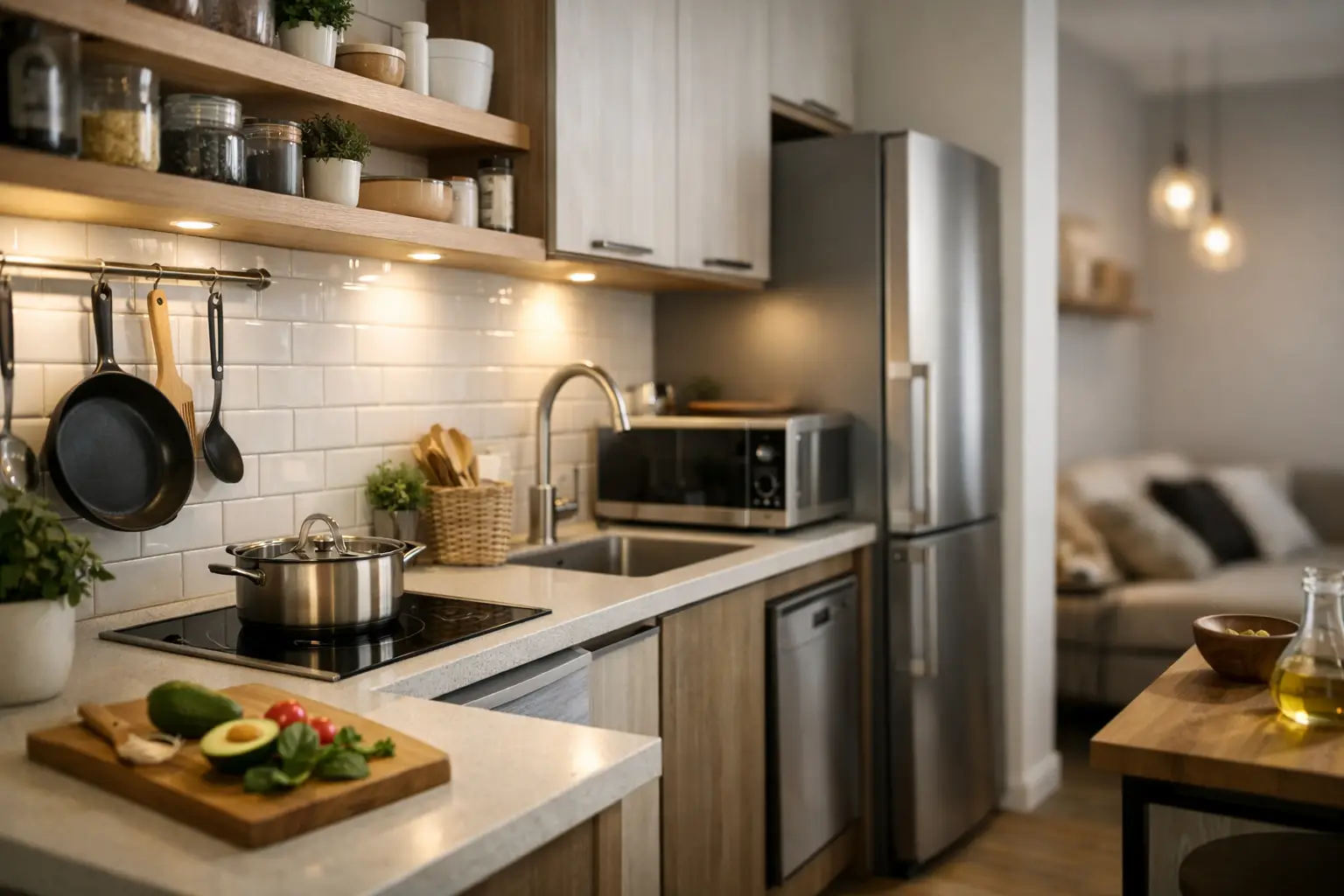
The kitchen may be the smallest room in your apartment, but it handles some of the biggest moments of the day: rushed breakfasts, weeknight dinners, Sunday baking, and the last-minute snack spread when friends stop by. This apartment kitchen upgrade guide focuses on the changes that make an immediate difference without asking you to renovate, replace cabinets, or upset your landlord.
The goal is not to fill every inch with gadgets. It is to choose a few useful, good-looking pieces that make cooking easier, storage calmer, and everyday meals feel more considered. A small kitchen can still be a place to cook, create, and celebrate.
Before buying anything, notice where your kitchen slows you down. Maybe the counter disappears beneath coffee supplies and mail. Maybe your baking tools live in three different drawers. Maybe opening one cabinet means moving five other things first.
Those small annoyances point to the upgrades worth making. A beautiful item that solves no problem can still be enjoyable, but your first purchases should earn their space. Think in terms of daily friction: what makes making coffee, packing lunch, prepping dinner, or cleaning up feel harder than it needs to be?
Measure the areas you use most, especially cabinet shelves, drawer interiors, the space beside the sink, and the clear stretch of counter you can claim for prep. Apartment kitchens vary wildly. A storage solution that works in a deep pantry may be useless in a narrow galley kitchen, so dimensions matter more than a perfect-looking photo.
Counter space is prime real estate. The trick is not to make it empty. It is to reserve it for items you reach for constantly and move everything else into a more intentional home.
Start by grouping items by routine. Keep your everyday coffee setup together: kettle, mugs, filters, and a small canister for beans or grounds. Create a compact cooking zone with your most-used utensils, salt, oil, and cutting board nearby. When each routine has a defined place, the kitchen feels more organized even if it is still busy.
Storage canisters do more than make open shelving look polished. They help reduce half-open bags, stale pantry staples, and the hunt for ingredients during dinner prep. Use them for flour, oats, pasta, coffee, tea, and snacks you buy often. Clear or labeled containers are especially helpful in apartments with limited cabinets because you can see what needs replenishing.
A tray can also do quiet organizational work. Place one on the counter to contain a coffee station or cooking essentials. It creates visual order, makes wipe-downs simpler, and lets a small collection of useful objects look deliberate rather than scattered.
In a compact apartment, every tool should be judged by how often it comes out of the drawer. Specialty gadgets can be fun, but multi-use pieces tend to deliver more value when storage is tight.
An immersion blender is a strong example. It can blend soups directly in the pot, make smoothies in a tall cup, whip up sauces, and help with small-batch dressings without requiring a large blender base on the counter. It is not the best choice for every job – a full-size blender still has an edge with large batches and tough ingredients – but it is an easy fit for everyday cooking in a smaller kitchen.
Bakeware is another place to edit thoughtfully. Rather than collecting every pan shape, build around versatile sizes you will genuinely use: a reliable sheet pan, a square or rectangular baking dish, and a loaf or muffin pan if you bake often. These pieces can handle roasted vegetables, simple cakes, baked pasta, cookies, and meal prep without crowding the cabinets.
When choosing utensils and prep tools, favor sturdy basics in finishes you will enjoy seeing. A few dependable tools are more useful than an overflowing crock of duplicates. If a tool only comes out once a year, consider whether it deserves permanent space.
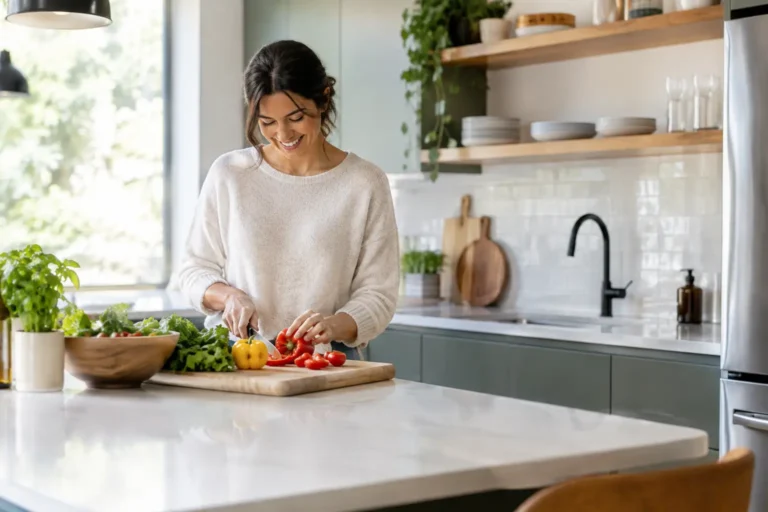
Good flow matters more than a large footprint. You need a clear place to chop, a place to set hot pans, and enough room to move from refrigerator to sink to stove without creating a pileup.
Keep one cutting board accessible instead of buried behind cookware. If your counters are especially limited, choose a board large enough to create a stable prep surface but easy enough to store upright. A heat-safe trivet or pair of placemats can protect a table or counter when you need an extra landing spot for a hot dish.
Lighting deserves attention, too. Many rentals have one overhead fixture that makes the room feel flat and dim. If you cannot change the installed lighting, add a portable accent light in an adjacent dining nook or use a small lamp where it is safe and practical. Warm light makes a modest kitchen feel more welcoming, especially during evening meals and casual hosting.
Do not overlook cleanup. Keep a small bin or basket under the sink for sponges, cloths, and cleaning supplies, and store only what you actually use. Less clutter around the sink makes the whole room feel fresher. It also makes the post-dinner reset faster, which is an upgrade you will appreciate every day.
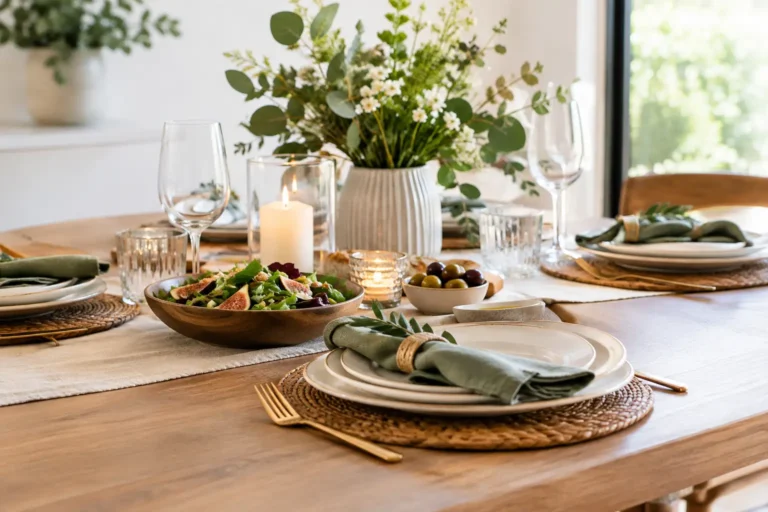
Apartment living often means the kitchen table doubles as a desk, crafting station, and dinner spot. That does not mean meals have to feel temporary. A tablecloth, placemats, or a set of everyday drinkware can change the mood in less time than it takes to order takeout.
Choose pieces that work for ordinary Tuesday dinners as well as company. Washable placemats offer easy protection and a finished look. A simple tablecloth can soften a small dining area and cover a worn table surface. Coordinated glasses and serving pieces make even a bowl of pasta or a snack board feel a little more inviting.
Color and texture can help define your style without permanent changes. If the kitchen itself is all white or builder-grade gray, bring in warmth through natural-looking textiles, tinted drinkware, or a decorative bowl. If your space already has bold cabinets or patterned tile, quieter table settings may create a welcome balance.
This is where a few curated home essentials from Kitchen Bay can help turn practical routines into something more personal. Focus on pieces that coordinate with what you own rather than trying to match every item exactly. A collected, useful kitchen usually feels more relaxed than a showroom-perfect one.
An apartment kitchen upgrade does not require a major budget, but it does benefit from priorities. Spend more on items you touch often: a reliable kettle, useful prep tools, storage you will open daily, and cookware or bakeware that performs well. Save on trend-driven décor and highly specialized gadgets unless they bring you real joy.
If you expect to move soon, choose portable upgrades that can travel easily. Canisters, table linens, small appliances, drinkware, and lighting accents can move from one apartment to the next. Built-in organizers and major fixtures may not make sense unless you have permission and plan to stay for a while.
A good rule is to make one zone better at a time. Start with the coffee corner, pantry shelf, baking cabinet, or dining table. You will learn what your space actually needs, avoid impulse purchases, and get the satisfying feeling of a kitchen that improves week by week.
Your apartment kitchen does not need more stuff to feel better. It needs a few well-chosen tools, clear surfaces, and details that make you want to put the kettle on, make something delicious, and set the table even when the only guest is you.







Leave a comment