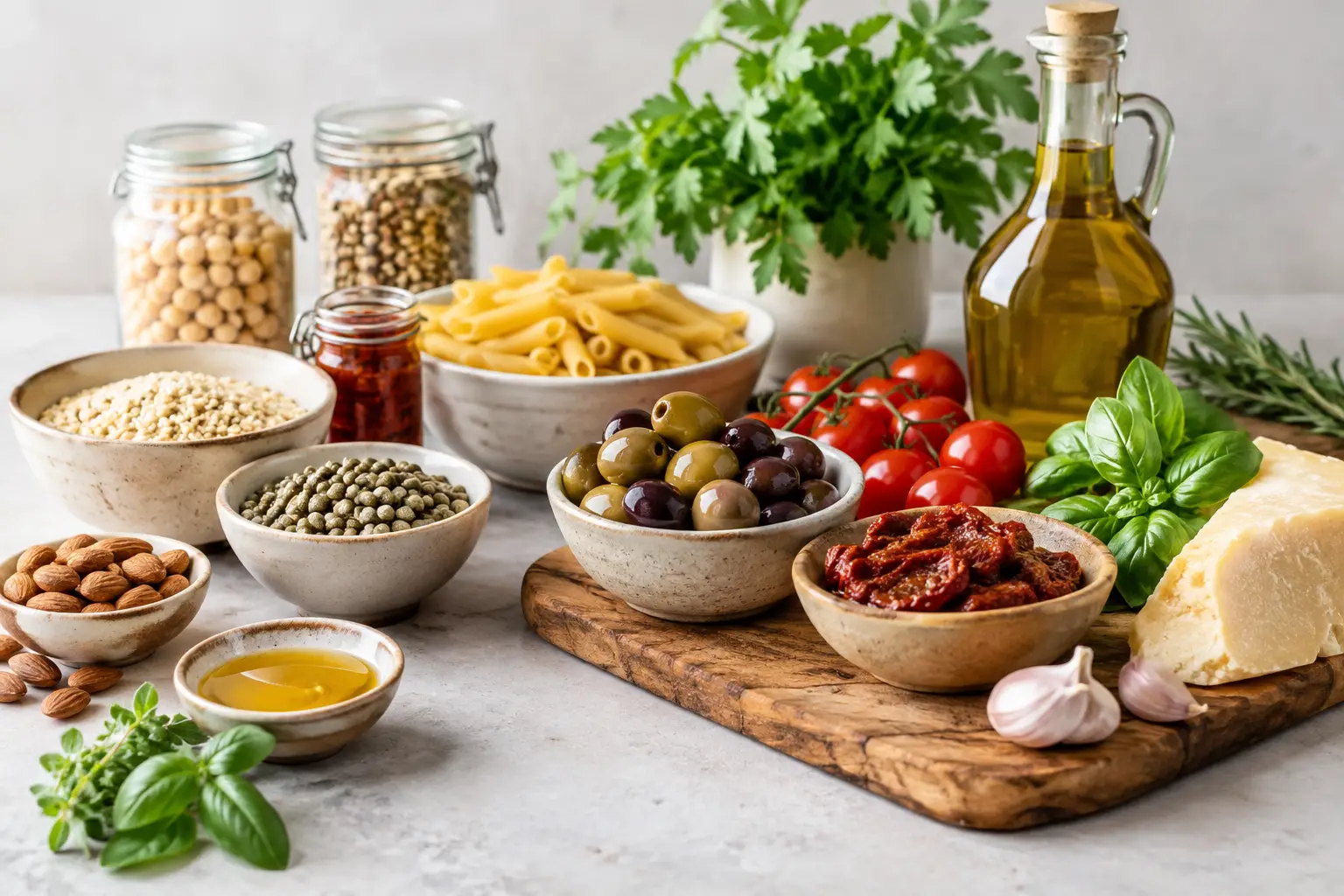
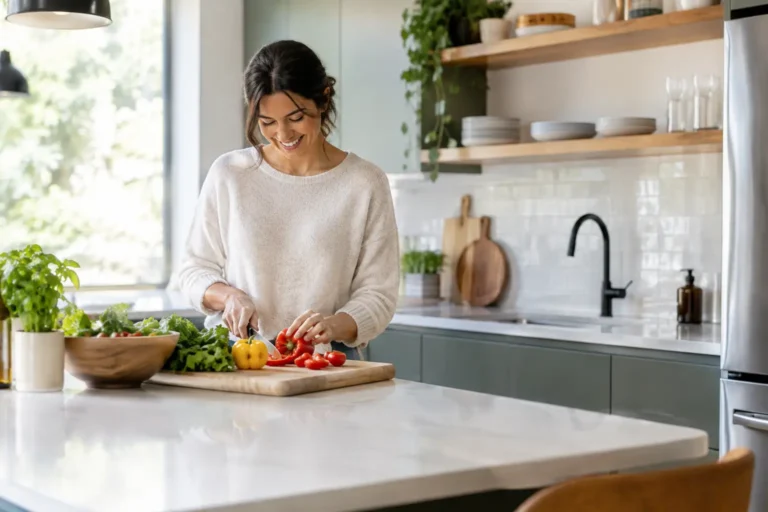
A good pantry changes the question from “What should we order?” to “What can I make in 20 minutes?” This Mediterranean pantry guide is built for exactly that kind of everyday ease: bright, satisfying ingredients that turn a few fresh vegetables, eggs, or a simple protein into a meal that feels considered without feeling complicated.
Mediterranean-style cooking is less about following one strict regional rulebook and more about keeping flavorful basics within reach. Think olive oil with personality, tender beans, tomatoes, grains, nuts, dried herbs, and a few tangy accents. With those pieces on hand, weeknight dinner, a work-from-home lunch, and an impromptu appetizer spread all become much easier to pull together.
The goal is not to buy every ingredient at once or crowd your cabinets with jars you will use only once. Begin with staples that work across several meals. Choose items you genuinely enjoy, then add more as your cooking rhythm takes shape.
Extra-virgin olive oil belongs at the center. Use a good everyday bottle for salad dressings, roasted vegetables, grain bowls, soups, and finishing a plate of beans. It does not have to be the most expensive option on the shelf, but it should smell fresh and taste pleasantly grassy, fruity, or peppery rather than flat. Store it away from heat and direct light to help preserve its flavor.
Canned tomatoes are another reliable foundation. Whole peeled tomatoes, crushed tomatoes, and tomato paste all have a place, though you do not need all three right away. A can of tomatoes can become a quick chickpea stew, a skillet sauce for eggs, or the base for pasta with olives and herbs. Tomato paste brings concentrated richness to soups, rice, and braises, especially when you let it cook briefly in olive oil first.
Keep a dependable salt, black pepper, and garlic in rotation. Fresh garlic gives the best bite, while garlic powder is a practical backup for rushed evenings. Red pepper flakes add gentle heat, and a bottle of red wine vinegar or sherry vinegar brings the acidity that makes simple pantry meals taste lively.
Beans are one of the most useful ingredients in a Mediterranean-inspired kitchen. Chickpeas are especially flexible: roast them until crisp for salads, simmer them with tomatoes and greens, or blend them into a creamy spread. Cannellini beans and other white beans are excellent with tuna, rosemary, lemon, and olive oil. Lentils cook into soups and grain salads with very little effort.
Canned beans are the convenience choice, and that is often the right choice for a busy household. Rinse them well before using to reduce excess sodium and give them a cleaner flavor. Dried beans can be more economical and wonderfully creamy, but they require planning and a little more time. Keep both if you cook often, or start with cans if speed matters most.
For grains, choose two or three rather than stocking an entire aisle. Couscous is quick and friendly for beginners. Farro has a pleasantly chewy texture for make-ahead salads. Rice works with nearly everything, while bulgur is ideal when you want a fast, nutty base for vegetables and herbs. Whole-wheat pasta is useful, but regular pasta is just as welcome if that is what your household prefers.
Store dry goods in labeled storage canisters instead of half-open bags. Clear containers make it easier to see what needs replacing, keep cupboards looking calm, and help you build meals from what you already own. For apartment kitchens, stackable containers can make limited shelf space work much harder.
The difference between a plain bowl of grains and a lunch you want to repeat is usually a flavor builder. These are the small but mighty ingredients that add saltiness, brightness, warmth, or texture at the last minute.
Olives and capers bring savory depth to tomato sauces, roasted fish, salads, and simple pasta. Jarred roasted red peppers make an instant sandwich filling or appetizer when paired with white beans and herbs. Sun-dried tomatoes add concentrated sweetness, while artichoke hearts can turn a basic grain bowl into something that feels ready for company.
For spices, oregano, cumin, smoked paprika, coriander, cinnamon, and dried mint are a smart starting set. Oregano and smoked paprika work beautifully with roasted vegetables and chickpeas. Cumin and coriander give soups and lentils a warm, earthy note. Cinnamon may sound unexpected, but a tiny pinch can add depth to tomato-based dishes and rice without making them sweet.
Nuts and seeds matter, too. Almonds, pistachios, walnuts, sesame seeds, and pine nuts offer crunch and richness when sprinkled over salads, yogurt, roasted vegetables, or dips. Because their oils can turn stale, buy modest amounts and store extras in the refrigerator or freezer. This is one place where smaller quantities often beat a giant bargain bag.
Once your shelves are set up, the real benefit is how quickly ingredients connect. A can of chickpeas, canned tomatoes, garlic, oregano, and olive oil becomes a cozy stew. Add a handful of spinach or kale if you have it, then serve with toasted bread or couscous.
White beans can become a satisfying lunch with little more than olive oil, vinegar, black pepper, chopped herbs, and a can of tuna. Add cucumber, celery, or roasted red peppers if they are available. The same mixture can be served in a shallow bowl with crackers for a casual, shareable snack.
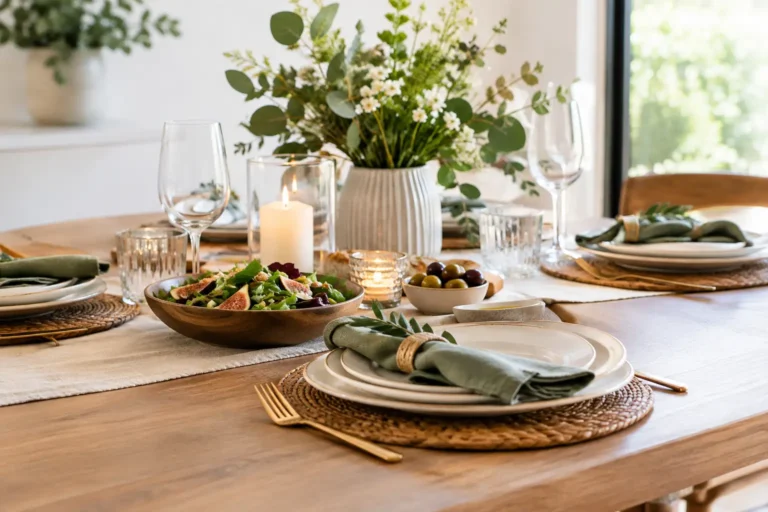
Pasta is another easy canvas. Sauté garlic and red pepper flakes in olive oil, add tomatoes, olives, capers, and a splash of pasta water, then toss with noodles. Finish with lemon zest, parsley, or grated cheese if you have it. It is simple food, but it lands beautifully on the table in a favorite bowl with a crisp placemat underneath.
For a relaxed hosting plate, arrange olives, roasted peppers, artichokes, nuts, crackers, and a quick white bean dip on a platter. Add fresh fruit, cheese, or warm pita if you have time to shop. Pantry-led entertaining is not about making everything from scratch. It is about knowing how to make a few well-chosen ingredients look generous and inviting.
A pantry can carry much of the meal, but a small fresh-food routine keeps it from feeling repetitive. Lemons are arguably the most valuable weekly purchase. Their juice wakes up beans, soups, dressings, seafood, and roasted vegetables, while the zest adds fragrance to grains and pasta.
Choose a few vegetables that hold well: onions, carrots, cucumbers, bell peppers, zucchini, and leafy greens are all useful options. Fresh parsley, basil, dill, or mint can make even a canned-bean meal taste newly made. Eggs, yogurt, feta, and a simple protein such as chicken, fish, or tofu give you more ways to turn pantry staples into dinner.
It depends on your schedule, of course. If you cook for one or two, buy fewer fresh items and lean more heavily on frozen vegetables. If you regularly host family or friends, keep extra olives, crackers, sparkling water, and a second bag of grains available. The best pantry is not the most photogenic one. It is the one that supports the way you actually live.
Set up your shelves in zones: cooking oils and vinegars together, canned goods together, grains and pasta together, then spices where you can reach them easily. Put older items toward the front and newer purchases behind them. A quick check before grocery shopping helps prevent duplicate cans and forgotten bags of lentils.
Use labels with purchase dates for dry goods, especially if you transfer them to canisters. Keep a small bowl or tray for onions and garlic, away from direct sunlight. If your pantry is open shelving, matching jars and a few attractive serving pieces can make everyday storage feel like part of your kitchen’s decor rather than clutter.
A Mediterranean pantry is not meant to be perfect or prescriptive. It is a collection of dependable ingredients that gives you more options when the day gets busy and more confidence when guests arrive. Start with a few staples, cook from them often, and let your shelves gradually become an invitation to cook, create, and celebrate.







Leave a comment