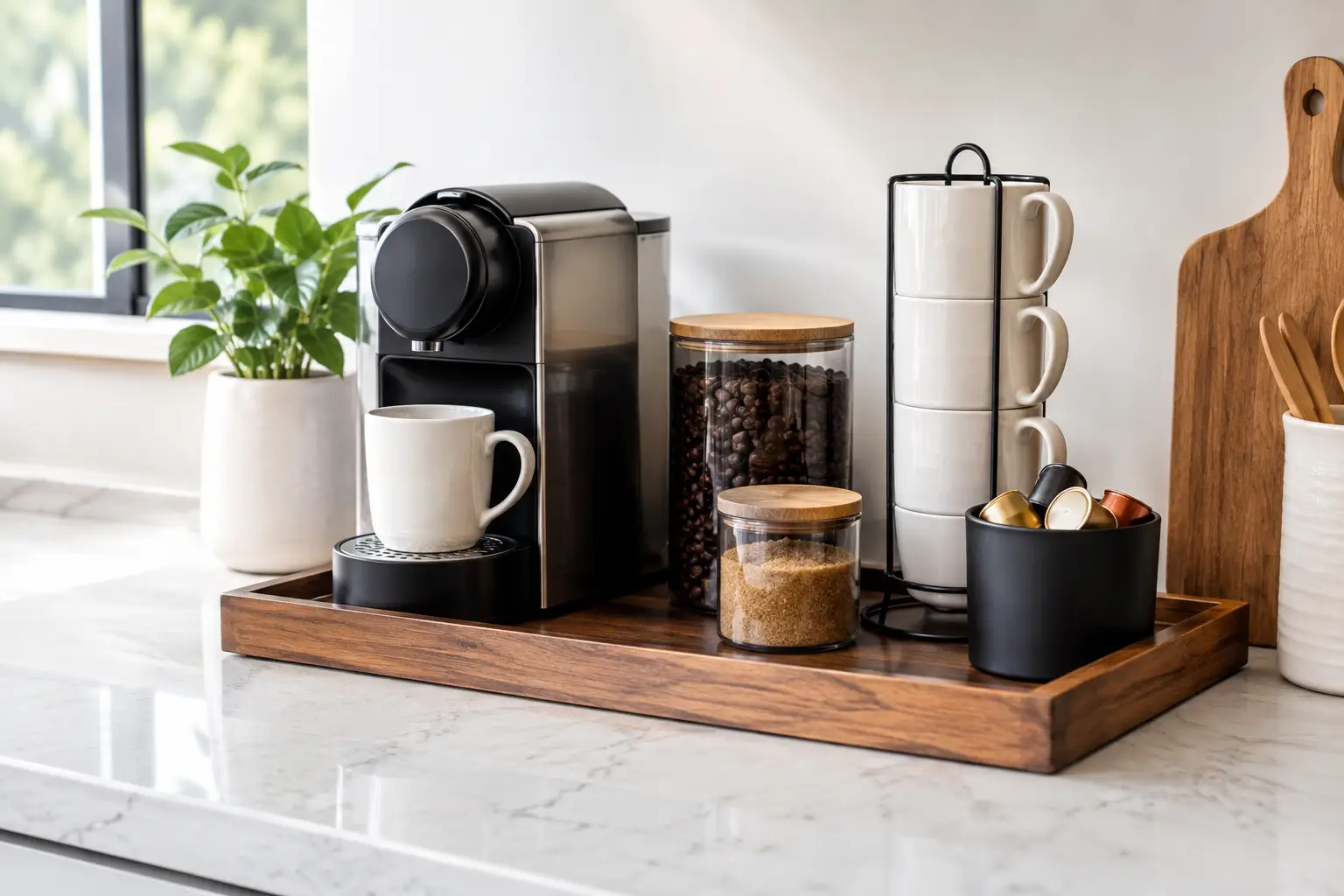
The first few minutes of the morning feel better when the coffee routine has a place of its own. A thoughtful coffee station setup example does more than gather mugs and beans on one tray. It turns a crowded counter into a small daily ritual that feels organized, inviting, and ready when you are.
Whether you have a spacious kitchen, a compact apartment, or a dining-room sideboard doing double duty, the best coffee station is built around how you actually brew, serve, and clean up. Start with the essentials, leave room for your favorite details, and let the setup make ordinary mornings feel a little more polished.
Before choosing canisters or arranging mugs, choose the spot that makes coffee easy to make. A section of countertop near an outlet is the natural choice for a drip machine, espresso maker, or electric kettle. If counter space is limited, a bar cart, buffet cabinet, or narrow console table can create a dedicated coffee corner without taking over the kitchen.
Think about the path your hands take in the morning. Water should be nearby, cups should be within reach, and the brewing equipment should have enough clearance to fill and clean. A station beside the sink can be practical, but avoid placing an electric appliance where splashes are likely. If the station is farther from the sink, keep a small tray for used spoons and empty pods so cleanup does not migrate across the room.
For households with busy mornings, give the station its own zone rather than sharing it with toaster clutter, mail, and cooking tools. The goal is not a picture-perfect counter. The goal is a spot that stays useful when everyone is reaching for a cup at once.
Picture a three-foot stretch of counter with a coffee maker or pour-over kettle set toward the back, near the outlet. Place a medium tray in front or alongside it to define the serving area. On the tray, keep a sugar bowl, a small creamer, and a spoon rest. Two or three everyday mugs sit on a nearby mug tree or open shelf, while extra mugs are stored in a cabinet to keep the station from looking overcrowded.
To one side, arrange airtight canisters for coffee beans, ground coffee, tea bags, or hot chocolate. This gives the setup a coordinated look while protecting ingredients from moisture and stale odors. A small basket can hold filters, stir sticks, napkins, and single-serve packets. Keep the items you use every day visible; tuck backup supplies into a drawer or pantry bin.
Finish the space with one personal touch, such as a framed coffee print, a compact lamp, or a small plant that tolerates indoor conditions. One detail adds warmth. Too many decorative pieces make it harder to wipe down the surface and can turn a practical station into a dust-collecting display.
Your equipment should lead the design. A coffee station for an espresso fan has different needs from one built for slow weekend pour-overs.
A drip machine works best with a generous clear zone around it. Leave room to open the lid, add water, and remove the carafe without moving canisters every time. Keep filters and coffee grounds close by, ideally in a basket or drawer organizer. If your household drinks several cups, a thermal carafe can help keep coffee warm without repeatedly reheating it.
A pour-over setup can be beautifully simple: a gooseneck kettle, dripper, server, scale, filters, and coffee canister. Because each piece is visible, matching materials help the station feel intentional. Glass, wood, ceramic, and matte metal can all work well together. Just make sure the kettle has a stable home and the scale stays protected from splashes.
These stations benefit from smart storage. Keep pods, capsules, or beans in a container that is easy to refill, and give milk frothers, tampers, and syrups a designated spot. A washable mat beneath the machine can catch drips and protect the counter. If you enjoy flavored drinks, limit the selection to a few favorites so the space stays calm rather than crowded.
Coffee supplies come in colorful bags, bulky boxes, and mismatched packaging. Transferring frequently used ingredients into canisters creates a cleaner look while making it easier to see what needs replenishing. Choose containers with secure lids for coffee, sugar, cocoa, and tea, then add simple labels if more than one person uses the station.
Clear canisters are convenient because you can see when supplies are running low. Opaque ceramic or metal containers offer a more streamlined look and can keep light away from coffee beans. It depends on whether you value quick visibility or a quieter visual finish. Either option works when the containers are easy to open with one hand during a sleepy morning rush.
Use vertical space whenever possible. A wall shelf can hold mugs and a few serving pieces, while hooks beneath it keep favorite cups accessible. If you rent or prefer not to mount anything, a freestanding tiered stand gives you a similar effect on the counter. Keep heavier items low and lighter accessories up high for a setup that feels secure and balanced.
A coffee station should feel welcoming, but it still needs to earn its countertop space. Start with a tray, placemat, or small washable runner to visually anchor the area. It helps separate the coffee zone from the rest of the kitchen and makes crumbs easier to collect.
Color is an easy way to make the setup feel considered. Neutral canisters and glassware keep the look flexible through every season. For more personality, choose a warm accent color through mugs, a tablecloth nearby, or a small piece of lighting. A single color thread can make an assortment of practical items feel like a collection.
If you enjoy hosting, keep a few guest-friendly additions nearby. A small bowl of sweeteners, decaf options, tea bags, and pretty spoons makes visitors feel comfortable serving themselves. You do not need a full cafe menu at home. A few thoughtful choices are enough to make weekend brunch or an after-dinner coffee feel special.
The most successful coffee station is one you can reset in less than two minutes. Build that into the design from the beginning. Choose a tray with a lip, use a spoon rest, and keep a small cloth or paper towels in a nearby drawer. Wipe spills before they become sticky, empty the drip tray regularly, and give the countertop a quick clean at the end of the day.
Once a week, wash the canisters, mug hooks, tray, and any syrup bottles that collect residue. Check filters, beans, and tea supplies at the same time, so you are not surprised by an empty canister on Monday morning. This small rhythm keeps the area fresh without making it another major kitchen chore.
At Kitchen Bay, the most inviting home setups pair useful essentials with details that make people want to linger. Your coffee station can be as minimal as a kettle, two mugs, and a canister, or as generous as a full self-serve beverage bar. Give it a place in your home that feels easy to use, then let tomorrow morning be the first reason to enjoy it.







Leave a comment