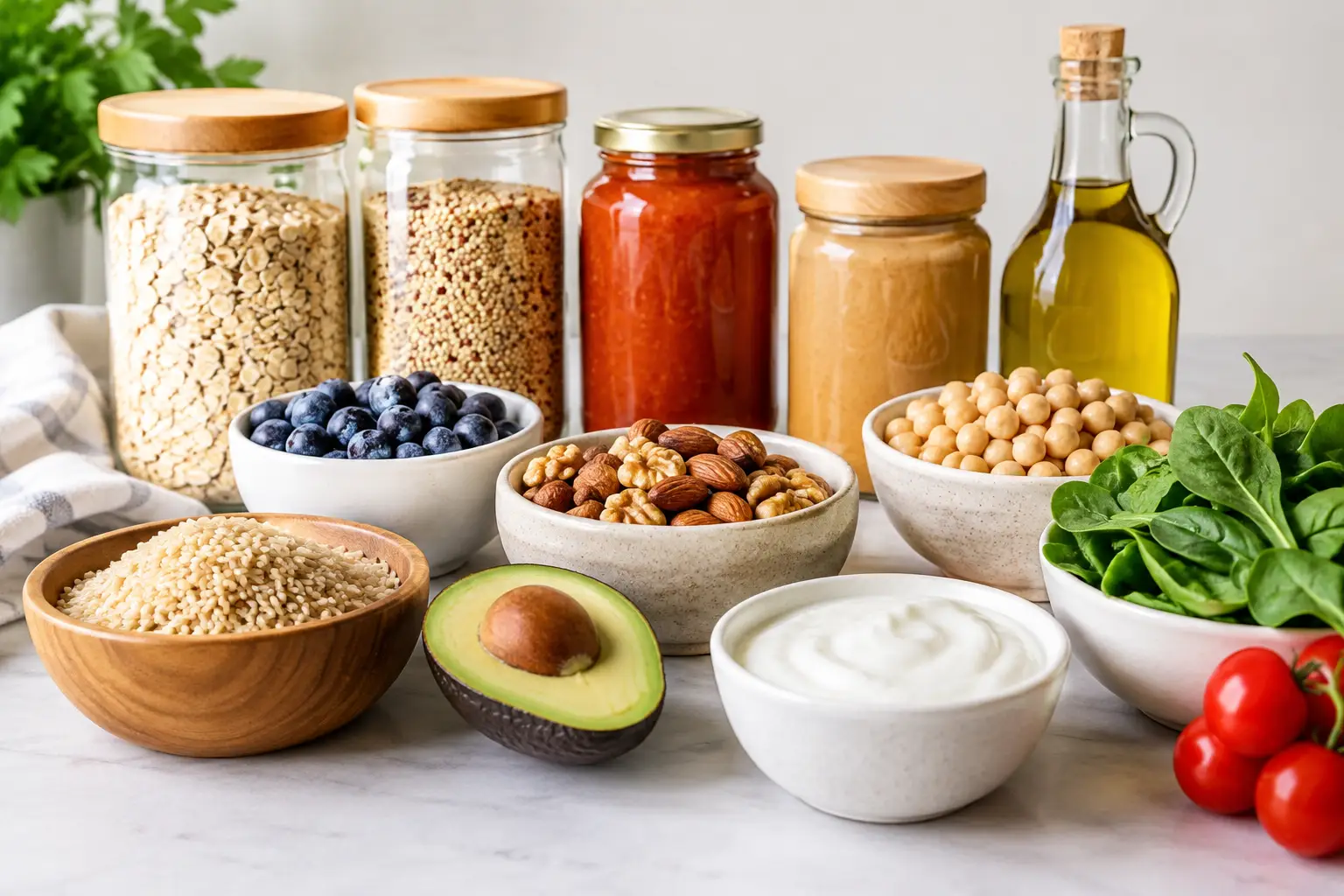
The easiest grocery reset is not a cart full of unfamiliar ingredients. It is noticing the items you reach for on a rushed Tuesday – the pasta, sauce, cereal, crackers, and snacks – then making a few healthy pantry swaps that still fit the meals your household already loves. The goal is not a picture-perfect pantry. It is a better-equipped one: flavorful, flexible, and ready when dinner needs to happen fast.
Small changes can add more fiber, protein, and variety without turning cooking into a complicated project. A well-organized shelf of staples also makes everyday meals feel less like a scramble and more like a simple ritual worth enjoying.
White rice, regular pasta, and white flour are convenient, but whole-grain versions can bring more fiber and a pleasantly nutty flavor. Try brown rice, whole-wheat pasta, oats, whole-grain couscous, or a blend of white and whole-wheat flour in pancakes and muffins.
This is one swap where gradual works beautifully. If your family is unsure about the texture of whole-wheat pasta, start with half regular and half whole grain. You will still get a more substantial meal without asking everyone to abandon a familiar favorite.
Canned beans are one of the smartest pantry staples around. They make chili, grain bowls, tacos, soups, and salads more filling in minutes. Look for no-salt-added or lower-sodium options when they are available, then season the finished dish to your own taste.
Rinsing canned beans also helps reduce excess sodium and gives them a cleaner flavor. Keep a few varieties on hand, such as black beans, chickpeas, white beans, and lentils. Each works differently, which keeps quick meals from feeling repetitive.
Jarred sauces and canned tomatoes can save dinner, but labels vary widely. Choose crushed tomatoes, diced tomatoes, tomato paste, or marinara with recognizable ingredients and less added sugar when possible. From there, build flavor with garlic, dried oregano, red pepper flakes, or a splash of balsamic vinegar.
Plain tomato products give you more control, and they are often just as convenient. A saucepan, a wooden spoon, and ten minutes can turn canned crushed tomatoes into a bright sauce for pasta, eggs, or homemade pizza.
Breakfast cereal is not automatically off the table, but many boxes deliver more sweetness than staying power. Rolled oats, steel-cut oats, unsweetened muesli, and whole-grain cereals with modest added sugar are easy alternatives.
Oats are especially useful because they can become breakfast, a baking ingredient, or a crunchy topping. Dress them up with cinnamon, peanut butter, chopped nuts, dried fruit, or frozen berries. If you love a sweeter cereal, mix it with a plainer one rather than making an all-or-nothing switch.
Some snack bars are convenient, but they can be closer to dessert than a snack that carries you through the afternoon. Keep options that combine protein, fiber, or healthy fats: nuts, seeds, roasted chickpeas, nut butter, whole-grain crackers, or lightly sweetened dried fruit.
Portion matters here. Nuts are nutrient-dense, but a small bowl is more satisfying than eating straight from a large bag. Clear storage canisters make these staples easy to see, and a simple scoop or small dish turns a rushed snack into something that feels intentional.
Peanut butter, almond butter, sunflower seed butter, and tahini can add richness to toast, oatmeal, sauces, and smoothies. When shopping, look for varieties with nuts or seeds as the main ingredient and little or no added sugar. Stirring natural nut butter can be a minor inconvenience, but the flavor is often worth it.
For a quick pantry-friendly sauce, whisk peanut butter with soy sauce or tamari, warm water, garlic powder, and a touch of lime or vinegar. Toss it with noodles and vegetables for a dinner that tastes far more special than its short ingredient list suggests.
A healthier pantry is not only about what you reduce. It is also about the flavor builders you add. Stock dried basil, cumin, smoked paprika, cinnamon, chili powder, garlic powder, black pepper, and a few vinegars. These ingredients can make simple beans, grains, and vegetables feel fresh without relying heavily on salt or creamy bottled sauces.
Buy spices in amounts you can reasonably use, especially if you cook for one or two people. Ground spices lose their sparkle over time. Labeling jars and storing them away from heat and sunlight helps protect their flavor.
Broth is a quiet workhorse for soups, rice, risotto, sauces, and braised dishes. Lower-sodium chicken, vegetable, or beef broth gives you room to adjust seasoning as a recipe comes together. You can always add salt. You cannot easily pull it back once a soup is too salty.
For a fuller flavor, add a bay leaf, a spoonful of tomato paste, dried mushrooms, or a Parmesan rind if you have one. This is a useful reminder that healthy cooking does not have to mean flat cooking.
Olive oil is a versatile pantry staple for sautéing, roasting, dressings, and dipping. It is an easy everyday choice in place of heavily processed fats, but there is no need to treat it as the only oil allowed in your kitchen. Neutral oils can still make sense for certain baking projects or higher-heat cooking.
What matters most is using oils with intention and enjoying the food you make. Store olive oil in a cool, dark cabinet and keep a smaller bottle near the stove for easy access. A pourer can help prevent the accidental heavy-handed drizzle.
Baking swaps should preserve the comfort of the recipe. Try using unsweetened applesauce for part of the oil in muffins, replacing a portion of all-purpose flour with oat flour or whole-wheat flour, or choosing dark chocolate chips for cookies and trail mix. These changes can add texture and depth, but they are not interchangeable in every recipe.
For delicate cakes, a full flour swap may make the crumb denser. Start with replacing one-quarter to one-half of the flour, then adjust based on what your family enjoys. The best baking staple is the one that gets used, not the one that sits untouched because the result felt too different.
The most useful healthy pantry swaps are the ones you can find, store, and use without extra friction. Before your next grocery trip, take five minutes to look at what is already in your cabinets. Choose two items to replace when they run out instead of tossing everything at once. This keeps spending practical and lets new habits settle in naturally.
Organization helps, too. Group breakfast staples together, keep grains and beans where you can see them, and place the ingredients you use most often at eye level. Airtight containers can keep oats, rice, flour, and nuts fresher while making the pantry look calmer and easier to navigate. If you buy in bulk, label containers with the item name and purchase date so nothing becomes a mystery ingredient six months later.
A few reliable tools make this style of cooking more inviting. A good saucepan handles grains and sauces, measuring cups simplify baking, and storage canisters help pantry basics stay fresh and visible. At Kitchen Bay, the idea is simple: practical kitchen pieces can support the small routines that make home cooking more enjoyable.
Start with the swap that matches a meal you already make every week. When better ingredients are within reach and dinner still tastes like dinner, a healthier pantry becomes less of a rulebook and more of a welcome invitation to cook, create, and celebrate.








Leave a comment