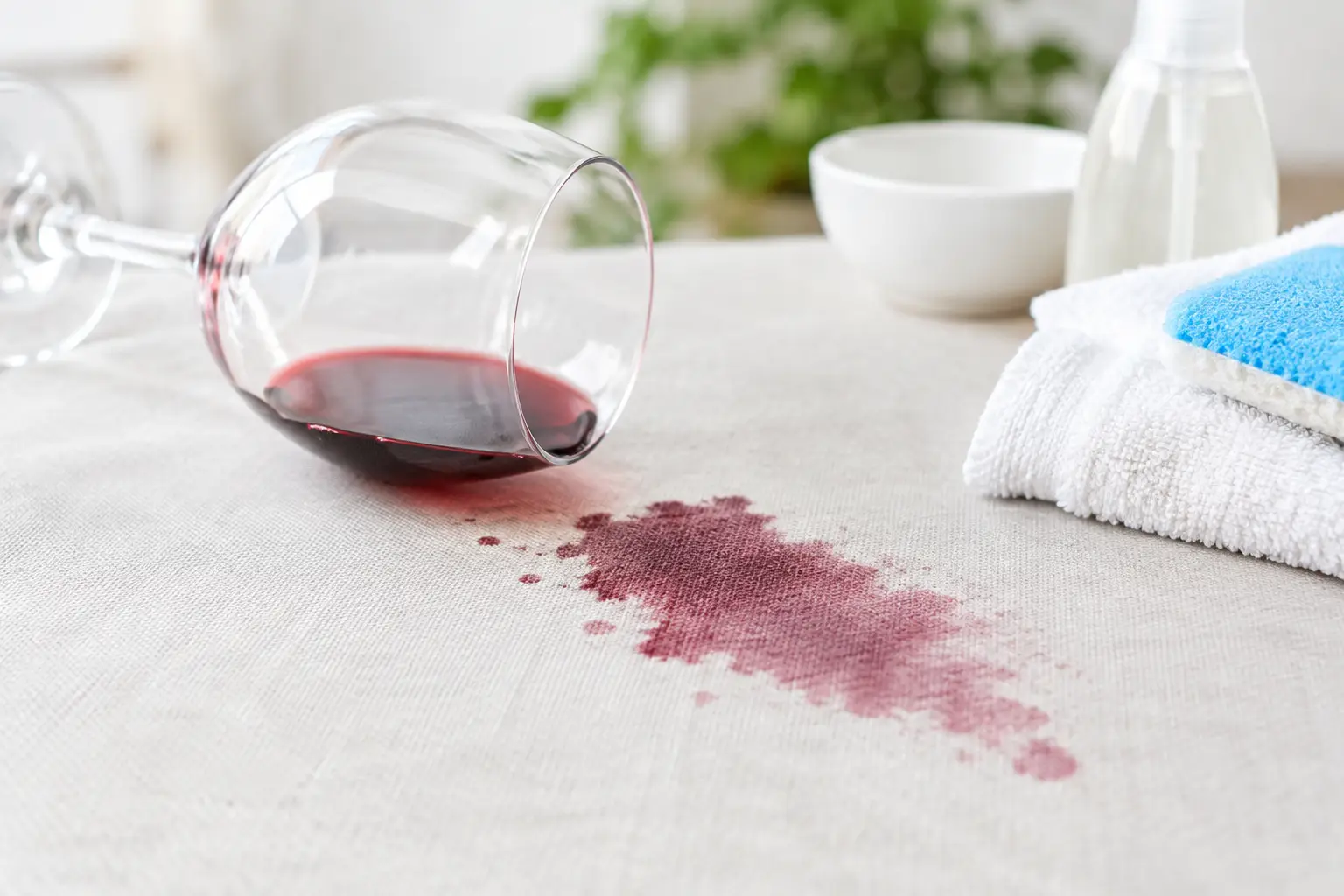
A poured glass should be the start of a good dinner, not the end of a favorite tablecloth. The fastest way to remove wine stains is to act before the spill dries: blot away excess liquid, treat the stained area with the right solution for its material, then let it air-dry before deciding whether it needs another round.
Red wine gets its staying power from deeply colored plant pigments called anthocyanins. Those pigments settle into fibers quickly, especially in absorbent cotton, linen, carpet, and upholstery. The good news is that a calm response and a few everyday supplies can rescue most fresh spills without turning a relaxed gathering into a cleaning emergency.
Start by lifting the wine, not spreading it. Place a clean white cloth, paper towel, or plain napkin over the spill and press gently. Replace it as it becomes saturated. Work from the outside edge toward the center so the stain does not travel farther across the fabric.
Avoid rubbing, even if the spill looks dramatic. Rubbing pushes color into fibers and can roughen delicate surfaces. Also skip hot water at this stage. Heat can help set a wine stain, making a simple cleanup far more difficult.
Once you have blotted up as much wine as possible, check the care label or identify the surface. A washable cotton napkin can handle a different approach than a wool rug, a velvet chair, or a dry-clean-only dress. That small pause protects the pieces that make your kitchen and table feel like home.
For washable clothing, cotton tablecloths, placemats, and most fabric napkins, rinse the back of the stain with cold running water. Flushing from the reverse side helps push the wine out rather than driving it farther into the weave.
Next, apply liquid laundry detergent directly to the affected spot and gently work it in with clean fingers. Let it sit for 10 to 15 minutes, then rinse with cold water. If the stain is still visible, repeat the detergent step before washing the item according to its care label.
A useful option for white or very light, colorfast fabrics is a mixture of equal parts dish soap and 3% hydrogen peroxide. Apply a small amount to the stain, wait a few minutes, and rinse thoroughly. Hydrogen peroxide has a mild bleaching effect, so always test it first on a hidden seam or hem. Do not use it on richly colored linens, dark clothing, silk, wool, or anything with uncertain dye stability.
For a stubborn stain on a white cotton tablecloth, an oxygen-based laundry soak can be especially helpful. Follow the package directions, allow enough soaking time, then wash as usual. Chlorine bleach is not automatically the better answer. It can weaken fibers, damage trims, and cause yellowing on some fabrics, so reserve it for items whose labels specifically allow it.
Before placing the item in a dryer, inspect the stain in bright light. If you can still see a pink, purple, or brown shadow, treat it again. Dryer heat may set what remains. Air-drying near a window or on a drying rack gives you a better chance to catch any lingering color.
These popular spill-time fixes can be useful in limited ways, but they are not magic. Salt may absorb some liquid from a very fresh spill, but it does not remove the pigment and can leave residue in fabric. Baking soda can help draw moisture out of a spill, yet it is best treated as a temporary measure rather than a full cleaning method.
Club soda is generally safe for many washable fabrics and can help dilute a fresh stain while you blot. Use it sparingly, then follow with detergent or a proper fabric treatment. If you are hosting, the most practical move is often to blot, cover the spot with a clean towel, and return to the table. You can handle the full wash routine after dessert.
Wine on carpet calls for patience. Saturating the area can push liquid into the carpet pad, where odors and discoloration are harder to address. Blot with a white towel until it stops picking up color, then apply a small amount of cold water and blot again.
For most synthetic carpets, mix a few drops of clear dish soap with two cups of cool water. Dip a clean white cloth into the solution, wring it out well, and dab the stain from the outer edge inward. Alternate between the cleaning cloth and a dry towel to lift moisture and color.
When the stain has lightened, dab with a cloth lightly moistened with plain water to remove soap residue. Blot dry, then place a stack of clean towels over the area with a light, flat weight on top for a few minutes. Let the carpet dry fully before deciding whether more treatment is needed.
Wool, silk, antique, or hand-knotted rugs deserve extra caution. Avoid peroxide, strong stain removers, and vigorous scrubbing. Blot promptly and contact a professional cleaner if color remains. With investment pieces, preserving the fibers and dyes matters more than trying every household trick in the cabinet.
Your dining chairs, bar stools, and sofa cushions may have a cleaning code on their tag. W means water-based cleaners are generally suitable. S means use a solvent-based cleaner only. WS allows either type, while X means vacuuming or professional cleaning is the safest route.
For W or WS upholstery, blot the spill and use the same lightly soapy water approach as carpet. Use as little solution as possible, and do not soak cushions or padding. Blot with clean water afterward, then dry with a fan or open window to help prevent water rings.
For S or X fabrics, do not experiment with dish soap and water. Blot the fresh spill, avoid pressing it deeper into the cushion, and use a cleaner approved for that code or call an upholstery professional. This is particularly true for velvet, suede, leather, and performance fabrics with special finishes.
The pressure of a spill can lead to well-meant shortcuts that create more work later. Keep these four rules in mind:
Vinegar is often suggested online, but it is not the first choice for wine stains. Because wine is already acidic, detergent and targeted stain treatments tend to be more useful for lifting the colored residue. Mixing products can also create unwanted fumes or damage, so use one method at a time and rinse between attempts.
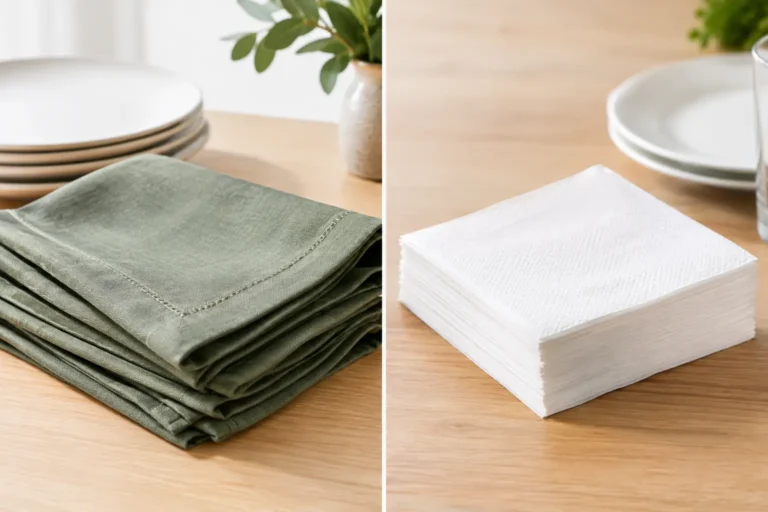
A thoughtfully set table is meant to be enjoyed, which means the occasional spill is part of the story. Keep a small stack of white cleaning cloths, clear dish soap, and an oxygen-based stain treatment within easy reach of your laundry area. For meals with red wine, washable napkins and a well-chosen tablecloth offer everyday polish with less worry.
If a faint mark remains after your first attempt, do not assume the piece is ruined. A second gentle treatment is often more effective than one harsh one. With quick blotting, material-specific care, and a little patience, you can clear the evidence of a lively toast and get back to cooking, creating, and celebrating.









Leave a comment