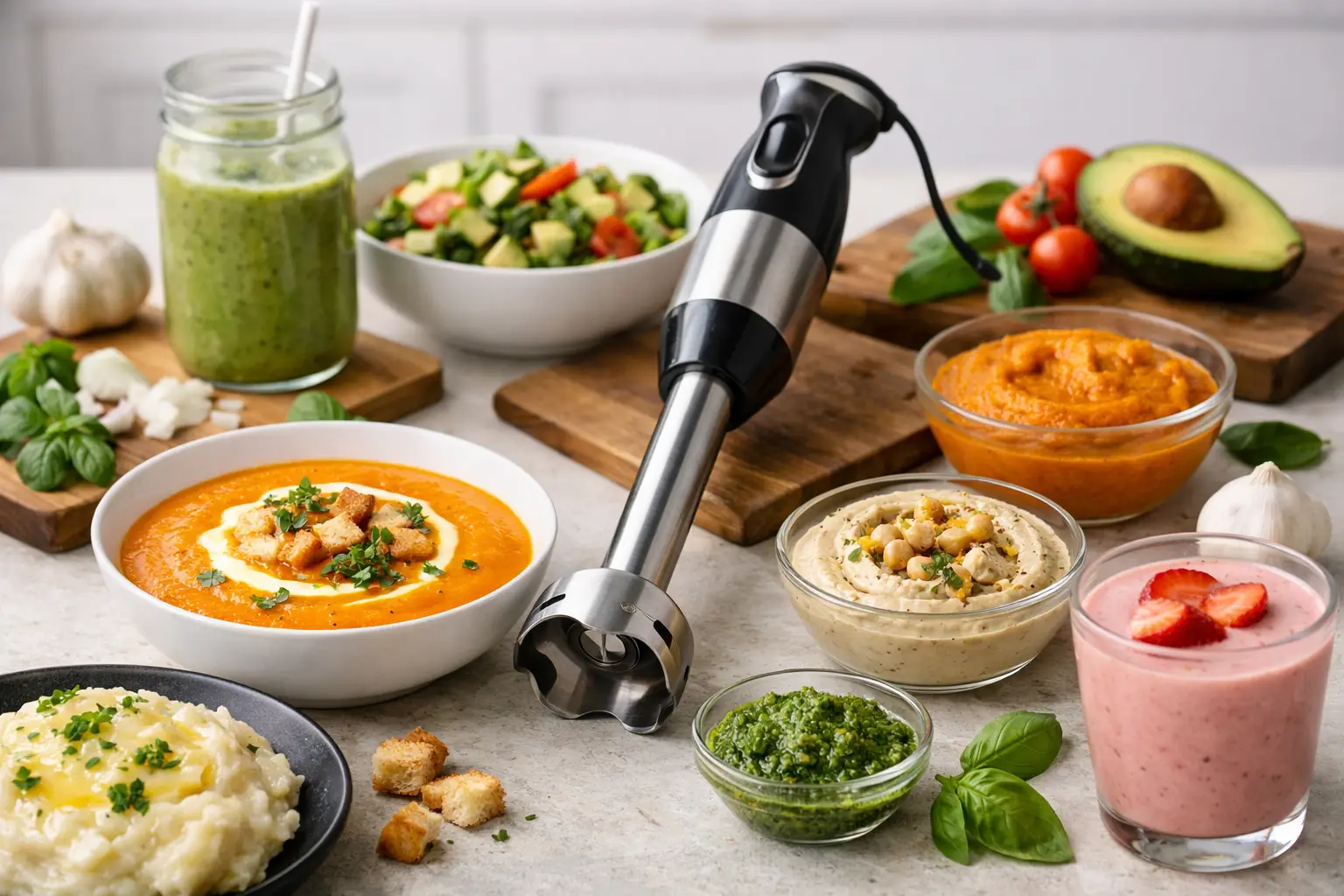
An immersion blender earns its keep on the kind of nights most home cooks actually have – a soup simmering on the stove, a smoothie idea that needs to happen fast, or a sauce that could use a smoother finish without dragging out a full-size blender. The best immersion blender recipes are the ones that make dinner easier, cleanup lighter, and everyday cooking feel a little more polished.
What makes this tool so appealing is not just speed. It lets you blend right in the pot, pitcher, or jar you are already using, which is a big win if you cook often but do not want a sink full of parts. It is also easier to control than a countertop blender when you want a bit of texture instead of a completely pureed result.
Immersion blenders shine in recipes with soft ingredients, enough liquid to move the blade, and a texture that benefits from blending in stages. That is why they are especially good for creamy soups, sauces, dressings, dips, whipped toppings, and single-serve drinks. They are less ideal for very thick nut butters or heavy doughs, where the motor can struggle and the results can turn uneven.
For everyday cooking, that trade-off is usually worth it. If your goal is quick, smooth, and low-mess, this is one of the most practical tools to keep within reach.
This is the classic immersion blender dinner for a reason. Simmer canned or fresh tomatoes with onion, garlic, broth, and a small splash of cream, then blend directly in the pot until smooth. Finish with basil and black pepper.
If you like a more rustic bowl, pulse instead of fully blending. That gives you body without turning it into tomato sauce.
Roasted butternut squash, sautéed shallot, broth, and a touch of maple syrup blend into a silky fall favorite with very little effort. An immersion blender handles this beautifully once the squash is fully tender.
The key is patience before blending. If the squash is undercooked, you will get tiny bits instead of that velvety texture everyone wants.
Potato leek soup is rich, cozy, and surprisingly weeknight-friendly. After simmering sliced leeks, potatoes, broth, and a little garlic, blend until smooth or mostly smooth depending on your preference.
This is one of those recipes where texture matters. Fully blended feels elegant. Partially blended feels heartier and more casual.
If your tomato sauce tastes good but looks a little chunky, an immersion blender fixes that fast. Simmer crushed tomatoes with olive oil, garlic, onion, oregano, and salt, then blend to the consistency you like.
It is especially useful if you are feeding kids, serving pasta for guests, or just want a cleaner, silkier sauce for lasagna or baked ziti.
A good immersion blender turns oil and vinegar into a creamy, restaurant-style dressing in seconds. Try olive oil, lemon juice, Dijon mustard, garlic, and honey for an easy house vinaigrette, or blend buttermilk, herbs, mayo, and sour cream for ranch.
This is one of the best uses for the blending cup that often comes with the tool. Small batches emulsify quickly, and cleanup is refreshingly simple.
Traditional hummus is often made in a food processor, but an immersion blender works well for smaller batches. Blend chickpeas, tahini, lemon juice, garlic, olive oil, cumin, and a bit of cold water until smooth.
It helps to blend longer than you think you need. Hummus can go from slightly grainy to noticeably creamy with an extra minute or two.
For anyone who does not want to haul out a full blender before work, this is where the immersion blender really proves its value. Combine banana, spinach, frozen mango, yogurt, and a splash of milk in a tall container, then blend until smooth.
The best container is narrow and deep enough to keep ingredients moving toward the blade. If you use a wide bowl or short glass, the mixture can splash and blend unevenly.
This is less about a recipe and more about convenience, which matters just as much in a real kitchen. Blend milk, protein powder, banana, peanut butter, and ice for a fast breakfast that does not create extra dishes.
If your blender model is on the lighter-duty side, crushier ice can be tough on it. Let frozen fruit soften for a minute or use fewer ice cubes for a smoother blend.
If you want something cozy but a little lighter than mashed potatoes, steamed cauliflower blended with butter, cream cheese, garlic, salt, and pepper makes a great side dish. The immersion blender gives it a whipped, fluffy feel without needing to transfer hot vegetables anywhere.
The one caution is moisture. Drain the cauliflower very well first, or the mash can turn watery.
Warm cooked pinto or black beans with broth, onion, cumin, and a little oil, then blend to your preferred consistency. This makes an easy taco-night staple and works well for burrito bowls, quesadillas, or party dips.
This recipe is forgiving, which is part of its appeal. Add more broth for a silky finish or keep it thicker for a scoopable side.
A full traditional pesto can be tricky with an immersion blender unless you make a modest batch, but a looser herb sauce is a great fit. Blend basil or parsley with olive oil, lemon, garlic, Parmesan, and nuts until mostly smooth.
Think of it as a flexible finishing sauce rather than a textbook pesto. Spoon it over grilled chicken, roasted vegetables, eggs, or pasta for an easy upgrade.
An immersion blender can whip small amounts of cream faster than many people expect. Blend cold heavy cream with a little powdered sugar and vanilla until soft peaks form.
This is a smart move for low-effort desserts. Top berries, pie, hot chocolate, or an iced coffee and it instantly feels a bit more special.
The biggest difference between a recipe that blends beautifully and one that fights back usually comes down to technique. Keep the blade fully submerged before turning it on, and use an up-and-down motion slowly instead of forcing it around the pot. That helps ingredients circulate without splashing hot liquid onto the stove or your hands.
It also helps to choose the right vessel. Deep pots, tall jars, and blending cups give better control than shallow pans. For soups, letting the mixture cool just slightly before blending can make the process safer and reduce steam bursts.
If a mixture is too thick, add liquid a little at a time. This matters with hummus, bean dips, and mashed vegetables in particular. An immersion blender needs some movement around the blade, and overly dense mixtures can strain the motor.
Not every recipe belongs on an immersion blender list, even if it technically can be made with one. Thick cookie dough, heavy bread batter, large quantities of frozen fruit, and very hard raw vegetables are better suited to other tools. You can sometimes make it work, but the extra effort usually cancels out the convenience.
That is really the beauty of the best immersion blender recipes – they play to the tool’s strengths. Think soft, simmered, pourable, creamy, and quick. When you stay in that lane, the results feel easy rather than improvised.
There are plenty of kitchen gadgets that sound useful and end up buried in a cabinet. An immersion blender is not usually one of them. It fits the way people actually cook now: faster meals, smaller kitchens, fewer dishes, and recipes that can shift from weekday practical to weekend hosting with very little fuss.
If you are building a kitchen that feels both functional and enjoyable, this is one of those tools that helps you cook with more confidence and less cleanup. Kitchen Bay is all about that kind of upgrade – the kind that makes everyday meals look better, feel easier, and leave you more ready to cook again tomorrow.







Leave a comment