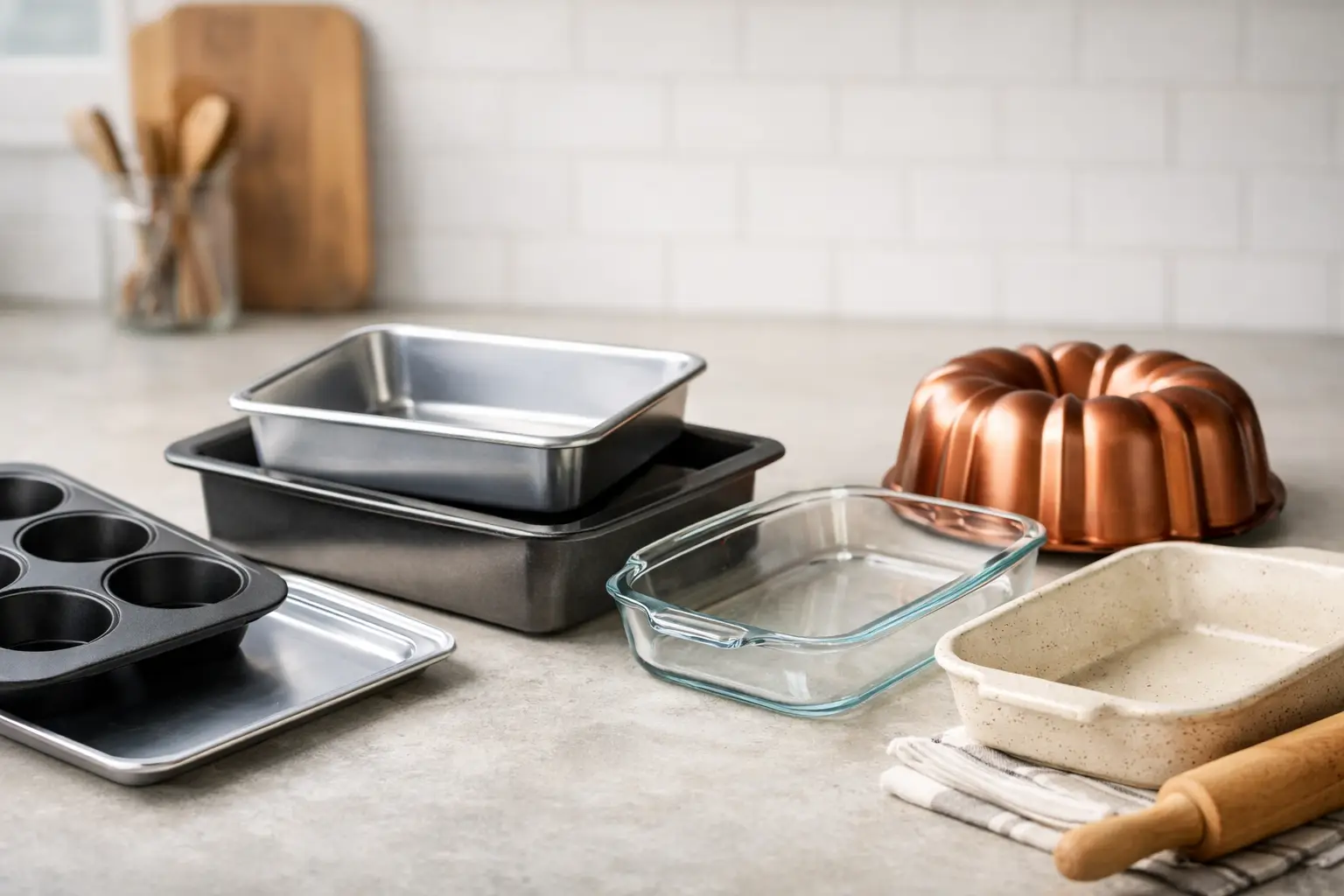
A golden cookie edge, a tender loaf that releases cleanly, a bubbling casserole carried straight to the table – these small wins often start with the pan, not the recipe. Knowing how to choose bakeware materials helps you buy fewer pieces that work harder, whether you are stocking a first apartment kitchen or refreshing the pans you reach for every week.
There is no single best material for every bake. The right choice depends on what you make most, how much cleanup you want, whether presentation matters, and how you like your food to brown. A beautiful ceramic dish may be perfect for Sunday baked pasta, while a light-colored aluminum sheet pan is the better partner for a batch of delicate sugar cookies.
Start with your real cooking habits rather than an imagined bakery-style kitchen. If cookies, roasted vegetables, and sheet-pan dinners appear often, prioritize dependable metal baking sheets. If you host potlucks or love make-ahead meals, a few oven-to-table casserole dishes may earn their cabinet space faster than another specialty cake pan.
Think about the finish you want, too. Fast, dark browning is helpful for some recipes but can be frustrating when a cake edge overbakes before the center is done. Easy release matters for muffins and quick breads. A dish that looks polished at the table can make a simple fruit crisp feel ready for company.
A thoughtfully chosen mix usually beats an all-one-material collection. For many home cooks, that means a reliable metal sheet pan, a versatile rectangular baking dish, and one or two nonstick pans for cakes, muffins, or brownies. Add specialty shapes only when they suit recipes you genuinely make.
Aluminum bakeware is popular for a simple reason: it heats quickly and evenly. That consistent heat makes it especially useful for cookies, cakes, biscuits, and roasted vegetables. Light-colored aluminum tends to encourage even baking without over-darkening the bottom, which gives it a welcome margin of error for everyday recipes.
Uncoated aluminum can stain or develop marks over time, but that does not necessarily affect performance. It can also react with highly acidic foods, such as tomato-heavy sauces or citrus desserts, so it is better suited to baking sheets and cake pans than long-baked acidic casseroles.
For a hardworking kitchen, look for heavier-gauge aluminum rather than very thin pans. A sturdier pan is less likely to warp in a hot oven, feels more stable when moving food around, and generally delivers more even results. Rolled edges also add useful strength to sheet pans.
Nonstick pans are a practical choice for sticky, delicate, or detailed bakes. Muffins, layer cakes, brownies, and quick breads are all easier to remove when the surface releases smoothly. They can also make cleanup feel much less like a chore after a busy weeknight.
The trade-off is longevity. Nonstick coatings need gentler care than bare metal. Avoid cutting directly in the pan, use silicone, wood, or nylon tools when possible, and skip harsh scouring pads. Even excellent nonstick bakeware will eventually show wear, particularly if it is used frequently at high temperatures.
Pay attention to the pan’s recommended oven temperature. Not every nonstick finish is designed for broiler-level heat or extra-hot pizza baking. If you want one pan for high-heat roasting as well as everyday baking, uncoated aluminum or stainless steel may be the more flexible choice.
Ceramic and stoneware bring warmth to the kitchen in more ways than one. They retain heat well, so baked ziti, cobblers, gratins, and cinnamon rolls stay inviting longer at the table. Their colors, glazes, and shapes can also turn a casual meal into an easy hosting moment without requiring a separate serving platter.
Because these materials heat more gradually than metal, recipes may need a little extra time. They also hold their heat after leaving the oven, so food can continue cooking slightly in the dish. This is often ideal for casseroles but worth considering for delicate baked goods that can dry out if left sitting too long.
Choose ceramic or stoneware with a durable, food-safe glaze and follow its care guidance closely. Sudden temperature changes can cause cracking, so avoid transferring a cold dish directly into a very hot oven or placing a hot dish on a cold, wet surface. It is a small habit that helps a favorite baking dish stay beautiful for years.
Glass baking dishes are especially helpful when you want to check browning along the sides and bottom. That visibility is useful for brownies, fruit crisps, baked pasta, and layered casseroles. Glass also does not react with acidic ingredients, making it a comfortable choice for tomato sauces, lemon bars, and berry desserts.
Like ceramic, glass retains heat. It is best to remove a dish when the recipe is just done rather than waiting for deep browning, since the residual heat can keep the edges cooking. Many recipes provide notes for baking in glass versus metal, and following them can make a noticeable difference.
Thermal shock is the main consideration. Let refrigerated glass come closer to room temperature before baking when the manufacturer’s instructions call for it, and do not place hot glass directly into cold water. With mindful use, glass dishes are versatile staples for both cooking and storing leftovers.
Stainless steel is durable, nonreactive, and easy to appreciate for roasting pans, baking racks, and specialty pieces. It is not usually the first choice for tender cakes because it can heat less evenly than aluminum, but it is a smart material when strength and a polished appearance matter. A stainless steel roasting pan can move confidently from a holiday turkey to a weeknight chicken dinner.
Carbon steel offers more direct heat response and can develop a naturally seasoned surface over time. It is often loved for pizza, cornbread, and high-heat baking, but it requires a little more care to prevent rust and maintain seasoning. For cooks who enjoy building a well-used kitchen collection, that extra attention can be part of the appeal.
Material is only part of the story. Color and finish affect how bakeware performs. Dark metal absorbs more heat, which can create crispier edges and deeper browning. That can be wonderful for roasted vegetables, but it may make pale cookies or tender cakes brown too quickly on the bottom.
Light-colored metal is often the safer all-purpose choice for baking. It reflects more heat and is more forgiving with recipes developed for standard aluminum pans. If you use a dark pan, consider checking food a few minutes early or reducing the oven temperature slightly when a recipe suggests it.
Insulated cookie sheets can slow bottom browning, but they are not always necessary and may change the texture of cookies. For most kitchens, a sturdy, light-colored aluminum sheet pan offers more versatility across cookies, biscuits, vegetables, and simple sheet-pan meals.
Before adding bakeware to your cart, check the recipes you make on repeat. A 9-by-13-inch baking dish is one of the most useful sizes for casseroles, brownies, and crowd-friendly desserts. A half-sheet pan gives you room for cookies and roasted vegetables. Standard muffin pans and round or square cake pans cover many everyday baking projects.
Storage matters, especially in compact kitchens. Nesting pieces, stackable pans, and dishes that can go from oven to table help keep cabinets organized. If you entertain, consider whether the exterior is something you would be happy to place on a table with a simple trivet and serving spoon.
At Kitchen Bay, the best bakeware is the kind that supports the way you cook now while giving you a little more confidence to try something new. Choose pieces that feel useful, easy to care for, and pleasing to bring out when friends or family gather.
Your bakeware does not need to match perfectly or fill every shelf. Begin with the materials that suit your favorite meals, learn how they behave in your oven, and let each well-used pan become part of the rituals that make home cooking feel special.







Leave a comment