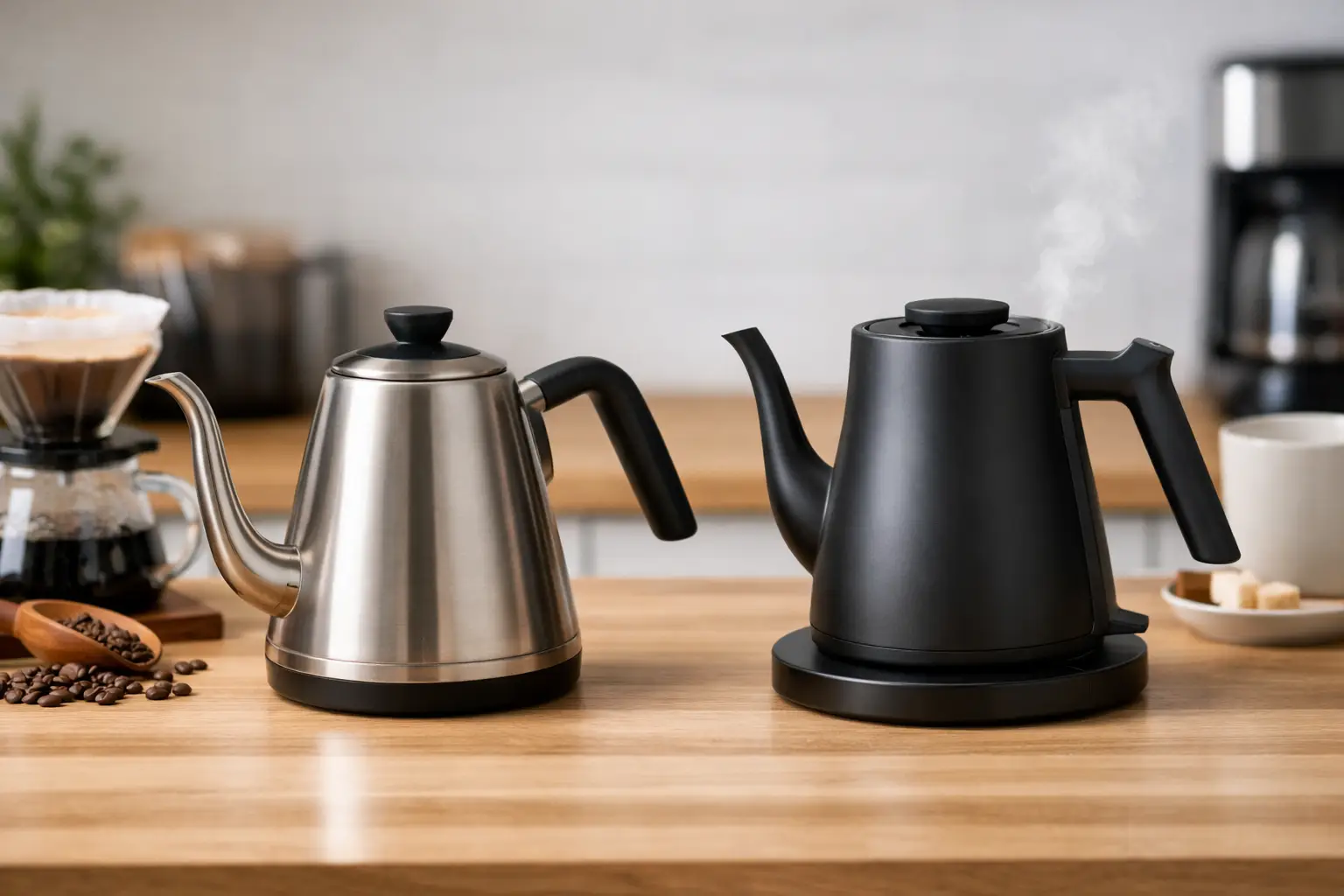
That first cup of coffee can set the tone for the whole morning, and if you make pour-over at home, the kettle you choose matters more than most people expect. In the pour over kettle vs electric debate, the real question is not which one is better in every kitchen – it is which one makes your routine easier, more enjoyable, and more consistent.
For some people, a classic stovetop gooseneck feels simple and satisfying. For others, an electric kettle with temperature control turns coffee into a smoother, less fussy ritual. Both can make excellent pour-over coffee. The difference comes down to speed, control, counter space, budget, and the kind of experience you want every day.
At a glance, both options do the same basic job. They heat water and pour it with the steady, narrow stream that pour-over brewing needs. That long, curved gooseneck spout is what helps you control flow rate and pour with precision instead of flooding the coffee bed.
The biggest difference is how the water gets heated and how much control you have over the process. A traditional pour-over kettle usually goes on the stove. It tends to be more straightforward, often more affordable, and visually timeless. An electric pour-over kettle plugs into a base and usually adds modern features like faster heating, preset temperatures, keep-warm settings, and auto shutoff.
So this is not really a battle between old and new. It is more like choosing between a simpler tool and a more convenient one.
Pour-over coffee rewards small details. Water temperature affects extraction. Pour speed affects saturation. Even how comfortably the handle fits in your hand can change how controlled your brew feels.
If you use a basic tea kettle or a saucepan, you can still make coffee, but it is harder to pour evenly and hit the right brewing rhythm. A proper gooseneck kettle gives you more confidence from the start. That matters whether you are making one mug before work or setting up a slower weekend breakfast.
For many home cooks and coffee drinkers, the best kitchen tools are the ones that feel useful and look good enough to leave out. That is part of this choice, too. A kettle often stays on the stovetop or countertop, so function and style tend to go hand in hand.
A stovetop pour-over kettle is often the better pick for shoppers who want simplicity without extra features. If your kitchen already runs on straightforward tools and you do not mind heating water on the stove, this option can feel refreshingly low-maintenance.
It also makes sense for smaller budgets. In many cases, a stovetop model gives you the gooseneck control you need at a lower price than an electric version. That can be appealing if you are just getting into pour-over coffee and want to improve your setup without turning it into a major investment.
There is also a style factor. Many stovetop kettles have a classic, polished look that blends beautifully with both modern and cozy kitchens. If you care about creating a kitchen that feels collected and inviting, a well-designed stovetop kettle can pull double duty as a hardworking tool and a visual accent.
The trade-off is convenience. You will need to watch the heating process more closely, and unless you are using a thermometer or have a very good feel for timing, dialing in exact water temperature can take more effort.
A stovetop pour-over kettle tends to suit people who enjoy a hands-on morning ritual, have a tighter budget, or prefer fewer electronic appliances on the counter. It can also be a smart choice for households that want versatility, especially if the kettle may be used for more than coffee.
An electric pour-over kettle is usually the stronger option for convenience. If your mornings are busy, the speed alone can feel worth it. Many electric models heat quickly and shut off automatically, which adds peace of mind along with ease.
Temperature control is the feature that often tips the scale. Different coffees and roast levels can benefit from slightly different water temperatures, and while you do not need barista-level precision to make a good cup, being able to select a temperature removes guesswork. It is especially helpful if you also drink tea, where exact heat levels can matter even more.
Many electric kettles also include a keep-warm function. That sounds like a small detail until you are making a second cup, brewing for two people, or moving around the kitchen doing three things at once. Instead of reheating water or rushing your brew, you can work at a more comfortable pace.
The main trade-offs are cost and space. Electric kettles are usually more expensive, and they require a dedicated base and outlet. If your counters are limited or you prefer a less plugged-in look, that can be a downside.
An electric kettle is ideal for shoppers who value convenience, want more consistent results, or like appliances that make everyday routines feel easier. It is especially appealing for frequent coffee drinkers, multi-tasking households, and gift buyers looking for something practical with a polished feel.
If you are brand new to pour-over, either option can work well, but your personality matters here. Some beginners do better with the simplicity of a stovetop model because it keeps the process approachable and affordable. Others feel more successful with electric because the extra features reduce mistakes and help them build confidence faster.
If you know you love coffee rituals and do not mind a little learning curve, a stovetop kettle may feel satisfying from day one. If you want coffee that is easy to repeat without much trial and error, electric often feels friendlier.
This is one of those kitchen decisions where the best beginner choice is the one you will actually enjoy using on a regular basis.
Whether you choose stovetop or electric, a few features matter more than the rest. A comfortable handle is important because pour-over requires control, not just hot water. A well-shaped gooseneck spout should give you a steady, gentle stream. Capacity matters too. If you usually brew a single mug, you may not need a large kettle. If you host brunch or make coffee for two or three people, extra volume is more useful.
Material and finish are worth considering as well. Stainless steel is popular for durability and a clean look. Matte finishes, polished metals, and minimalist silhouettes can all help a kettle feel at home in your kitchen instead of like an afterthought.
If you are shopping electric, check whether the temperature settings are adjustable, whether it has a keep-warm mode, and how intuitive the controls are. The best appliance is not the one with the most features. It is the one that makes your routine smoother.
Price matters, but value matters more. A lower-cost stovetop kettle can be a great buy if it fits your brewing style and lasts well. A pricier electric kettle can also be worth it if it saves time every day and makes your coffee more consistent.
Think about frequency. If you make pour-over a few times a month, you may not need the upgrades. If you brew daily, convenience adds up quickly. The same goes for shared kitchens. In a household where multiple people use hot water throughout the day, an electric kettle often feels more efficient.
There is also the experience factor. The right kettle can make an everyday habit feel more polished. That is not just about coffee quality. It is about making your kitchen work better for real life.
If you want affordable, attractive, and simple, choose a stovetop pour-over kettle. It gives you control where it counts and keeps the process beautifully straightforward.
If you want speed, precision, and a little extra help on busy mornings, choose an electric pour-over kettle. It adds convenience without taking away the pleasure of the ritual.
For many shoppers, this choice comes down to whether coffee is mainly a quiet moment or a practical necessity. If it is both, you may lean electric. If you love a slower, more tactile routine, stovetop can be exactly right.
A well-chosen kettle does more than heat water. It supports the kind of mornings you want to have, and that is always a smart place to start.









Leave a comment