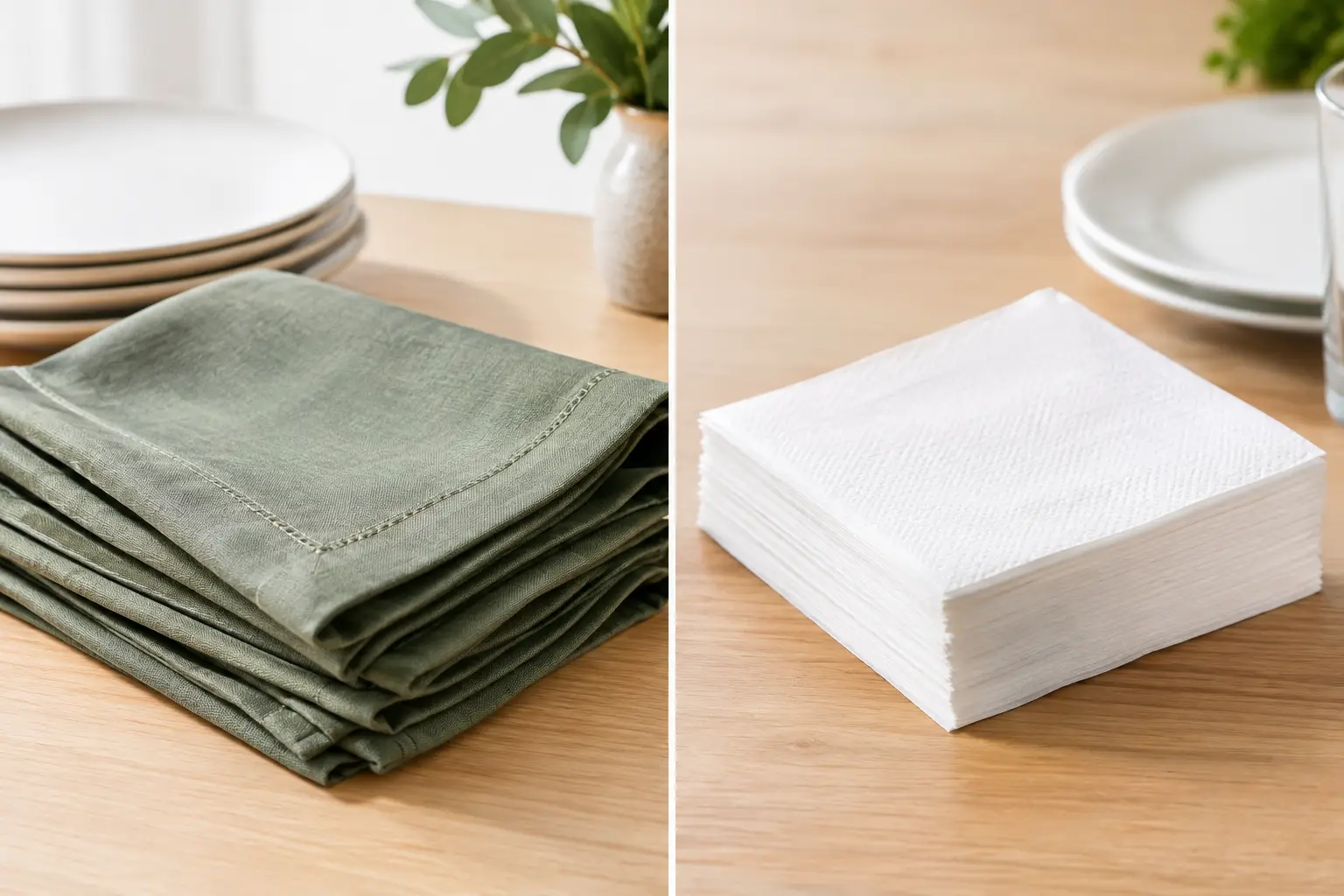
A weeknight pasta dinner, a child’s birthday party, a holiday table set for twelve – each calls for a slightly different kind of cleanup. That is why the cloth napkins vs paper napkins question is less about finding one perfect answer and more about choosing what works for the meal, the moment, and your household.
Paper napkins offer instant convenience. Cloth napkins bring texture, color, and a sense that even Tuesday’s dinner deserves a proper place at the table. Both belong in a well-prepared home, especially if you enjoy cooking, gathering, and making everyday routines feel a little more considered.
The simplest distinction is this: paper napkins are made for quick use and easy disposal, while cloth napkins are designed to be washed and enjoyed again. That difference affects everything from cost and storage to table style and post-dinner cleanup.
Choose paper when speed, mess level, or guest count is the priority. Choose cloth when you want a more polished table and do not mind adding a small load of laundry to the routine. Many homes do best with both: a stack of cloth napkins for regular meals and entertaining, plus paper napkins ready for takeout nights, kids’ crafts, backyard barbecues, and extra-messy foods.
Cloth napkins change the look of a table with very little effort. A folded cotton or linen-blend napkin beside a favorite glass and placemat creates an inviting place setting, whether you are serving roast chicken to friends or reheating leftovers after work. They offer a softness and visual warmth that paper cannot quite replicate.
They are also more versatile than they first appear. Neutral cloth napkins can work year-round, then take on a different personality with seasonal tablecloths, colorful drinkware, or a simple napkin fold. For hosts who prefer to buy fewer pieces with more uses, that flexibility is a real advantage.
Cloth napkins are generally more absorbent than standard paper napkins, which matters with saucy meals, spilled drinks, and enthusiastic young eaters. One good-quality cloth napkin can often handle what would take several paper napkins. They also feel more comfortable during a long meal, when guests may reach for their napkin several times.
There is a practical rhythm to using them, too. Keep a small basket or drawer near the dining area, then toss used napkins into a designated hamper after meals. If your household already does regular laundry, adding a few napkins may feel easy rather than burdensome.
Cloth napkins do require care. Tomato sauce, red wine, grease, and berries can leave stains if they sit too long, so it helps to rinse or treat noticeable spots promptly. White napkins look crisp but may need more attention; darker colors, patterns, and textured fabrics are more forgiving for family meals.
Upfront cost is another consideration. A set of cloth napkins costs more than one pack of paper, although repeated use can make them a smart long-term buy. The best value comes from choosing washable napkins you genuinely like enough to use often, not ones you save indefinitely for a “special” occasion.
Paper napkins earn their place in a busy home. They make cleanup fast, reduce laundry, and let you relax when the menu is particularly sticky, greasy, or spill-prone. Think ribs on the patio, tacos with a crowd, birthday cake for a room full of kids, or a casual movie night with pizza.
For large gatherings, paper can also simplify hosting. Instead of worrying whether you have enough matching cloth napkins, whether guests will accidentally take one home, or how much laundry awaits afterward, you can set out a generous stack and focus on enjoying the occasion.
Paper is especially useful when you need different sizes. A cocktail napkin suits drinks and appetizers, while a larger dinner napkin is better for a buffet or full meal. Decorative paper options can bring a playful seasonal touch without requiring storage for another set of linens.
Still, quality matters. Thin paper napkins may tear quickly or require guests to grab two or three at a time, which can feel less convenient than expected. For parties and meals with sauces, a thicker, more absorbent paper napkin is worth considering.
Paper napkins look inexpensive because each purchase is small. But frequent repurchasing adds up, particularly for larger households or people who entertain often. Cloth napkins cost more at the start, then spread that cost over many meals. If you use them regularly and care for them well, the per-use cost can become quite low.
Laundry changes the calculation. Washing cloth napkins uses water, energy, and detergent, and washing a tiny load just for napkins is not especially efficient. The practical approach is to wash them with other washable kitchen linens or similar colors. That keeps the extra effort modest and makes cloth a more sensible everyday option.
On the waste side, paper napkins are single-use and can quickly fill a trash can after a meal or party. Used napkins are often not recyclable because of food residue. Cloth avoids that recurring disposable waste, but it is not automatically the right environmental choice in every situation. If cloth napkins sit unused in a drawer or are washed separately after every meal, their benefits shrink.
The most sustainable habit is usually the one you can maintain. Use cloth repeatedly for low- and medium-mess meals. Reach for paper when it prevents a bigger cleanup headache or makes hosting manageable. Practical choices are more likely to last than all-or-nothing rules.
Start with enough cloth napkins to get through several days without creating laundry pressure. For a household of two to four, eight to twelve is a comfortable starting point. Choose colors that coordinate with your plates, placemats, and tablecloths, but do not feel limited to matching every piece exactly. A warm neutral, soft stripe, or subtle pattern can make mixing and matching look intentional.
For day-to-day meals, place cloth napkins at each setting and keep paper towels or paper napkins nearby for kitchen prep and major spills. This helps cloth napkins stay useful rather than becoming the catchall for every kitchen mess.
For parties, consider the menu before setting the table. A seated dinner, brunch, or holiday meal often feels more welcoming with cloth. A casual open-house gathering with finger foods may call for paper cocktail napkins, with a few cloth napkins reserved for the dining table. For outdoor entertaining, a blend can be ideal: cloth for place settings, paper near drinks and serving stations.
Cloth napkins are not fussy, and paper napkins are not a failure of style. The right option is the one that lets you serve the meal comfortably and enjoy the people around your table. A beautiful home is built through useful choices, not extra rules.
Keep both on hand, then let the menu guide you. With a few versatile cloth napkins for everyday dining and dependable paper options for quick cleanup, your table is ready for quiet breakfasts, spontaneous guests, and every celebration in between. Kitchen Bay believes those small, practical details are often what make home feel most welcoming.









Leave a comment