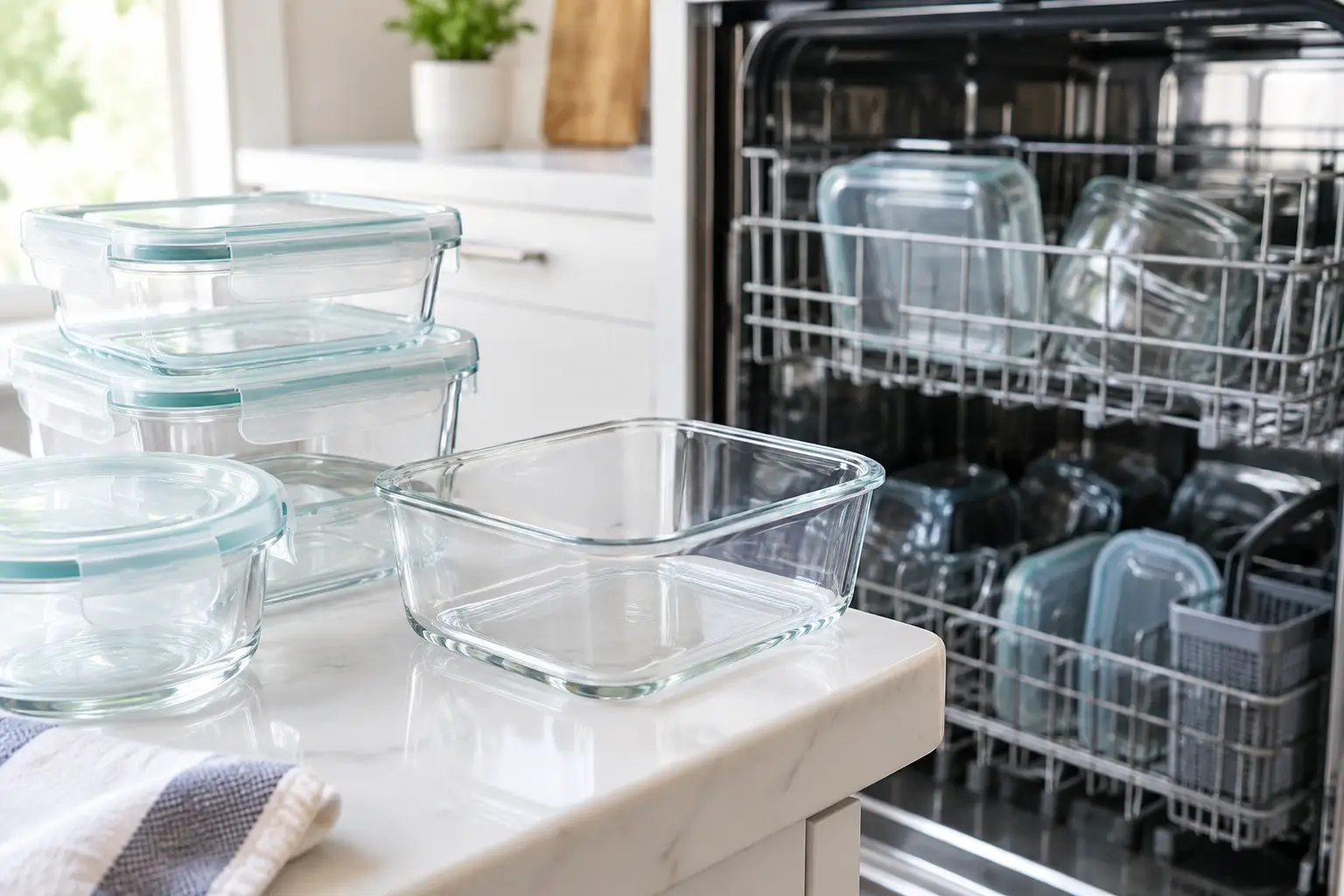
A week of meal prep can look beautifully organized in clear glass containers – right up until a lid warps, a label peels, or a favorite dish comes out cloudy. So, are glass containers dishwasher safe? Many are, but the answer depends on the type of glass, the lid and seal, and the care directions from the maker.
For busy kitchens, dishwasher-safe glass can be a genuine everyday luxury. You can pack leftovers, reheat lunch, serve a baked side dish, and send everything through the dishwasher afterward. The key is choosing pieces designed for that routine and treating them with a little more care than a stack of everyday plates.
No. Glass itself is often dishwasher friendly, particularly tempered glass and many heat-resistant glass food-storage pieces. But not every container is made the same, and the accessories attached to it can change the answer.
A plain, sturdy glass dish marked “dishwasher safe” is usually fine for regular washing. The manufacturer has indicated that its glass can handle the dishwasher’s water pressure, detergent, and heat cycle under normal use. That mark is your best guide, especially for bakeware, storage containers, drinkware, and serving pieces.
When there is no care label, take a more cautious approach. Vintage glass, hand-blown pieces, glass with painted details, metallic trim, decals, or a delicate finish may not tolerate repeated dishwasher cycles. The dishwasher can gradually dull decorative surfaces even when the glass does not crack.
Just as importantly, dishwasher-safe does not automatically mean microwave-safe, freezer-safe, or oven-safe. A container may be built to handle a wash cycle but not the intense, direct heat of an oven or a sudden temperature change. Read each use instruction separately before moving food from freezer to oven or from microwave to cold water.
Most food-storage glass falls into a few broad categories. You do not need a materials-science lesson to care for it well, but knowing the basics helps you shop and use containers with more confidence.
Tempered glass is strengthened to better withstand everyday knocks and temperature shifts. It is common in food-storage dishes and bakeware, and it is a practical choice for households that use the same container for leftovers, lunches, and serving. If a tempered-glass piece is labeled dishwasher safe, placing it on the top or bottom rack according to its size is generally appropriate.
It is still glass, though. A hard impact against another dish, a chip along the rim, or a dramatic change from very cold to very hot can cause breakage. Strengthened does not mean indestructible.
Borosilicate glass is known for handling thermal changes better than standard glass. It is frequently used in oven-ready storage dishes, measuring cups, and specialty kitchenware. Many borosilicate containers are dishwasher safe, but the product label remains the deciding factor. A silicone sleeve, printed measurement marks, or a fitted lid may need different treatment than the glass base.
This is the common glass used in much everyday drinkware, jars, and serving items. Plenty of it can go into the dishwasher, especially modern machine-made pieces. However, thinner glass and inexpensive decorative pieces can be more vulnerable to chipping, cloudiness, and breakage over time.
If a container feels especially thin, has an irregular handmade shape, or carries a painted design, hand washing is often the safer choice.
The dishwasher is not automatically harsh, but it creates a combination of heat, water force, detergent, and contact with other items. The biggest concern is thermal shock – when glass experiences a rapid temperature change that creates uneven stress.
For example, placing a refrigerator-cold glass container into a very hot dishwasher immediately after a heated dry cycle can be tougher on it than a normal wash. The same is true if a hot dish is rinsed under cold water. Letting glass come closer to room temperature before washing or cooling makes everyday care much easier.
Crowding can also cause trouble. When glass containers knock against ceramic plates, metal cookware, or each other during the cycle, they can chip at the rim or develop tiny damage that later becomes a crack. Give larger dishes a little breathing room, and avoid balancing small glass pieces where the spray arm or another item can move them around.
A few simple habits protect both your containers and the rest of your dishwasher load. Start by separating the glass base from its lid whenever possible. This allows water to circulate, helps pieces dry more thoroughly, and keeps flexible lids from holding moisture in a sealed pocket.
Place containers securely rather than stacking them tightly together. Smaller pieces often do well on the top rack, where they are farther from the heating element. Larger, sturdy glass storage dishes may fit on the lower rack if they are stable and not touching heavier cookware. Always follow the maker’s rack recommendation if one is provided.
Turn bowls and containers at an angle or upside down so water can drain. A glass dish that fills with dirty water during the cycle may come out with residue, even when the dishwasher is working properly. For square containers, make sure corners do not block the spray arms.
Choose a normal or gentle cycle for everyday washing. Extra-hot sanitizing and heavy-duty settings can be useful when needed, but they are not necessary for every load of glassware. If your dishwasher has a heated-dry option that runs especially hot, air drying can be a gentler alternative for delicate pieces.
The glass base may be dishwasher safe while the lid is not. Plastic lids can warp with high heat, particularly on the bottom rack. Silicone seals may collect food residue in their grooves if they are not removed and cleaned well. Bamboo, wood, cork, and other natural-material lids should usually stay out of the dishwasher altogether, since soaking and heat can cause splitting, swelling, or loss of shape.
For storage containers with snap-lock lids, check the hinges and tabs after washing. They should still close firmly but without strain. A lid that no longer seals well can turn a convenient leftover container into a leaky lunch bag surprise.
When in doubt, wash lids on the top rack or by hand. That small extra step can extend the useful life of a full storage set.
Cloudiness is one of the most frustrating things about dishwasher-washed glass. Sometimes it is a removable film caused by hard-water minerals or detergent buildup. Other times, it is permanent etching – tiny surface damage created by a combination of overly aggressive detergent, very soft water, high heat, and repeated cycles.
If the haze wipes away with a gentle vinegar-and-water rinse, it is likely mineral buildup. Adjusting the dishwasher’s rinse-aid setting, using the recommended amount of detergent, and avoiding an overfilled detergent dispenser can help. A dishwasher cleaner may also improve results if residue is affecting the whole load.
If the cloudiness remains no matter what you do, the glass may be etched. That cannot be polished away at home. To lower the risk with future pieces, use a moderate cycle, avoid excessive detergent, and reserve especially delicate drinkware or serving bowls for hand washing.
Dishwasher-safe glass is meant to make life easier, not create rules you have to stress over. Still, hand washing is the smart choice for sentimental pieces, vintage dishes, thin stemware, containers with hand-painted details, and anything with a crack, chip, or loose trim.
It is also helpful after cooking with sticky or baked-on foods. A brief soak and a soft sponge can remove residue without forcing you to run an intense dishwasher cycle. Avoid abrasive scrubbers, which can leave fine scratches that make glass look dull over time.
For a kitchen that works hard and looks polished, build your everyday collection around clearly labeled dishwasher-safe glass storage and bakeware. Then keep a smaller group of special serving pieces for hand washing. It is an easy balance between convenience and care – leaving more time for warm leftovers, well-packed lunches, and a table that is ready whenever friends decide to stay for dinner.









Leave a comment