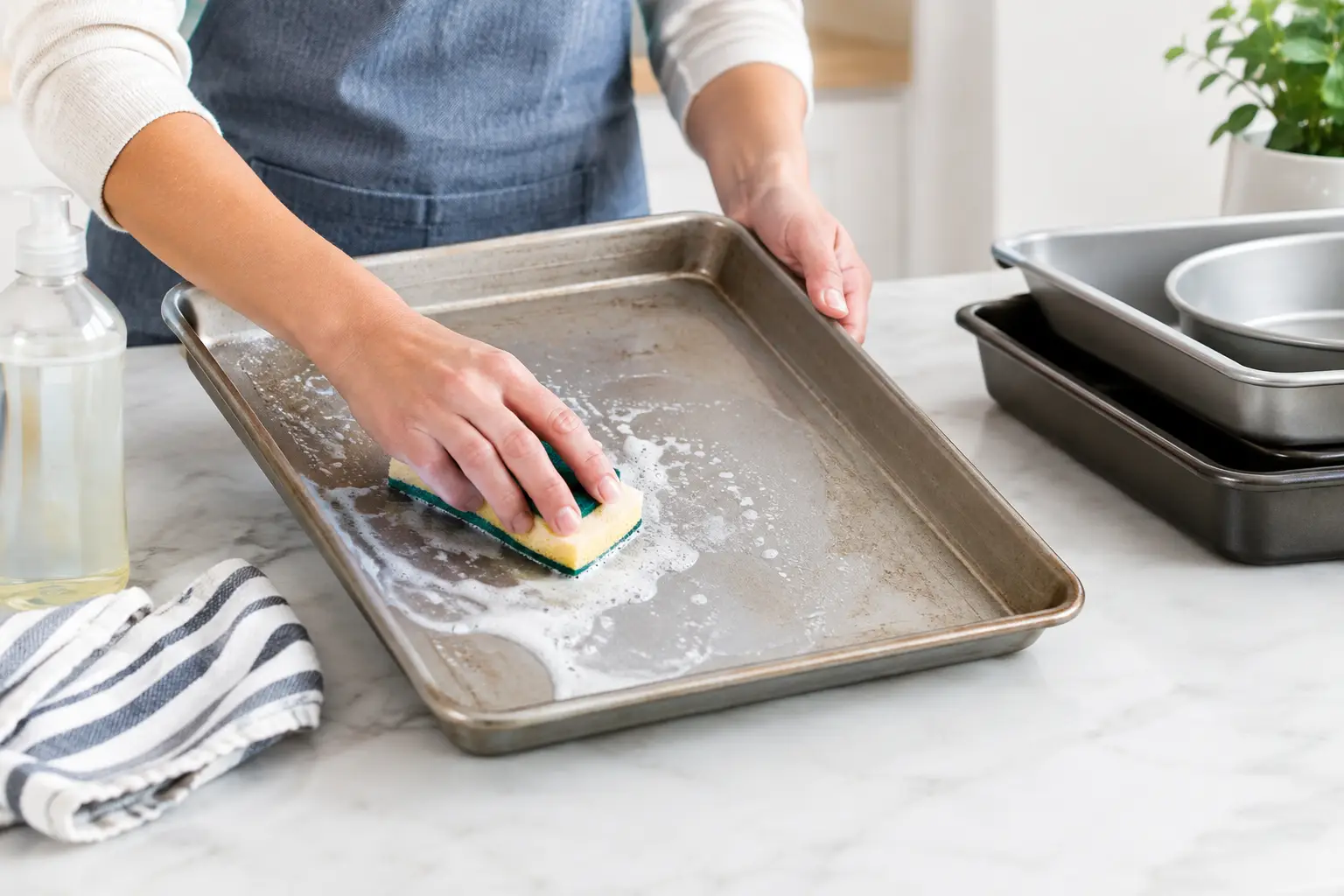
A golden tray of roasted vegetables or a bubbling pan of brownies should be the satisfying part of cooking, not the start of a scrubbing marathon. Knowing how to clean bakeware pans properly helps preserve the finish, prevent stubborn buildup, and keep your favorite pieces looking ready for the next dinner, batch of cookies, or weekend brunch.
The best method depends on what your pan is made from and what is stuck to it. A little warm water and dish soap may be all a glass casserole dish needs, while a darkened aluminum sheet pan benefits from a gentler paste and some patience. The goal is not to make every well-loved pan look brand new. It is to clean it thoroughly without scratching, warping, or stripping the surface that helps it perform.
Let bakeware cool before washing it. Moving a hot glass dish into cool water can cause thermal shock, and sudden temperature changes are not kind to metal pans either. Once the pan is warm or room temperature, wipe away loose crumbs, grease, and food bits with a paper towel or soft cloth.
Fill the pan with warm water and a few drops of dish soap, then let it sit for 15 to 30 minutes. This simple pause does much of the work for you, especially after casseroles, baked pasta, fruit crisps, and sticky marinades. Use a nonabrasive sponge, soft dish brush, or silicone scraper to lift softened residue.
For fresh messes, avoid reaching immediately for a metal scraper or harsh scouring pad. Those tools can leave permanent marks on nonstick coatings, glazed ceramic, and even polished stainless steel. A little soaking is usually easier on both your hands and your bakeware.
Nonstick pans need the gentlest treatment. Wash them by hand with warm, soapy water and a soft sponge. If food is baked on, make a loose paste of baking soda and water, spread it over the affected area, and let it rest for 10 to 15 minutes before wiping clean.
Skip steel wool, abrasive powder cleaners, and aggressive scrubbers. They can damage the coating, which makes food more likely to stick later. Also avoid cooking sprays if your pan manufacturer advises against them. Over time, sprays can leave behind a tacky film that soap alone struggles to remove.
Aluminum sheet pans earn their marks. Browned edges, baked-on oil, and a darker surface often come with regular use, especially if you roast at high heat. That patina is not always a sign that the pan is dirty.
For greasy buildup, sprinkle baking soda over the pan and add just enough water to form a paste. Let it sit for 20 minutes, then scrub lightly with a non-scratch sponge. Rinse and dry right away. Aluminum can discolor if it sits wet, and strong alkaline cleaners can dull the surface.
A sheet pan with deep scratches, peeling coating, or warped corners may be due for replacement. A naturally darkened but smooth, sturdy pan can still have plenty of good baking days ahead.
Stainless steel is durable, but heat marks and brown residue can make it look tired. Soak the pan first, then use baking soda paste for stuck-on food. For rainbow-like heat discoloration, a small amount of white vinegar on a soft cloth can help brighten the finish. Rinse well afterward and dry with a towel to reduce water spots.
Stainless steel tolerates more scrubbing than nonstick pans, but it still responds best to steady pressure rather than brute force. Work with the grain of the metal when visible to keep the finish looking smoother.
Glass and ceramic bakeware are popular for serving straight from oven to table, so appearance matters as much as cleanup. Soak these dishes in warm, soapy water, then use a nylon scrubber or baking soda paste on baked-on corners. Avoid sudden temperature changes and do not use chipped or cracked pieces for high-heat baking.
If a ceramic dish has a glazed finish, treat it gently. Harsh abrasives can make the glaze look cloudy over time. For a pan that has absorbed grease around the rim, repeat a mild baking soda treatment rather than scrubbing harder.
These pans follow different rules. Do not soak them for long or leave them wet, since rust can form. Instead, wipe out excess food while the pan is still warm enough to handle, add a little hot water, and use a brush or pan scraper to remove residue. Dry it completely over low heat, then rub in a very thin layer of cooking oil.
A little seasoning and character are part of the appeal. Trying to strip a seasoned cast iron pan until it looks bare can create more work than necessary.
When soaking is not enough, use heat to loosen the mess. Add warm water and a drop of dish soap to the pan, then gently warm it on the stovetop only if the bakeware is stovetop-safe. For oven-only pans, use hot tap water instead. Let the warmth soften the residue, then loosen it with a silicone spatula or wooden spoon.
For especially stubborn spots, baking soda is the kitchen standby. Its mild grit helps lift residue without the intensity of many abrasive cleaners. Make a paste with water, apply it to the stain, and give it time to work. Rushing the process often leads to harder scrubbing and unnecessary scratches.
Vinegar can help with mineral spots and some discoloration on stainless steel or glass, but it is not the right answer for every pan. Avoid using acidic cleaners on bare aluminum or carbon steel, where they may affect the surface. Never mix vinegar with bleach or other cleaning products.
The easiest cleanup begins before food goes into the oven. Line sheet pans with parchment paper for cookies, roasted vegetables, and sticky glazes when the recipe allows. Use a silicone baking mat for many baked goods, but avoid placing it under foods that need direct contact with the pan for crisping.
Grease pans according to the recipe, using butter, oil, or shortening as directed. Too much oil can polymerize under high heat and create the brown, tacky film that seems impossible to scrub away. A light, even coating is usually enough.
After baking, transfer food out of the pan when practical. Letting sugary sauces, cheese, or acidic foods sit for hours gives them more time to cling to the surface. Once the pan has cooled, rinse it or start the soak rather than leaving the cleanup for tomorrow.
It also helps to keep the right tools within reach: soft sponges, silicone scrapers, a nylon brush, baking soda, dish soap, and clean kitchen towels. Kitchen Bay believes everyday tools should make cooking feel more inviting, and a small, dependable cleanup kit does exactly that.
Not every mark needs to disappear. A seasoned sheet pan may have darker areas but still be clean, safe, and excellent at roasting. The signs that matter are leftover food, greasy residue, lingering odors, flaking coatings, rust, or damage that affects how the pan heats and releases food.
If a nonstick surface is deeply scratched or peeling, replacement is usually the safer choice. If glass is cracked, chipped around the rim, or damaged after a temperature shock, retire it from baking. For everything else, choose the mildest cleaner that works and give it a little time.
A well-cared-for pan makes weeknight baking, holiday hosting, and casual family meals feel less fussy. Clean it with patience, dry it thoroughly, and let the honest signs of good cooking be part of its story.









Leave a comment