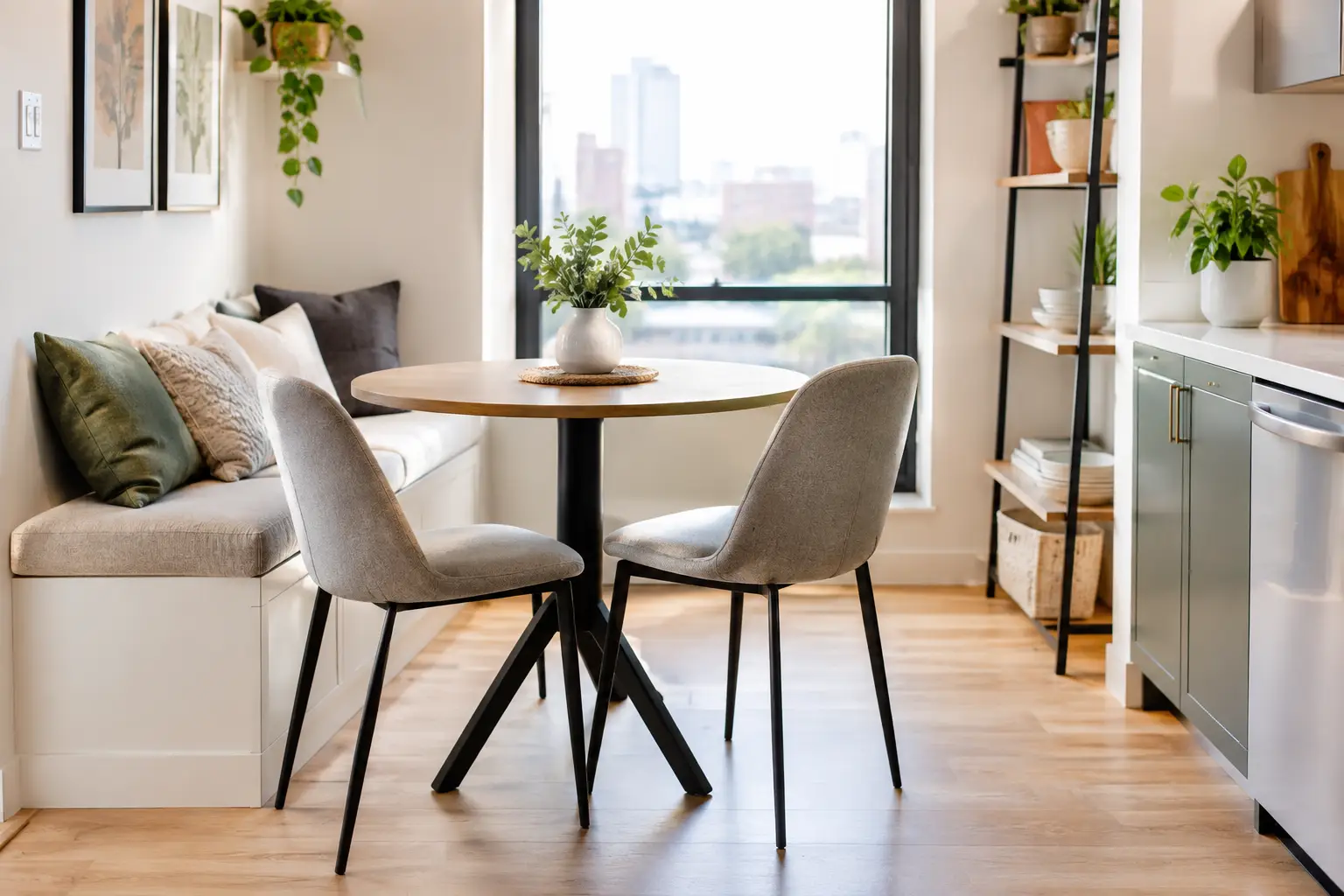
A dining area does not need a separate room to feel special. A compact table beside the kitchen, a sunny corner near a window, or one end of a living room can become a place for slow breakfasts, weeknight dinners, and last-minute guests. The most useful small space dining trends are less about squeezing in more furniture and more about choosing pieces that earn their place every day.
For apartment dwellers, first-time homeowners, and anyone making the most of an open floor plan, the goal is simple: create a dining setup that looks considered, stays easy to live with, and can shift when the occasion calls for it. Here is what is shaping small-space dining right now.
The most successful compact dining rooms are designed to change shape. A small round table can soften a tight corner and make it easier to move around, while a drop-leaf or extendable table gives you a little more room when friends come over. The best choice depends on how you actually eat at home. If two people dine there nightly, a fixed table with a comfortable footprint may be all you need. If you love hosting, an expandable option is worth prioritizing.
Furniture that works double duty is also having a moment for good reason. A slim console can serve as a buffet during dinner and a landing spot for keys during the week. A storage bench can tuck under a table, offer extra seating, and keep linens or seasonal table settings out of sight. Even a sturdy kitchen cart can become a movable drink station or dessert bar when company arrives.
The trade-off is that flexible pieces should still feel good in their everyday position. Avoid buying a table that only works when fully extended if that leaves your room cramped the rest of the time. Measure the open floor around it, not just the tabletop.
A dining nook is no longer a fallback for a space without a formal dining room. It is a design feature. Built-in banquettes, corner benches, and upholstered seating make a small footprint feel purposeful while creating a cozy place to linger over coffee or homework.
You do not need a custom installation to get the look. A bench along one wall paired with lightweight chairs on the other side can mimic the feel of a tailored nook. Add a seat cushion in a washable fabric, a few pillows, and a small pendant or plug-in wall light overhead. Suddenly, the corner has its own identity.
Round tables pair especially well with nook seating because their curved edges improve traffic flow. In a narrow room, however, a slim rectangular table may use the available wall space more efficiently. There is no universal winner – the shape should follow the room, not a trend photo.
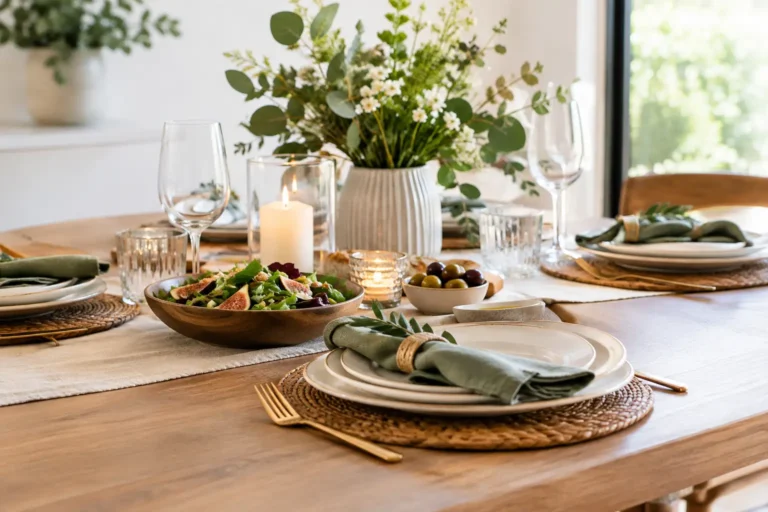
Small dining spaces often benefit from fewer large visual interruptions, but that does not mean they should feel bare. Current styling leans toward soft, tactile layers: woven placemats, cotton tablecloths, ceramic drinkware, linen-look napkins, and a simple centerpiece with a little height.
These details are easy to swap with the season, which is helpful when the furniture itself needs to stay practical and neutral. A textured runner can warm up a simple table for fall. Bright glassware and a fresh floral arrangement can make the same setup feel ready for spring brunch. For everyday meals, placemats are a quick way to add color while protecting the surface underneath.
The key is editing. On a small table, one low bowl of fruit, a compact vase, or a candleholder is usually enough. Oversized centerpieces may look dramatic in photos, but they can block conversation and leave nowhere to set serving dishes. Choose pieces that invite people to use the table rather than work around it.
Open shelving and visible storage are helping tableware take on a more decorative role. A neat row of glassware, a stack of dinner plates, or matching storage canisters can make a kitchen-dining zone feel pulled together without adding more furniture.
This trend works best when you curate what stays visible. Keep your most-used mugs, bowls, and glasses within reach, then store extras elsewhere. A coordinated color palette makes even an open shelf look calm. Think clear glass, warm neutrals, soft white ceramics, or one accent color repeated in small doses.
At Kitchen Bay, practical tabletop pieces can help bring this approach to life, whether you are refreshing everyday drinkware or building a table setting that feels ready for guests.
One overhead fixture is rarely enough to make a small dining area feel inviting. Layered lighting is a major part of the move toward more livable, mood-friendly compact spaces. The idea is to combine task lighting for meals and cleanup with softer lighting that makes the area feel distinct after dark.
A pendant centered above a table creates a clear dining zone, even in a studio or open-plan home. If wiring is not an option, a table lamp on a nearby console, a cordless lamp, or a well-placed floor lamp can add warmth without a renovation. Indoor lighting with a warm glow is especially helpful when the dining area shares space with the kitchen, where brighter light may be needed for prep.
Scale matters here. A fixture that is too large can dominate a small room, but one that is too tiny may disappear. Choose a piece that relates to the width of the table and hangs high enough to preserve sightlines across the room.
Extra chairs are useful until they become a permanent obstacle. That is why stackable stools, folding dining chairs, and compact benches continue to be smart choices for small homes. They allow you to host more comfortably without committing valuable square footage to seating that is only needed a few times a year.
A pair of attractive folding chairs can hang in a closet or slide behind a sofa. Backless stools can tuck under a console or table. If your dining table also serves as a workspace, choose seating that is supportive enough for an hour or two, not just a quick meal.
This is one area where comfort should outrank appearance. The sleekest chair is not a bargain if no one wants to sit in it through dessert. Test the seat height against your table, and leave enough clearance for knees and movement.
Perfectly matched dining sets are giving way to rooms that feel more personal. The collected look might combine a modern table with vintage-inspired glassware, natural fiber placemats, and a colorful tablecloth. It feels relaxed, warm, and easier to update over time.
For a small room, this approach works best when there is still a common thread. Repeat one material, such as light wood or black metal, or keep the palette within a tight family of colors. That creates variety without visual clutter. A small space can handle personality, but it needs a little structure to stay restful.
Consider the view from the rest of the room, too. In an open layout, your dining table is almost always on display. A tray for salt, pepper, and napkins, coordinated linens, and a tidy surface can make the entire home feel more organized in a matter of minutes.
The strongest trend is not a specific chair shape or table finish. It is the shift toward dining spaces that support real life: Tuesday night pasta, a child finishing a school project, a solo cup of coffee, or a table full of friends sharing takeout.
Start with the pieces that solve your space challenges, then add the details that make the setup feel like yours. A small dining area does not need to do everything at once. It simply needs to make everyday moments feel a little more welcoming.







Leave a comment