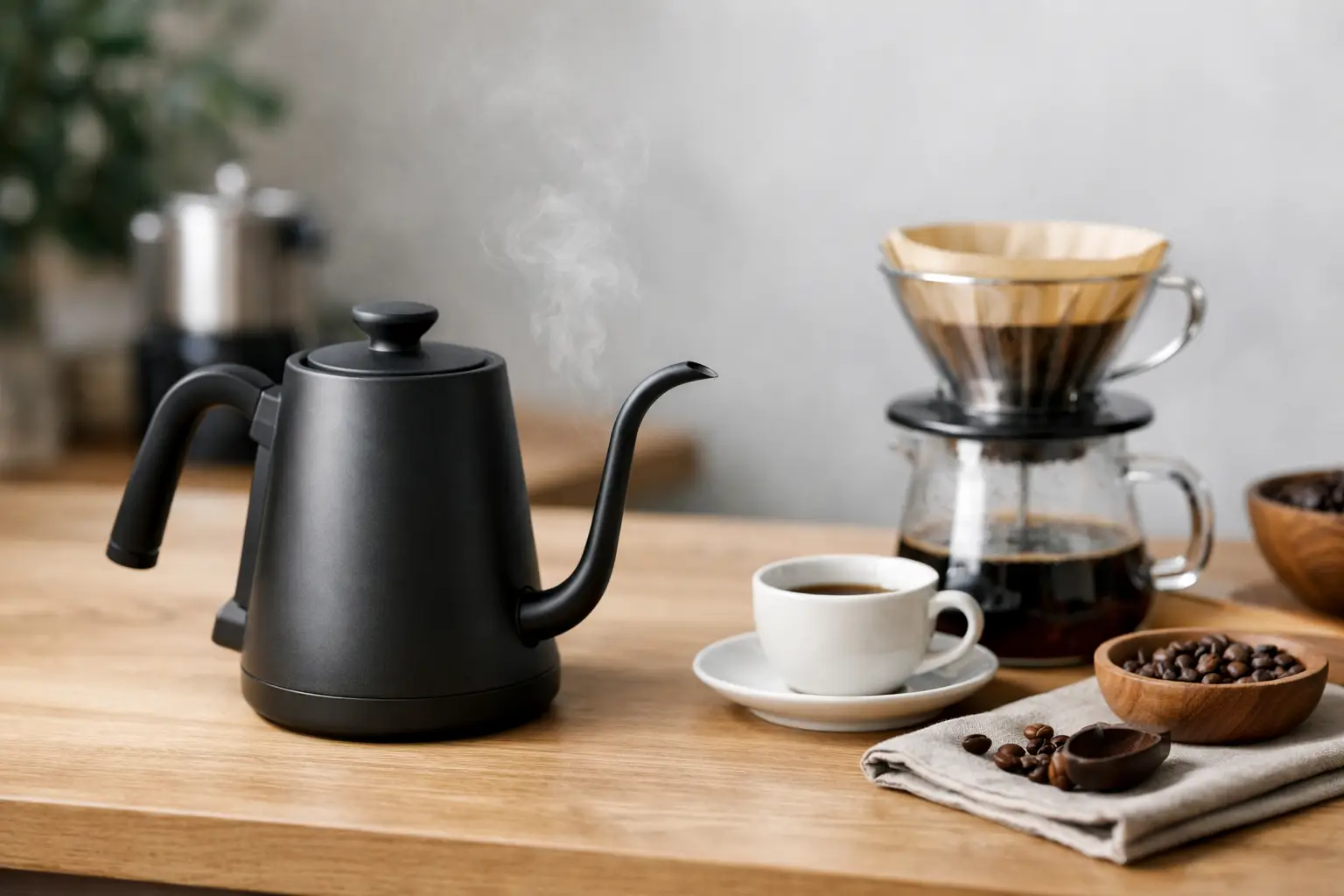
A great cup of pour-over coffee can come down to a small, satisfying moment: the slow circle of hot water over freshly ground beans. If you have wondered, what is a gooseneck kettle, it is the tool made for that moment. Its long, narrow, curved spout gives you much more control than a standard tea kettle, helping turn an everyday coffee break into a ritual worth looking forward to.
For home cooks, coffee fans, new homeowners, and thoughtful gift buyers, a gooseneck kettle is one of those practical kitchen pieces that also looks right at home on an open shelf or coffee station. It is designed to pour beautifully, but it can also make brewing feel calmer, more intentional, and more consistent.
A gooseneck kettle is a kettle with a tall, thin spout that curves upward before gently bending downward at the tip. The shape resembles a goose’s neck, which is where the name comes from. Unlike a wide, short spout that releases water quickly, a gooseneck spout creates a narrow, steady stream.
That controlled flow is especially useful for pour-over coffee. Brewing methods such as a dripper, cone, or flat-bottom brewer work best when water reaches the coffee grounds evenly. With a gooseneck kettle, you can start in the center, slowly wet the grounds, and pour in measured circles without flooding one area of the coffee bed.
Many gooseneck kettles are also simply lovely objects to use. Available in polished steel, matte black, soft neutral colors, and modern finishes, they bring a little café-inspired style to a countertop without requiring a full barista setup.
The benefit of a gooseneck kettle is not that it makes water hotter. It gives you control over how that water moves. A standard kettle is excellent for filling a mug, pot, French press, or teapot quickly. Its broad pour is practical when speed is the priority.
A gooseneck kettle is better when placement and pace matter. Its slim spout lets you pour slowly, stop cleanly, and aim water exactly where you want it. That can help you avoid splashing, channeling through coffee grounds, or accidentally pouring too much water at once.
For pour-over coffee, an even pour supports more even extraction. In simple terms, that means you are more likely to get a balanced cup rather than coffee that tastes sour, weak, harsh, or uneven. The kettle cannot fix stale beans or an incorrect grind size, but it gives you a reliable way to practice and improve your technique.
It is also useful for blooming coffee grounds. During the bloom, a small amount of water is added to release trapped gas from freshly roasted coffee. A measured, gentle pour makes this stage easier to manage, especially when you are learning.
No, although pour-over coffee is its signature use. A gooseneck kettle can be a helpful addition for loose-leaf tea, matcha preparation, instant oatmeal, ramen cups, and other tasks where you want hot water in a controlled stream. It is particularly nice for smaller servings because the narrow spout feels less heavy-handed than tipping a large kettle.
Still, it is worth choosing a kettle for how you actually use your kitchen. If most mornings involve filling a large French press or making tea for several people, a standard electric kettle may be faster and easier. If you enjoy manual coffee brewing, make one or two cups at a time, or appreciate thoughtful kitchen tools, a gooseneck model is likely a better fit.
There is no rule saying you need separate kettles. Many households use a gooseneck kettle as their everyday hot-water kettle because they enjoy the precision. The trade-off is capacity: many models hold less water than a family-size electric kettle, and their slower pour is not ideal when you need to fill a big pot in a hurry.
Gooseneck kettles generally come in two styles: electric and stovetop. Both offer the same controlled-pour advantage, but the best choice depends on your routine, budget, and kitchen setup.
Electric models are all about convenience. Place the kettle on its base, set it to heat, and let it do the work. Many include adjustable temperature settings, which are especially useful for coffee and tea drinkers who want more control. Water just off the boil is often preferred for many pour-over coffees, while delicate green teas call for lower temperatures.
Some electric kettles include a hold setting that maintains your chosen temperature for a period of time. That is useful for a relaxed weekend breakfast, when you may want a second cup without reheating water from scratch.
The main consideration is counter space and cost. Electric gooseneck kettles are usually more expensive than simple stovetop versions, and they need an outlet. For frequent brewers, the added ease can be well worth it.
Stovetop kettles have a classic, uncomplicated appeal. They work on a compatible cooktop and do not require an electrical base, making them a smart option for smaller kitchens, minimalist setups, or anyone who likes a more hands-on routine.
They can also be easier to store, depending on the design. The catch is that you will need to monitor the heat and use a separate thermometer if precise temperature matters to you. Check the manufacturer’s compatibility guidance before using one on induction, gas, or electric ranges.
The right gooseneck kettle should feel comfortable in your hand as well as look good in your kitchen. Capacity is a good place to start. A kettle around 0.8 to 1 liter is often enough for one or two pour-over coffees, while a larger model may suit households that brew several cups at once.
Pay attention to the handle shape and balance. A well-designed handle helps you pour steadily without straining your wrist, even when the kettle is full. The lid should fit securely but be easy to remove for filling and cleaning.
If you choose an electric model, consider whether variable temperature control is a feature you will truly use. It is valuable for people who rotate between coffee, black tea, green tea, and herbal blends. If your goal is simply to make a dependable morning pour-over, a straightforward boil-only model may be all you need.
Material matters, too. Stainless steel is durable, easy to coordinate with most kitchens, and a popular choice for everyday use. Matte finishes can look especially polished but may show fingerprints or water spots more easily. A thermometer built into the lid can be useful on a stovetop kettle, though digital temperature control is typically more precise.
At Kitchen Bay, a gooseneck kettle can fit naturally alongside a pour-over dripper, beautiful mugs, storage canisters for fresh beans, and the small details that make a coffee corner feel personal.
Using one is simple, and it becomes intuitive after a few brews. Start by heating fresh water. For many coffees, a temperature around 195 to 205 degrees Fahrenheit is a helpful range, though personal taste and the coffee itself can change what works best.
Place your filter in the dripper and rinse it with hot water if your brewing method calls for it. Add your ground coffee, then begin with a gentle pour in the center. Use just enough water to saturate the grounds, then wait briefly for the bloom.
After that, pour slowly in small circles, moving from the center outward and avoiding a heavy stream directly against the paper filter. Keep the water level steady rather than filling the dripper to the top all at once. The goal is not perfection on day one. A consistent, calm pour will teach you more than rushing through the process.
One common mistake is pouring too slowly simply because the kettle allows it. If your brew takes much longer than expected, the coffee can taste over-extracted or bitter. Your recipe, grind size, and flow rate all work together, so adjust one variable at a time.
Empty the kettle after use rather than leaving water inside for long periods. This helps prevent mineral buildup, especially in areas with hard water. Wipe the exterior dry if you want to keep stainless steel or matte finishes looking fresh.
If you notice white mineral deposits inside, descale the kettle according to its care instructions. A gentle descaling routine keeps heating efficient and helps preserve clean-tasting water. Never immerse an electric base in water, and avoid abrasive scrubbers that can scratch the finish.
A gooseneck kettle does not need to make every morning complicated. Set out your favorite mug, choose beans you enjoy, and give yourself a few unhurried minutes to pour. That small pause can make an ordinary kitchen routine feel a little more like home.








Leave a comment