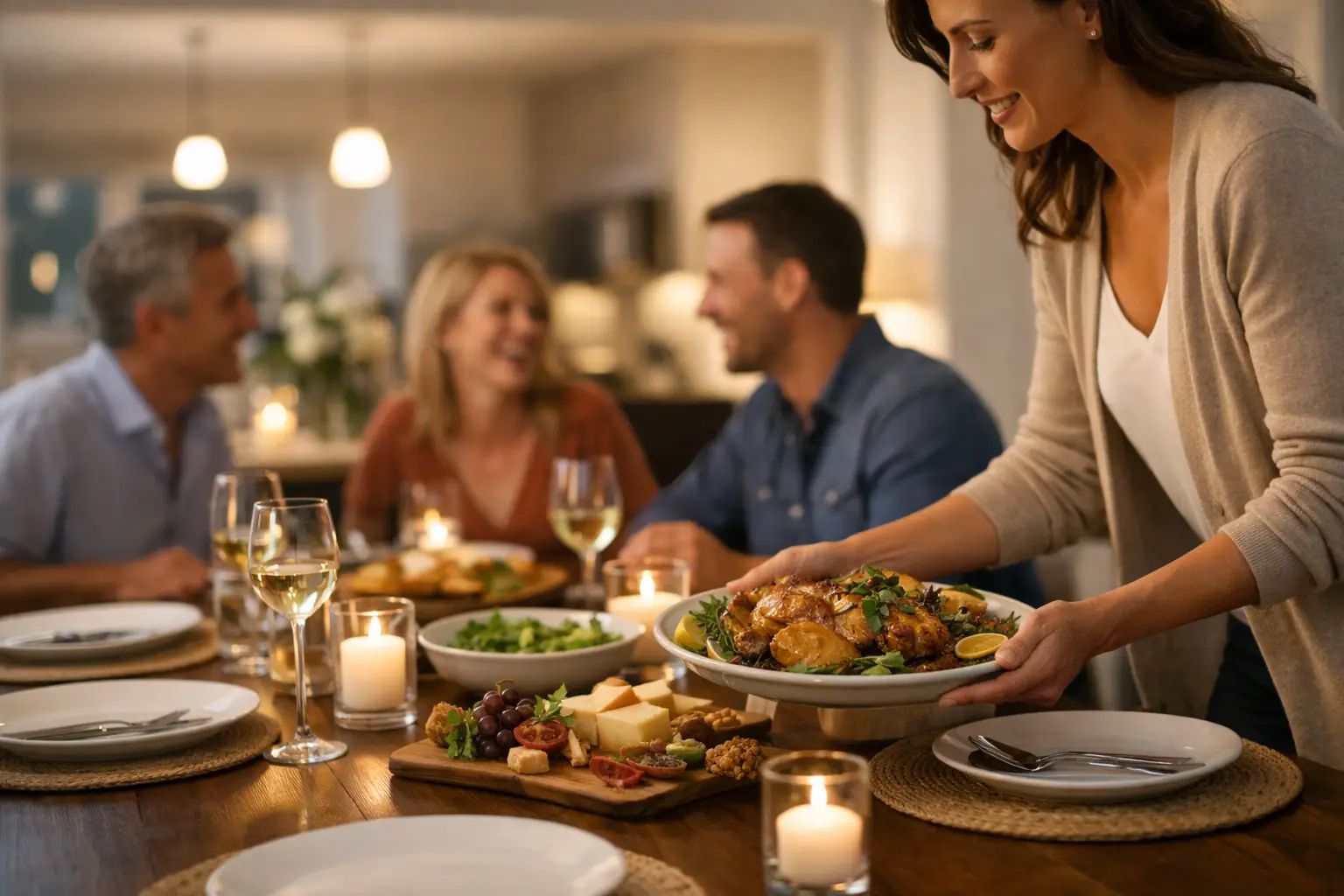
The best dinner parties rarely look like they came from a catalog. Someone is topping off water glasses, the kitchen smells like roasted garlic, and guests are already reaching for another piece of bread before the main course lands. Learning how to host dinner parties is less about performing for a crowd and more about creating an evening where people feel comfortable enough to linger.
A beautiful table helps, and a well-planned menu makes everything easier. But the real secret is choosing a format that lets you enjoy the gathering, too. Start with a plan that works for your home, your budget, and the amount of time you actually have.
Before choosing recipes or pulling out placemats, decide what you want the night to feel like. A Tuesday dinner for four can be intimate and simple: one cozy main dish, a good salad, and a dessert you make ahead. A Saturday celebration for eight may call for a more generous spread, a longer table, and a few dishes guests can help themselves to.
Your guest list should shape the plan. For a first-time host, four to six guests is a sweet spot. It is large enough to feel festive, but small enough that you can serve, talk, and keep an eye on the oven without missing the conversation. If your space is compact, a smaller group with thoughtful details will always feel more welcoming than a crowded room with nowhere to set a drink.
Send invitations early enough for guests to plan, but do not overcomplicate them. Include the start time, whether it is a full dinner or a more casual meal, and ask about dietary needs. This one small step prevents last-minute guesswork and helps everyone relax.
The most successful host menu is not necessarily the most impressive one. It is the one you can make confidently. Choose dishes you have prepared before, or test a new centerpiece recipe a week or two ahead of time rather than debuting it in front of guests.
Build the meal around one main dish that can rest, simmer, roast, or stay warm without losing its appeal. Braised chicken, baked pasta, sheet-pan salmon, chili, and make-ahead lasagna are all forgiving choices. Pair the main with a fresh salad, one simple vegetable, good bread, and a dessert that is finished before the doorbell rings.
Try to avoid a menu where every component needs the stove at the same moment. Crispy pan-seared fish, individual soufflés, and four separate side dishes can be wonderful for a special occasion, but they demand attention at exactly the time you want to greet guests. If you love cooking projects, save one showpiece moment for the evening and let the rest of the meal be easy.
A balanced dinner party menu usually includes a little contrast: something warm and comforting, something crisp and bright, and something sweet at the end. For example, a baked pasta with lemony greens and a berry dessert feels complete without becoming fussy. If you are serving cocktails, offer a simple nonalcoholic option too, such as sparkling water with citrus or a pitcher of iced tea.
The day before is your best friend. Set the table, wash and dry produce, make dessert, prepare a dressing, and organize serving pieces. Label leftovers containers if you know you will send food home with guests. On the day of the party, aim to finish chopping and measuring before you start getting ready.
Use a written timeline rather than relying on memory. Note when to preheat the oven, when to take the main dish out of the refrigerator, and when to light candles or put drinks on ice. A few notes on the counter can turn a busy hour into a calm one.
A welcoming table begins with comfort. Make sure every guest has enough elbow room, a stable seat, and a clear place for their glass. If space is limited, family-style serving can be more practical than crowding the table with every platter. Place dishes on a nearby counter or sideboard and let guests help themselves.
Start with a tablecloth or placemats to create an intentional base, then add everyday dinnerware, glassware, and cloth or paper napkins in colors that suit the season. You do not need matching everything. A mix of simple plates, textured napkins, and a few serving bowls can look collected and personal.
Keep centerpieces low. A small bowl of fruit, a cluster of votive candles, or a short vase of grocery-store flowers brings warmth without blocking anyone’s view. If you use candles, leave enough room for serving dishes and keep flames away from trailing linens. Soft lighting is flattering, but guests should still be able to see what they are eating.
Kitchen Bay’s approach to entertaining is a useful one: choose practical pieces that earn their place at the table, then use them to make everyday moments feel more considered. A sturdy pitcher, useful storage canisters for prep, attractive drinkware, and versatile bakeware can support hosting long after one dinner party ends.
The first 20 minutes set the tone. Have a drink ready to offer and something small to nibble on, but do not make the appetizer so filling that dinner becomes an afterthought. Olives, nuts, cheese, crackers, cut vegetables, or a simple dip are plenty.
This is also the moment to stop trying to finish everything. Guests do not mind seeing a host give the sauce one final stir or put bread in the oven. They do mind feeling like they have interrupted a stressful production. Welcome people in, introduce anyone who has not met, and let the gathering begin while dinner finishes.
Music should support the room rather than take over it. Choose a playlist with a relaxed rhythm and keep it low enough that guests do not need to raise their voices. The same goes for scents: a kitchen that smells like dinner is lovely, while a heavily fragranced candle competing with the food is not.
Family-style dining is one of the easiest ways to create a generous, relaxed atmosphere. Bring the main dish to the table in its baking dish or a favorite serving bowl, then pass sides around. It encourages conversation and saves you from plating every meal like a restaurant line cook.
For larger groups, a buffet setup may be the better choice. It keeps the table uncluttered and allows guests to serve their preferred portions. Put utensils with each dish, keep hot foods together, and place plates at the beginning of the line. These small practical choices prevent traffic jams in the kitchen.
Do not apologize for a dish that is not perfect. If the potatoes are a little rustic or the dessert cracks, serve it with confidence. Most people remember how the evening felt, not whether every garnish was precisely placed.
Once the main plates are cleared, slow the pace. Bring out dessert, coffee, tea, or a final round of sparkling water. This is often when the best conversations happen, especially if you have moved away from the formality of the dinner table.
You also do not need to clear every plate immediately. Stack dishes neatly, move anything that may spoil to the refrigerator, and leave the full cleanup for later if you can. A host who sits down for dessert sends a clear message: the purpose of the night is to enjoy one another.
When guests leave, accept help if it is offered, save what you can, and take a quick note of what worked. Maybe the salad disappeared first, the dining chairs needed extra cushions, or six guests felt more natural than eight. Every gathering teaches you something useful.
The next time you host, choose one detail to make easier and one detail to make special. That might mean ordering dessert instead of baking it, then setting the table with the glassware you love. A memorable dinner party is not built on perfection. It is built on good food, a little care, and the welcome feeling that there is room for everyone at the table.








Leave a comment