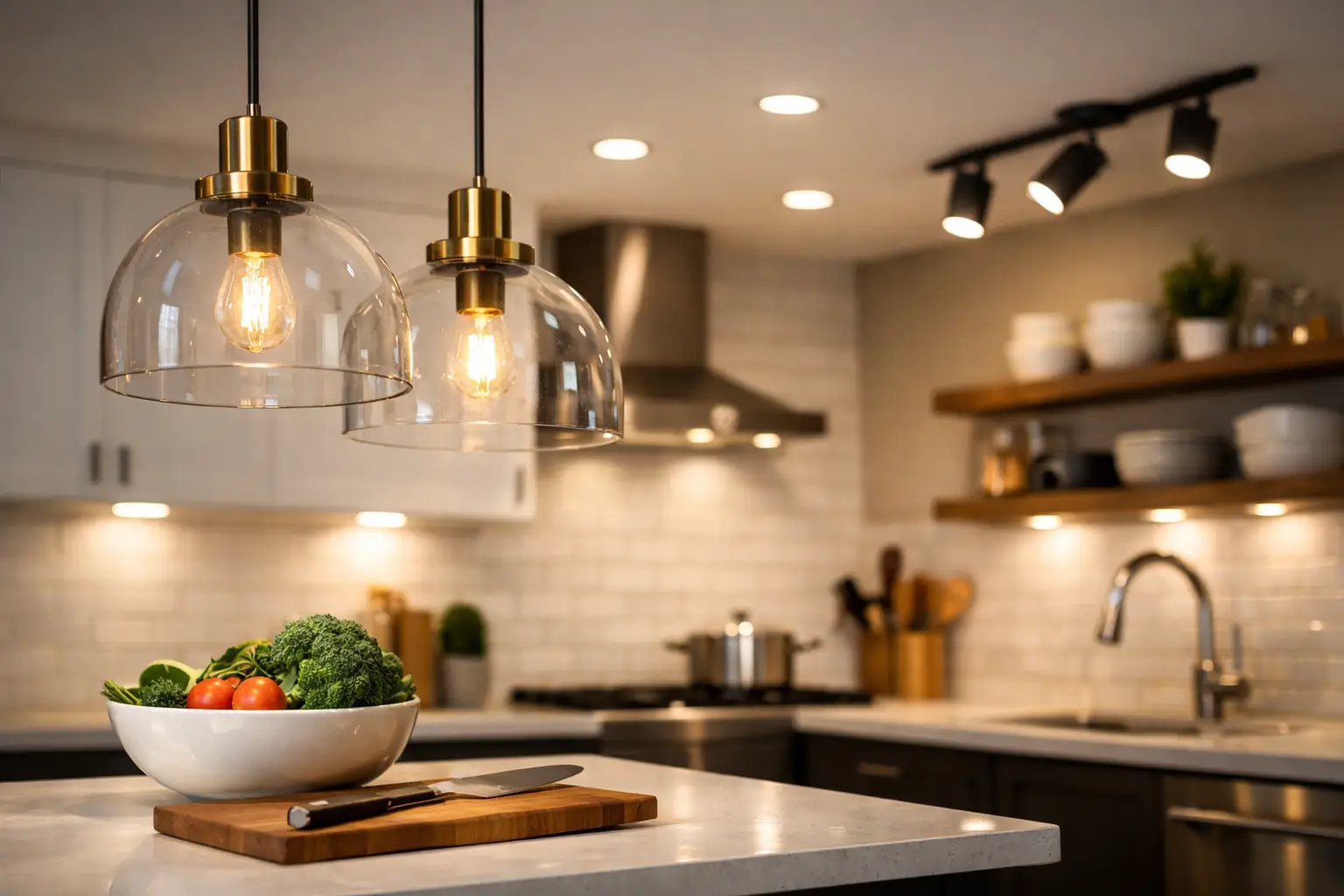
A kitchen can have beautiful cabinets, a favorite tablecloth, and every tool ready for dinner, yet still feel unfinished when the light is wrong. Indoor lighting for kitchens does more than brighten a room: it makes chopping safer, morning coffee calmer, and a simple weeknight meal feel worth sitting down for.
The most inviting kitchens rarely rely on one bright ceiling fixture. They use a few purposeful layers of light that support the way the room is actually used – from packing lunches before sunrise to setting out drinks when friends arrive. The good news is that creating that balance does not require a full remodel.
A well-lit kitchen needs ambient, task, and accent lighting. Think of them as the room’s overall glow, its practical work light, and its finishing touch. Each has a distinct job, and together they make the space feel more comfortable at every hour.
Ambient lighting fills the room with general illumination. A flush-mount ceiling light, semi-flush fixture, recessed lights, or a central pendant can all handle this role. It should let you move around confidently without leaving dark corners near the pantry, refrigerator, or dining nook.
Task lighting is more focused. This is the light that reaches your cutting board, stovetop, sink, and recipe notes. Under-cabinet lighting is a favorite for good reason: overhead fixtures can cast shadows when you stand at the counter, while a light installed beneath the cabinet shines directly where your hands are working.
Accent lighting adds personality. A small lamp on a sideboard, illuminated shelves, or a decorative pendant above an island can soften a hardworking room. It is not strictly necessary for peeling potatoes, but it can make a kitchen feel connected to the rest of your home, especially in an open-plan layout.
Instead of choosing fixtures one at a time, look at the zones that make up your kitchen. The best choice for the island may not be the best choice for a compact breakfast table or a narrow galley kitchen.
An island is often the room’s busiest surface. It may serve as a prep station at 5 p.m., a homework spot at 6 p.m., and a snack bar later in the evening. Pendants work beautifully here because they bring useful light down closer to the surface while adding visual interest overhead.
For a longer island, two or three smaller pendants usually feel more balanced than one oversized fixture. Leave enough visual breathing room between them, and hang them high enough that they do not block sightlines across the room. If your ceilings are low, a streamlined linear fixture or semi-flush design may offer better clearance.
Under-cabinet lighting is one of the most practical upgrades a kitchen can get. It brightens the backsplash, reduces counter shadows, and gives the room a welcoming glow after the main lights are turned off. LED light bars, tape lights, and puck lights can all work, depending on how even you want the illumination to look.
The sink deserves direct attention, too. A recessed light, small pendant, or well-placed ceiling fixture helps with washing produce and tackling the dishes. Avoid relying on a fixture positioned behind you, since your body can create a shadow right where you need to see.
The eating area benefits from a warmer, more relaxed feel than the prep zone. A pendant or chandelier over the table helps define the space and makes weekday meals feel a little more gathered. In a small nook, a modest fixture can be more charming than a grand statement piece.
If the table shifts for game nights, crafts, or extra guests, choose a fixture with a broad, even spread of light. A dimmer is especially useful here, allowing the same space to move from bright breakfast energy to a softer dinner setting.
Light bulbs have a color temperature measured in Kelvin, and the number affects how the kitchen feels. Lower Kelvin numbers create a warmer, cozier light. Higher numbers look cooler and crisper.
For many homes, 2700K to 3000K is the sweet spot for general kitchen lighting. It flatters wood tones, painted cabinetry, and dining spaces without turning the room yellow. If your kitchen has a very clean, contemporary look or you want sharper visibility for food prep, 3000K to 3500K can work well.
Try to keep bulb temperatures consistent within sight of one another. Mixing a warm pendant with very cool under-cabinet lights can make countertops and cabinet colors look strange. A coordinated choice feels more polished, even when the fixtures themselves are different styles.
Color rendering matters, too. Look for bulbs with a high CRI, ideally 90 or above, if you want ingredients, paint colors, and tabletop details to look more true to life. This is a small specification with a noticeable payoff when you are checking whether chicken is cooked through or setting a colorful table for guests.
Dimmers are one of the simplest ways to make lighting work harder. Bright light is useful when you are measuring flour, reading labels, or cleaning up. Lower light feels better when dinner is served, candles are lit, and nobody needs the room to feel like a workspace.
They are especially helpful in open kitchens, where the cooking area is visible from the living room. Dimming a pendant or ceiling fixture helps the kitchen settle into the evening without leaving the rest of the space in darkness. Before buying bulbs, confirm that both the bulb and fixture are compatible with your preferred dimmer.
A lighting fixture can act like jewelry for the kitchen, but it should still belong in the room. The right finish and shape can quietly pull together your cabinet hardware, faucet, bar stools, and dining pieces.
Matte black pendants bring definition to light kitchens and pair naturally with black hardware. Brushed brass adds warmth and works well with wood, cream, and softly colored cabinetry. Clear glass feels airy and helps a smaller kitchen stay visually open, while woven or textured shades bring a more relaxed, collected look.
Scale matters as much as style. A fixture that is too small can disappear above a large island, while one that is too wide can make a compact kitchen feel crowded. When in doubt, use painter’s tape or a paper template to visualize the fixture’s footprint before committing.
Beautiful lighting still has to function well. Consider cleaning, glare, and installation before falling for a design. Open glass shades can look stunning but may need more frequent dusting and cleaning in a kitchen where steam and cooking residue travel. Fabric shades are generally better reserved for a nearby dining zone than directly over the range.
Also consider where light will reflect. Glossy backsplashes, stainless steel appliances, and polished stone can create glare if a bright bulb is exposed at eye level. Frosted glass, shaded bulbs, or a fixture with a diffuser can soften the effect.
For any new hardwired fixture, use a qualified electrician. This is particularly wise when moving a junction box, adding a dimmer, or working near existing cabinetry. Simple plug-in lamps and battery-powered accent lights can be approachable additions, but electrical work is not the place to guess.
You do not need to replace every fixture to change the feeling of your kitchen. Start with the spot that frustrates you most: a shadowy counter, a harsh dining area, or an island that never feels finished. One practical upgrade, paired with a light that makes you want to linger over coffee or invite someone to stay for dessert, can make everyday cooking feel more at home.










Leave a comment