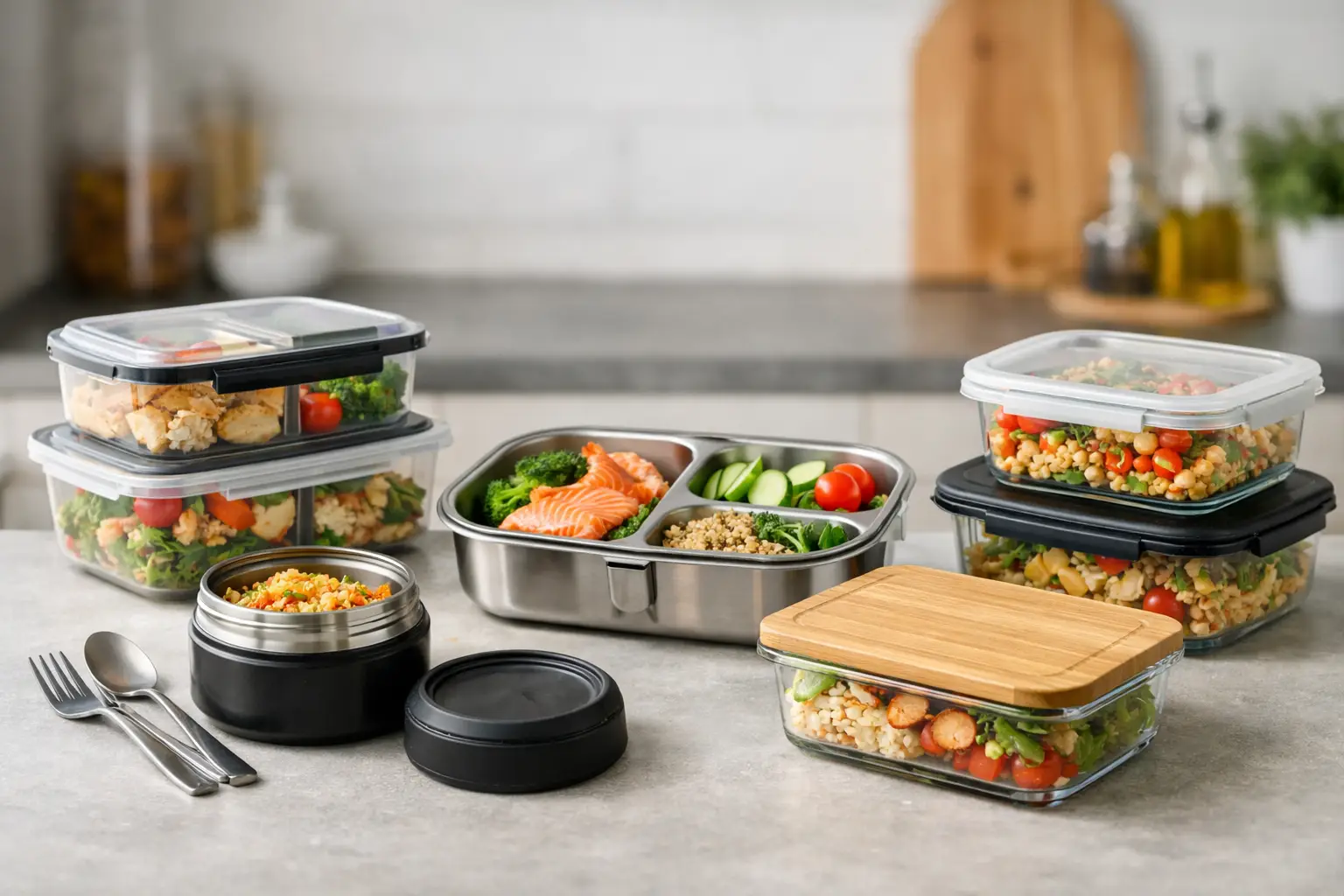
A good lunch can lose its appeal quickly when the dressing leaks, the container stains, or the lid vanishes somewhere behind the cereal boxes. This meal prep containers comparison is designed for real kitchens, where storage space is limited, schedules are busy, and a container needs to work just as well for Tuesday’s desk lunch as it does for Sunday’s batch cooking.
The best choice is rarely one material for every meal. Glass shines when you want to reheat a grain bowl without transferring it to a plate. Lightweight plastic makes sense for a child’s backpack or a long commute. Stainless steel is a smart companion for cold foods and outdoor days. The most useful setup often combines a few container types, chosen around the way you actually cook and eat.
Before choosing colors, shapes, or a matching lid set, think about the meals you prepare most often. If you cook a large tray of roasted vegetables and portion dinners for the week, stackable rectangular containers can make the refrigerator feel instantly calmer. If you bring salads, sauces, snacks, and cut fruit, smaller leak-resistant containers may do more for your routine than a cabinet full of oversized boxes.
Also consider where your food travels. A container that stays at home can be heavier and more substantial. One that rides in a tote bag, gym bag, or work backpack should be lighter, securely sealed, and easy to open without a struggle. The right container makes meal planning feel less like another chore and more like a small favor to your future self.
Glass meal prep containers are a favorite for home cooks who want one dish to move from refrigerator to microwave to table. They do not hold onto tomato sauce stains, curry aromas, or yesterday’s garlic as easily as many plastic options. Clear sides also make it simple to spot what is ready to eat, which helps reduce the mystery leftovers that tend to linger too long.
Many glass containers have plastic or silicone-sealed lids, giving them a dependable feel for soups, grains, pasta, and saucy meals. They are especially helpful for anyone who likes to portion meals directly after cooking, then reheat at work or home with minimal fuss.
The trade-off is weight. Glass is less convenient for a long commute, and it can chip or break if dropped on a hard floor. It also takes up more room in a packed lunch bag. Choose it when clean reheating, odor resistance, and an elevated serve-from-the-container look matter most.
For most households, a mix of medium rectangles and small round containers covers the basics. Medium containers suit entrees, while smaller sizes keep dips, dressings, berries, and chopped toppings from getting lost in the fridge.
Plastic meal prep containers are popular for a reason: they are light, affordable, easy to stack, and simple to carry. For school lunches, quick snacks, or meals that will be eaten cold, they are often the most practical choice. A well-designed plastic set can make a crowded refrigerator and cabinet feel more organized, especially when the pieces nest together.
Look for sturdy, food-safe plastic with lids that fit firmly. If microwave use matters, follow the container’s care guidance and avoid overheating oily or highly pigmented foods, which can encourage staining over time. Even durable plastic can show wear sooner than glass, particularly when used daily with tomato-based sauces or turmeric-heavy dishes.
Plastic is also a strong option for portioning ingredients before cooking. Think pre-chopped onions, smoothie ingredients, taco toppings, or a ready-to-grab snack of crackers and cheese. It keeps the weekday rhythm moving without adding bulk to your bag.
Stainless steel containers bring a polished, durable feel to meal prep. They are lightweight compared with glass, resist odors and stains, and stand up well to busy households. They are particularly useful for cold lunches such as salads, sandwiches, pasta salads, fruit, and snack plates.
Their biggest limitation is heating. Stainless steel should not go in the microwave, so it is less convenient for a leftover soup or a hot grain bowl at the office. For meals that stay cold or can be transferred to a plate before reheating, however, it is an excellent long-term choice.
These containers also suit picnics, road trips, and packed lunches where durability matters. If your kitchen style leans clean and timeless, stainless steel has the added benefit of looking as tidy on a shelf as it does on a table.
Silicone containers, especially collapsible styles, are helpful when cabinet space is at a premium. Apartment kitchens, RVs, and shared homes can all benefit from containers that shrink down after lunch is eaten. Silicone is soft, lightweight, and often suitable for both freezing and reheating, depending on the product.
That flexibility comes with a few considerations. Soft-sided containers may be less stable for soup or saucy food, and some people find they hold onto strong smells if not cleaned promptly and thoroughly. They are usually best as supporting players in a meal prep collection rather than the only container you own.
Use silicone for snacks, produce, leftovers that do not need rigid structure, or meals you want to freeze in a space-saving shape. A collapsible container can be especially welcome when you do not want an empty lunch box taking up half your work bag on the trip home.
Material gets most of the attention, but a container’s shape often determines whether it earns a permanent place in your rotation. Rectangles use refrigerator shelves efficiently and fit sandwiches, proteins, and layered lunches well. Round containers are ideal for soups, oats, sauces, and chopped ingredients. Square containers split the difference, offering useful capacity without awkward corners.
Compartment containers are convenient for keeping foods separate, particularly for snack-style lunches or meals with crunchy toppings. They are less ideal for saucy dishes or flexible portions. If you prefer to change your meals throughout the week, separate containers can give you more freedom than a fixed three-section tray.
Lids deserve close attention, too. A lid should feel secure without requiring a wrestling match at lunchtime. Snap-lock lids with a silicone gasket can offer extra reassurance for dressings and soups, while simple press-on lids are often perfectly fine for dry foods stored at home. Whichever style you choose, sets with interchangeable lids are easier to live with than a mismatched collection of mystery tops.
Instead of buying every style at once, start with the meals you make on repeat. A small collection of versatile pieces is easier to store, wash, and keep organized. Consider a few medium glass containers for reheatable dinners, lightweight plastic containers for snacks and lunches, and several small leak-resistant tubs for sauces and toppings. Add stainless steel or silicone when your routine calls for cold lunches or compact storage.
It helps to choose containers that stack when full and nest when empty. That combination saves space in both the fridge and cabinet, which makes sticking with meal prep much more realistic. Clear containers are also worth considering because they keep ingredients visible and encourage you to use what you have.
For a more pulled-together kitchen, give your containers a dedicated shelf or drawer near your storage canisters and pantry staples. At Kitchen Bay, we believe everyday tools should make cooking feel easier while still bringing a little order and style to the space around you.
A few habits can extend the life of nearly any container. Let very hot food cool slightly before sealing it and placing it in the refrigerator. Avoid packing lids too tightly against sharp utensils. Wash containers soon after meals with strongly colored sauces, and dry them completely before nesting to prevent trapped moisture and lingering odors.
For freezer meals, leave a little room at the top because food expands as it freezes. Labeling the date is another small step that pays off, especially when a freezer fills with soups, chili, and make-ahead breakfasts. A piece of masking tape and a marker are all you need.
The goal is not a picture-perfect row of identical containers. It is a kitchen that makes tomorrow’s breakfast, lunch, or dinner feel pleasantly within reach. Choose the pieces that fit your favorite meals, your storage space, and your pace of life, then let them make more room for cooking, creating, and celebrating around the table.
[…] consistent is to make board care part of the meal’s closing routine. While leftovers go into storage containers and dishes head to the sink, wash the board before residue has a chance to dry. Give it a quick […]







Leave a comment