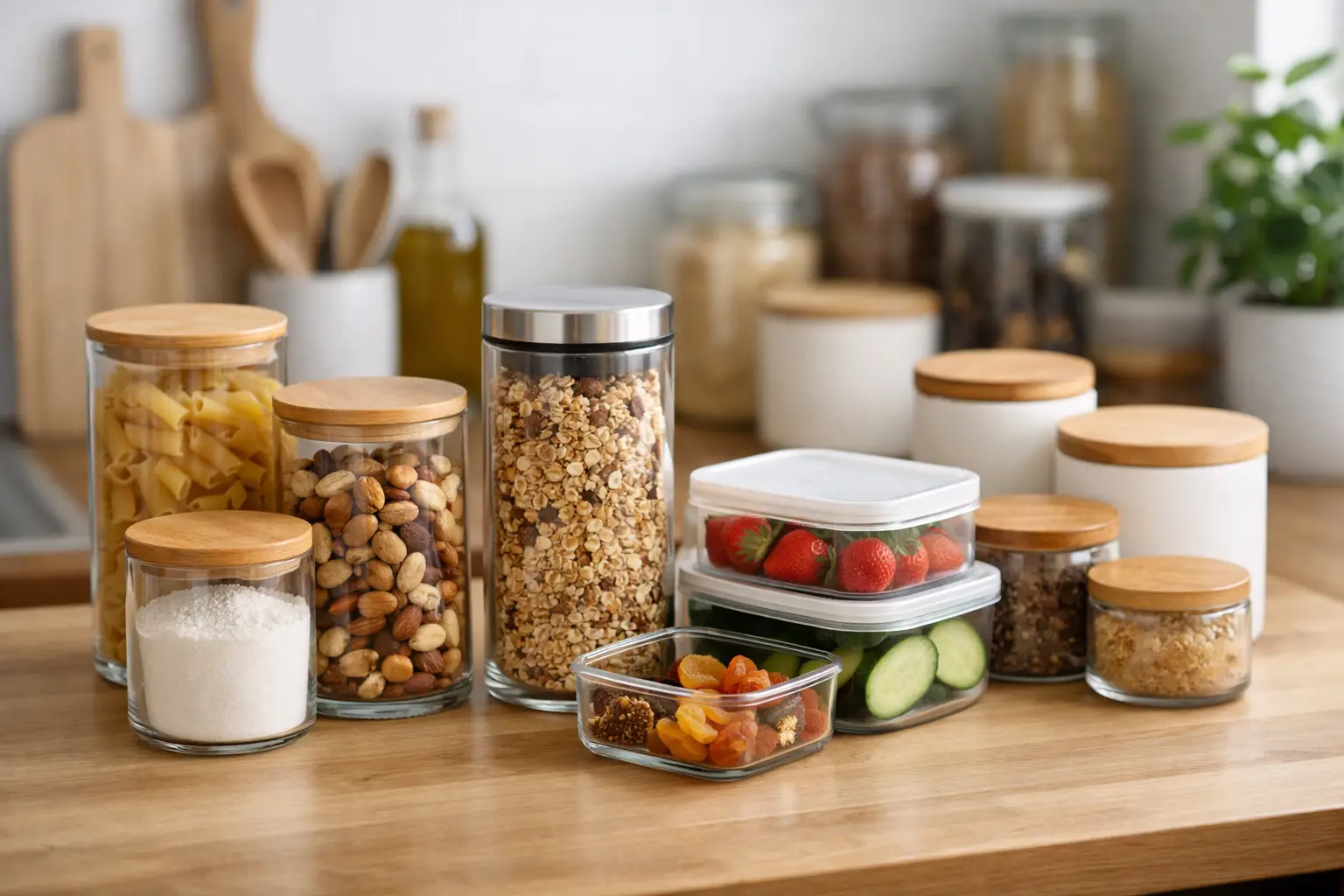
A half-open bag of coffee, flour clipped shut with a chip clip, pasta boxes that topple when you reach for cumin – these are small kitchen frustrations, but they add up fast. Knowing how to pick storage canisters helps turn those crowded shelves into a pantry that feels easier to cook from, easier to clean, and far more enjoyable to look at.
The best canisters do more than make ingredients look tidy. They help protect dry goods from humidity, make staples easier to find, and give everyday routines a little more polish. The right choice depends on what you store, where you store it, and whether you want your pantry to feel purely practical, countertop-ready, or both.
Start with your real habits, not a picture-perfect pantry. Think about the ingredients you use every week: coffee, tea, sugar, flour, rice, oats, pasta, snacks, baking supplies, or pet treats. A canister should make those items simpler to grab and put away, not add another step to the routine.
Take a quick look at the packages currently taking up space. This gives you a useful sense of the sizes you need. A tall container may suit spaghetti, while a wider shape is often more convenient for flour, cookies, or scoopable snacks. If you bake often, it is worth choosing a canister with an opening wide enough for a measuring cup. For coffee beans or loose tea, a smaller container that is easy to open one-handed can be a better fit.
Avoid buying every canister in the same size just because a matching set looks appealing. Uniformity creates a calm look, but your ingredients are not uniform. A thoughtfully mixed set – small for spices and tea, medium for grains and cereal, large for flour and pasta – works harder in daily life.
A canister that looks compact online can be surprisingly tall once its lid is included. Measure the height between your pantry shelf and the shelf above it, then leave a little room to lift containers out comfortably. Do the same for cabinet depth, especially if you are choosing wide glass jars or bulky lidded containers.
For countertop storage, consider the visual space as well as the physical space. A pair of medium canisters beside the coffee maker can look intentional. Six oversized containers lined across a small counter can make a kitchen feel crowded, even if they technically fit.
Round canisters have a classic, relaxed look and work beautifully on open shelves or counters. They are often easy to reach into and especially nice for cookies, coffee, and frequently used baking ingredients. Their trade-off is that they leave unused space in square cabinets and drawers.
Square and rectangular canisters are the practical choice for maximizing a pantry. They sit neatly side by side, stack more efficiently, and make it easier to see what you have at a glance. If your goal is a streamlined cabinet or a small-apartment pantry that holds more without feeling stuffed, these shapes are usually the smartest place to start.
Tall, narrow containers are useful for pasta, grains, and snacks, but only when the opening is still comfortable for pouring or scooping. A very slim container may save space while becoming frustrating every time you need a half cup of rice. Convenience matters more than squeezing out every last inch of shelf room.
Material affects the look, weight, durability, and everyday care of your canisters. There is no single best option. The right one is the material that suits your household and the ingredients you reach for most.
Glass canisters are a favorite for good reason. They let you see what is inside, coordinate easily with many kitchen styles, and can feel especially elevated on open shelving. Glass is ideal for colorful pantry staples such as pasta, beans, cereals, and baking ingredients. It is also nonporous, so it does not tend to hold onto odors or stains.
The trade-off is weight and breakability. Glass may not be the best fit for a very high shelf, a busy kitchen with young children, or anyone who wants to move containers around frequently. Look for sturdy construction and a lid that feels secure without being difficult to remove.
Plastic canisters are lightweight, practical, and often the easiest choice for everyday pantry organization. Clear plastic makes it simple to check supplies before grocery shopping, while stackable designs can make a major difference in a compact kitchen. For cereal, snacks, flour, and pantry staples that are handled often, lightweight canisters can be wonderfully convenient.
Metal canisters offer a more tailored, decorative feel and can protect light-sensitive ingredients from direct sun. They are a lovely option for tea, coffee, sugar, or countertop staples. Since you cannot see through them, labels become more important. Choose metal when you value a curated countertop moment and do not mind checking quantities a little more deliberately.
Ceramic canisters bring warmth and character to a kitchen, particularly in neutral, farmhouse, or artisan-inspired spaces. They are best reserved for ingredients you use regularly and can identify easily. Like glass, they can be heavy and breakable, so they are often more at home on a counter than in a crowded upper cabinet.
A handsome canister is only useful if the lid is pleasant to use. For dry goods that need help staying fresh, such as flour, sugar, cereal, crackers, coffee, or nuts, look for a close-fitting lid with a silicone gasket or another airtight-style seal. This can help limit exposure to air and moisture after opening.
That said, an airtight seal is not the only factor. If a lid is so tight that you avoid opening it, it is not serving your morning routine. For coffee, consider how easily you can access it before the first cup of the day. For a snack canister, check whether every member of the household can open and close it securely.
Flip-top, clamp, twist, and lift-off lids all have their place. Clamp lids can create a satisfying, secure closure for dry goods. Lift-off lids are quick and attractive for countertop canisters, though they may not seal as tightly. Twist lids can be dependable but may be less convenient when your hands are floury. The best choice is often the one that feels natural after a week of use, not the one that wins on looks alone.
Seeing ingredients saves time and can cut down on duplicate grocery purchases. Clear canisters are especially useful for pantry basics you want to monitor, such as rice, oats, pasta, and baking supplies. They also make a simple shelf feel more abundant and inviting – a small detail that can encourage more home cooking.
Opaque canisters have their advantages, particularly for ingredients that do better away from light or for anyone who prefers a less visually busy kitchen. Coffee, tea, and spices may benefit from a darker storage spot, although freshness also depends on keeping them sealed, cool, and away from heat.
Labels are helpful whenever containers look alike, especially with white pantry staples. Flour, powdered sugar, cornstarch, and baking soda are easy to confuse in the middle of a recipe. Use clear, readable labels and include a purchase or refill date for ingredients you do not use often. If you decant food into a canister, keep cooking instructions or allergen information from the original package when needed.
A canister collection does not need to be enormous to make a difference. Begin with the ingredients that create the most clutter or get used most often. For many households, that means flour, sugar, coffee, tea, pasta, rice, cereal, and snacks. Once those are organized, you will know whether you truly need more.
If you love baking, prioritize wide-mouth containers, easy-to-clean interiors, and room for a scoop. If weekday cooking is your focus, clear stackable containers may make meal prep and pantry inventory much simpler. If you enjoy hosting, a few attractive countertop canisters can do double duty, keeping cocktail napkins, cookies, tea bags, or coffee within easy reach while adding a finished touch to the room.
This is also where a coordinated collection can be worthwhile. Matching lids or repeated shapes make shelves feel intentional, even when the contents vary. Kitchen Bay’s storage options can help you build that pulled-together look without losing the practical details that make a kitchen easier to use.
Before choosing a canister, consider its least glamorous moment: cleaning day. Wide openings are easier to wash by hand and easier to dry completely. Containers with lots of narrow grooves, decorative ridges, or hard-to-reach lid parts may look beautiful, but they can be more work after a flour spill or sticky snack mishap.
Always let a canister dry fully before adding fresh ingredients. Even a little leftover moisture can cause clumping in dry goods. When refilling, it is also wise to finish or remove the older ingredients first rather than continually pouring new food on top. This helps keep your pantry fresher and makes it easier to spot when something has been sitting too long.
The most satisfying kitchen upgrades are often the ones you notice every single day. Choose canisters that fit your shelves, suit your staples, and make reaching for the next ingredient feel simple. A calmer pantry can start with just a few well-chosen containers – and make every meal, coffee break, and hosting moment feel a little more considered.







Leave a comment