That cutting board may be the hardest-working surface in your kitchen. It catches tomato juices, chopped herbs, raw chicken drips, and the crumbs from a quick snack between meetings. Knowing how to sanitize cutting boards helps keep those everyday cooking moments fresh, confident, and ready for the next meal.
The good news: a cleaner board does not require a complicated routine or a cabinet full of specialty products. It does require choosing the right approach for the board you own, cleaning it promptly, and giving extra attention after raw meat, seafood, or eggs. A few practical habits can make prep feel more polished – whether you are assembling weekday lunches or setting out a generous spread for friends.
Cleaning and sanitizing are related, but they are not the same job. Cleaning removes visible food, grease, and residue. Sanitizing reduces germs to a safer level after the surface is clean. If you skip straight to sanitizer on a board covered in food bits or oily residue, it cannot work as effectively.
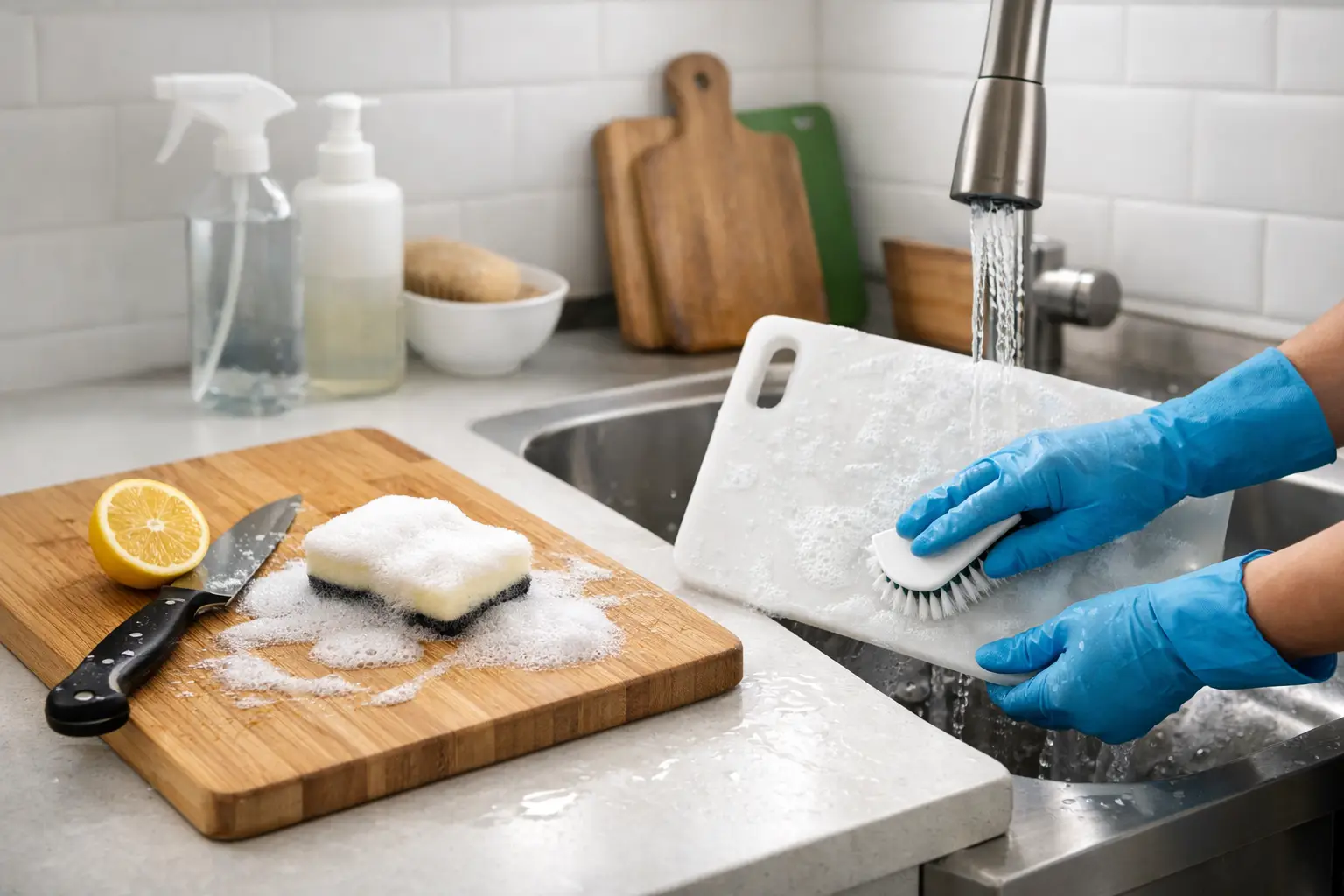
After each use, scrape away leftover food and wash the board with hot water, dish soap, and a clean sponge or dish brush. Rinse thoroughly and dry it right away with a clean towel or by standing it upright where air can circulate. Moisture trapped against a countertop is especially unkind to wood boards.
For routine tasks such as slicing bread, cutting washed fruit, or chopping herbs, a careful wash and complete dry may be all the board needs. Sanitize more deliberately after cutting raw poultry, meat, fish, or seafood, and anytime a board has a lingering odor, stain, or heavy use day behind it.
A beautiful cutting board is both a useful prep tool and part of the kitchen’s visual rhythm. Still, wood, plastic, and composite boards need different care.
Wood and bamboo boards bring warmth to the counter and work beautifully for produce, bread, cheese, and everyday chopping. They should be washed by hand, never soaked in the sink. Extended water exposure can cause swelling, splitting, warping, or a rough surface that is harder to clean.
To sanitize a wood or bamboo board after washing, use a food-safe sanitizing solution according to its label directions. A diluted unscented household bleach solution is a common option, but concentration and contact time matter, so follow the product label rather than guessing. Apply it to the cleaned surface, let it sit for the directed time, then rinse if the label calls for rinsing and dry the board upright.
Do not put wood or bamboo cutting boards in the dishwasher. The combination of heat, water, and detergent can shorten their life quickly. Once the board is fully dry, occasional food-grade mineral oil helps condition the surface and reduces the chance of drying and cracking. Use mineral oil rather than cooking oil, which can turn rancid over time.
Plastic cutting boards are convenient, lightweight, and especially practical when your meal prep involves raw proteins. Many are dishwasher-safe, which can make cleanup easier. Check the manufacturer’s care guidance, then place the board where water can reach all surfaces and allow it to dry completely before storing.
For handwashing, use hot, soapy water first, then apply a food-safe sanitizer according to the product directions. Plastic boards often show knife marks sooner than wood. Those grooves can hold residue, so inspect them regularly. If a board is deeply scarred, stained beyond cleaning, warped, or difficult to scrub smooth, replacing it is the simpler and safer choice.
Composite boards generally tolerate moisture well and may be dishwasher-safe, but their care instructions still come first. Glass boards are easy to wipe down, though many home cooks find them hard on knives and slippery during active prep. Whatever the material, the same principle applies: remove food residue, sanitize when needed, and dry completely.
When dinner calls for chicken cutlets, burgers, shrimp tacos, or marinated steak, keeping your prep sequence organized saves cleanup later. Start by setting out a board reserved for raw proteins if you have one. A separate board for vegetables, fruit, and ready-to-eat foods is a small kitchen upgrade with a big practical payoff.
After handling raw meat, move the food to the pan, grill, or oven before touching spice jars, refrigerator handles, or serving platters. Wash your hands with soap and water, then wash and sanitize the cutting board, knife, and nearby work area. Use a fresh towel afterward instead of wiping clean hands on the towel used during prep.
If space is limited, you do not need a drawer full of boards. Two well-chosen boards can do the job: one for raw proteins and one for produce, bread, and cooked foods. Choose different colors or distinct styles so the system is easy to follow, even when several people are cooking together.
A few popular cleaning habits sound appealing but do not replace proper washing and sanitizing. Lemon and salt can help freshen a board or loosen surface stains, particularly on wood, but they are not a dependable sanitizing method after raw meat. Vinegar is useful for many household tasks, yet it should not be treated as a reliable substitute for a properly labeled food-contact sanitizer.
Avoid mixing cleaning products. Combining bleach with ammonia, vinegar, or other cleaners can create dangerous fumes. Use one product at a time, work in a ventilated space, and keep sanitizing solutions away from children and pets.
It is also tempting to leave a board flat on the counter to dry. That can trap moisture beneath it and create an unpleasant smell over time. Standing the board on its edge allows air to reach both sides and helps preserve its shape.
The easiest way to stay consistent is to make board care part of the meal’s closing routine. While leftovers go into storage containers and dishes head to the sink, wash the board before residue has a chance to dry. Give it a quick inspection under good light. If you notice deep cuts, a fuzzy texture, cracks, or persistent odors, it may be time to retire it from food prep.
Store clean, dry boards where they can breathe instead of stacking them wet in a cabinet. A slim rack near the prep area keeps your favorites within reach and turns a daily essential into a tidy part of the kitchen display. For hosts, keeping a dedicated serving board separate from your raw-food prep board also protects the presentation of cheeses, charcuterie, and small bites.
A clean cutting board is not glamorous, but it quietly supports everything you want your kitchen to be: welcoming, capable, and ready for a good meal. Give your boards a little care after each use, and they will be ready when inspiration strikes – from a simple chopped salad to a table full of people you love.









Leave a comment