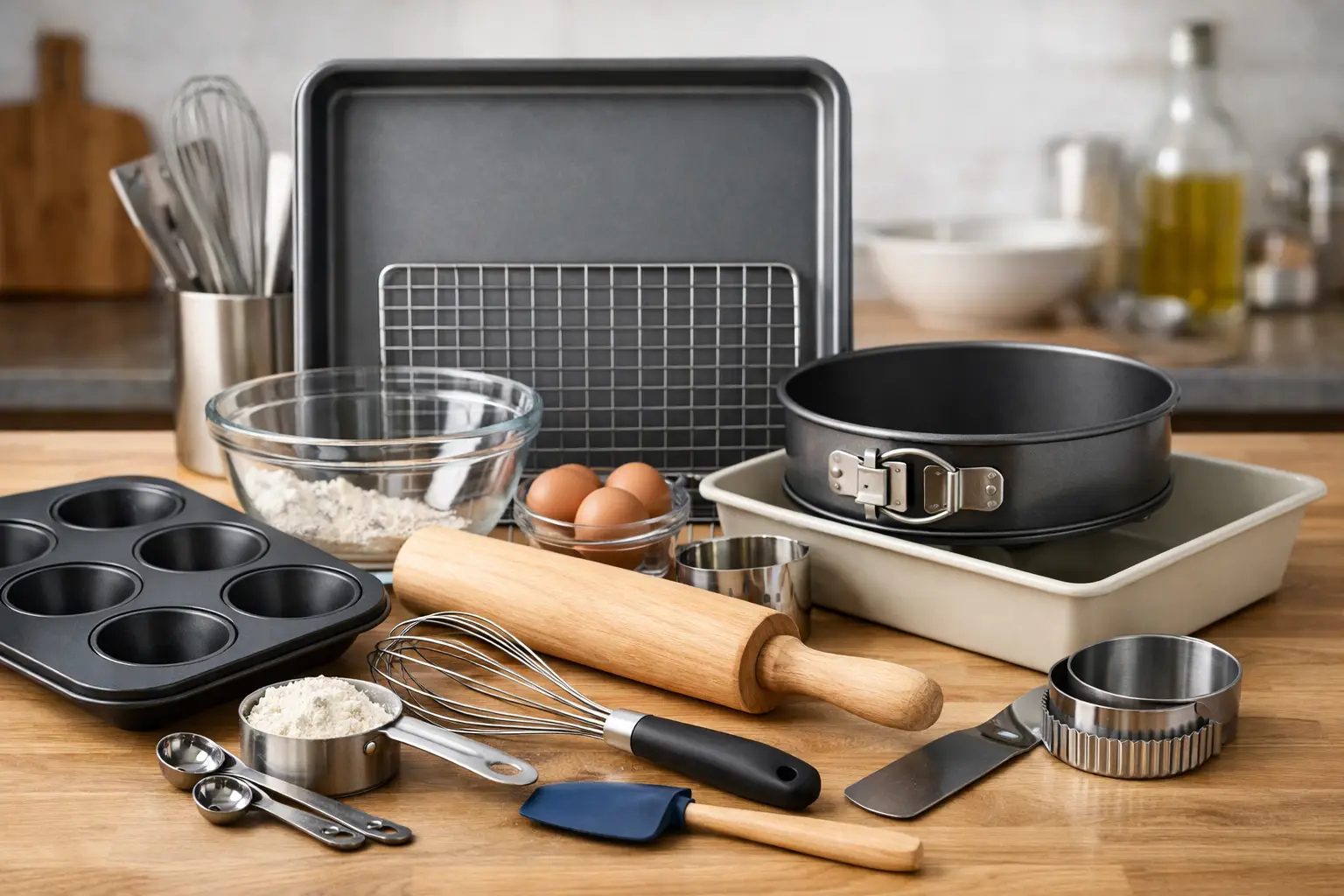
You do not need a kitchen packed with specialty gear to bake well. What you do need is a short list of bakeware tools for beginners that make cookies, cakes, muffins, and weeknight treats feel easy instead of frustrating. A solid starter setup saves space, cuts down on guesswork, and helps your kitchen look as good as it works.
For most home bakers, the sweet spot is simple: choose pieces you will reach for often, that clean up without drama, and that can handle more than one job. If you are outfitting a first apartment, refreshing a family kitchen, or picking out a practical gift, the right bakeware can make everyday baking feel more polished from the start.
Beginner baking gets easier when each item earns its spot in the cabinet. Instead of buying a different pan for every recipe you might someday try, start with essentials that cover the basics. You can always add the fun extras later.
A sturdy baking sheet is usually the first smart buy. It works for cookies, roasted nuts, sheet pan desserts, reheating pastries, and even casual dinner prep. If you only buy one pan at first, make it one that feels substantial in your hand and sits flat. Thin pans tend to warp, and that can lead to uneven baking.
A muffin pan is another strong early purchase because it does more than muffins. It handles cupcakes, mini quiches, baked oatmeal cups, and portioned desserts for parties or lunch prep. For busy households, that kind of flexibility matters.
Then there is the classic round or square cake pan. If you enjoy brownies, snack cakes, bars, and simple celebration desserts, this is one of the most useful tools to keep around. A square pan is especially practical because it works for both sweet and savory bakes.
Some kitchen tools look exciting online but end up buried in a drawer. These are the pieces most beginners will use again and again.
A quality baking sheet is a real workhorse. It supports everything from cookies to roasted fruit, and it is often the pan you will grab without even thinking. Look for one with a solid rim so ingredients stay put and cleanup stays manageable.
This one earns its keep quickly. Whether you are baking cupcakes for a birthday or making egg bites for weekday breakfasts, a muffin pan helps with portion control and presentation.
For brownies, blondies, simple cakes, and baked desserts, one dependable cake pan goes a long way. If your storage space is tight, start with one versatile size before building a larger collection.
A loaf pan is ideal for banana bread, pound cake, quick breads, and even meatloaf. It is one of those crossover tools that fits both baking and everyday cooking, which makes it especially useful for smaller kitchens.
Good mixing bowls are not glamorous, but they make prep faster and cleaner. A nested set saves space and gives you room to mix batter, whisk dry ingredients, or hold toppings without cluttering the counter.
Baking is less forgiving than casual stovetop cooking, so accurate measuring matters. A complete set of measuring cups and spoons helps beginners follow recipes with more confidence and more consistent results.
A flexible spatula helps scrape every bit of batter from the bowl, fold ingredients gently, and spread mixtures evenly. It is a small tool, but it makes baking feel smoother and less messy.
For blending dry ingredients, beating eggs, or smoothing out simple batters, a whisk is a must-have. It is also useful well beyond baking, which makes it an easy choice for any starter kitchen.
This is one of those tools beginners often skip, then wish they had. A cooling rack helps baked goods set properly and keeps bottoms from turning soggy. It also helps with neater glazing and faster cooling when you are short on time.
Not every essential is a pan or utensil. A nonstick baking surface makes cleanup easier, helps prevent sticking, and can improve results with cookies and pastries. Parchment is convenient, while reusable mats can be a smart choice if you bake often.
Material matters, but not in a way that needs to feel intimidating. Most beginners do well with dependable metal bakeware because it heats evenly and supports a wide range of recipes. Nonstick options can make release easier, especially for cakes and muffins, though they may need a little more care to keep the finish looking good over time.
If you are deciding between the prettiest set and the one that feels more substantial, lean practical first. A beautiful kitchen is part of the fun, but beginner bakeware should also feel reliable. Pieces that bake evenly, stack neatly, and clean up well are the ones you are most likely to keep using.
Size is worth paying attention to too. Standard sizes are generally the safest choice because most recipes are written for them. Oversized or unusually deep pans can change baking times, which adds confusion when you are just getting comfortable.
There is also the question of buying a set versus building your collection one piece at a time. A set can be convenient and often looks coordinated in your kitchen, but it only makes sense if you will actually use most of it. If not, starting with a few core pieces is usually the better value.
Not everyone has room for a full baking cabinet, and that is fine. If you are working with apartment storage, shared shelving, or a kitchen that has to do a lot with very little, a compact setup can still cover plenty.
A baking sheet, muffin pan, loaf pan, mixing bowls, measuring tools, and a spatula can handle a surprising number of recipes. Add a cooling rack and either parchment paper or a reusable baking mat, and you have a functional setup that does not overwhelm your space.
This is often the smartest route for beginners because it keeps things approachable. You are not trying to become a professional baker overnight. You are building a kitchen that supports easy Sunday muffins, birthday cupcakes, and simple homemade desserts that make everyday life feel a little more special.
Once you have used your basics for a while, patterns start to show. Maybe you bake cookies every weekend and want a second baking sheet. Maybe loaf cakes are your thing, or maybe you have realized you love hosting and want matching pans that look a little more elevated.
That is the best time to upgrade because you are shopping based on how you actually live. Some households need durable pieces that can handle frequent use. Others want bakeware that feels giftable, display-worthy, or coordinated with the rest of the kitchen. Both are valid.
A curated collection can make baking feel more enjoyable, especially when the pieces are attractive enough to leave out or easy enough to grab at a moment’s notice. That is part of the appeal of shopping a thoughtfully chosen assortment instead of sorting through endless options on your own.
The most common mistake is buying too much, too soon. Specialty pans are tempting, especially when they promise bakery-style results, but they often create clutter before they create confidence. It is better to start with dependable basics and learn what kinds of baking you genuinely enjoy.
The second mistake is treating all bakeware as interchangeable. Price alone does not tell the whole story, but extremely flimsy pieces can make baking harder than it needs to be. A few well-chosen tools tend to be more satisfying than a crowded cabinet full of items that never quite perform.
If you are shopping for your own home or helping someone else get started, think about the rhythms of real life. The best bakeware supports casual baking, easy cleanup, and moments worth sharing – not just holiday projects or once-a-year recipes.
A beginner-friendly kitchen does not need to be perfect. It just needs the right tools to help you cook, create, and celebrate a little more often, with a little more ease.







Leave a comment