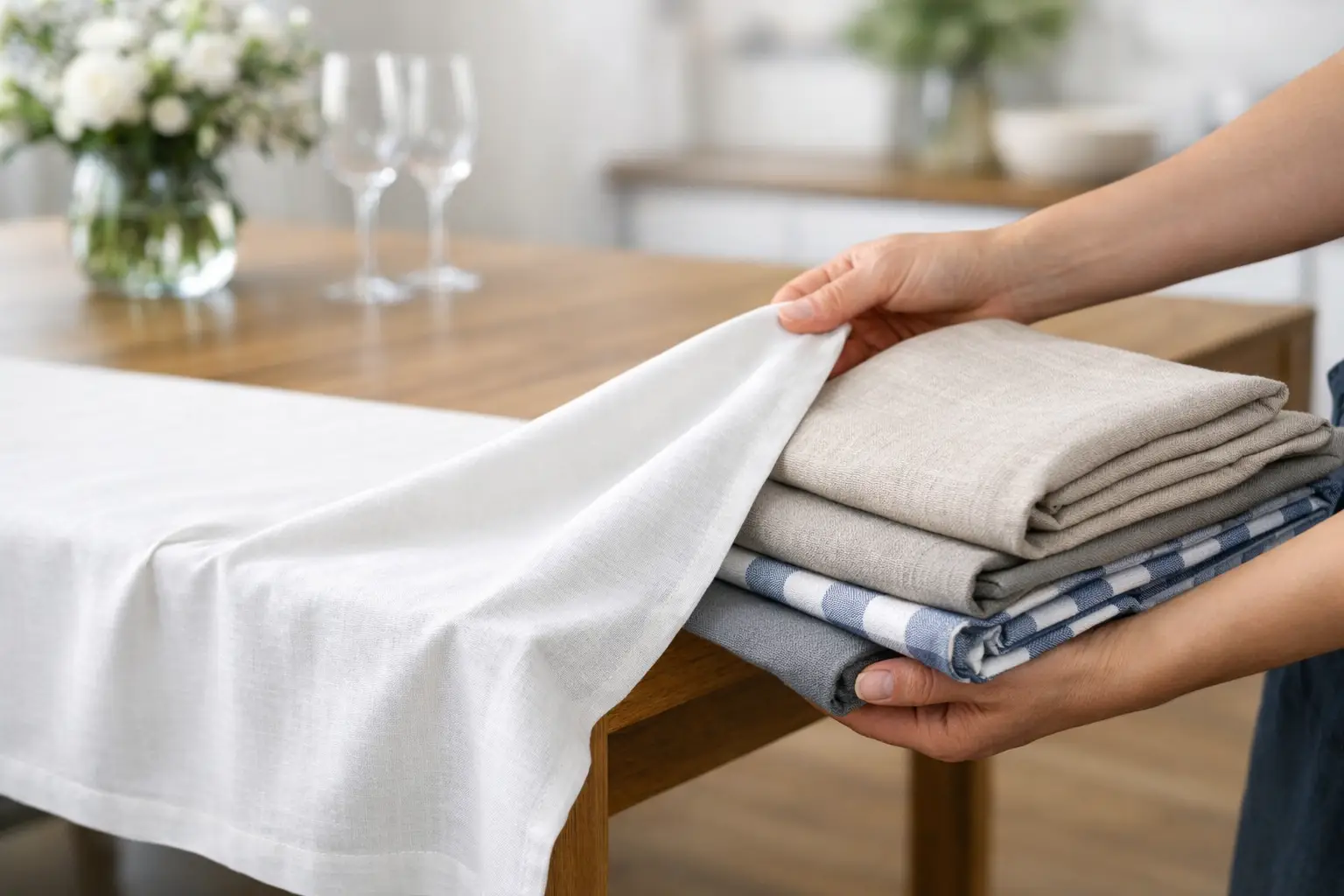
A table can look almost finished and still feel off. Maybe the plates are right, the candles are nice, and the room is clean, but the table still reads flat or fussy. If you’ve been wondering how to choose a tablecloth, the answer usually comes down to five things: fit, fabric, color, purpose, and how much real-life mess you want it to handle.
The good news is that choosing one is not about following rigid decorating rules. It is about making your table work for the way you actually eat, host, and live. A weeknight dinner setup needs something very different from a holiday table, and a busy family kitchen has different priorities than a formal dining room that only comes out for special occasions.
It is tempting to shop by print first. Florals feel cheerful, stripes feel tailored, and a crisp solid can make everything else on the table stand out. But before you fall for a design, focus on your table’s shape and measurements.
Round, square, rectangular, and oval tables all call for slightly different proportions. A tablecloth that looks elegant in a product photo can feel awkward at home if the drop is too short, too long, or uneven. Measuring first saves a lot of guesswork and usually leads to a better-looking result.
To get the size right, measure the full length and width of your table, or the diameter if it is round. Then decide how much drop you want, which is the amount of fabric that hangs over the edge. For everyday use, a drop of about 6 to 10 inches on each side tends to look neat and practical. For more dressed-up dining, 10 to 15 inches feels more refined. Floor-length tablecloths are usually best reserved for buffets, dessert tables, or formal events where no one needs to tuck in a chair comfortably.
If your household uses the dining table often, shorter drops are usually easier to live with. They snag less, shift less, and are friendlier for kids and busy weeknight meals.
Once you know your preferred drop, add it twice to each table measurement. For example, if your rectangular table is 40 by 72 inches and you want an 8-inch drop, you would look for a tablecloth around 56 by 88 inches. That extra fabric gives you the overhang on both sides.
This is where style and practicality meet. A longer drop looks more polished, but it can also feel heavy in smaller rooms or become a nuisance if people brush it with their knees. A shorter drop feels casual and clean, though it may not create the layered, finished effect some hosts want for holiday meals.
There is no single correct choice. If your goal is easy everyday dining, lean practical. If your goal is a more elevated tablescape, give yourself a bit more length.
Round tables usually look best with round tablecloths, though some square options can work for a more relaxed look. Rectangular and oval tables are the most flexible, but the cloth should still follow the general shape of the table. A shape mismatch can look less intentional and more like you grabbed whatever was in the linen closet.
Extension tables add another layer. If your table expands for guests, measure it at both sizes. Some shoppers prefer one everyday cloth and one larger option for entertaining. It sounds like an extra purchase, but it often makes the table easier to style all year.
After size, fabric is the biggest decision. It affects how the tablecloth hangs, how it feels, how easy it is to wash, and whether it fits your life.
Cotton is a favorite for good reason. It feels soft, relaxed, and easy to use for everyday meals or casual gatherings. It generally washes well, but it can wrinkle, and lighter colors may show stains more quickly.
Polyester and easy-care blends are popular for busy households because they resist wrinkles and tend to be lower maintenance. If your table sees frequent breakfasts, craft projects, or homework sessions, this kind of fabric can make life simpler. It may not have the same natural texture as cotton or linen, but it often wins on convenience.
Linen brings beautiful texture and an effortlessly elevated look. It works especially well if you like a table that feels relaxed but still special. The trade-off is upkeep. Linen wrinkles easily, and for some people that is part of the charm. For others, it feels like one more thing to fuss over.
Vinyl-coated or wipe-clean tablecloths are the practical champions. They are especially useful for outdoor dining, kids’ tables, and high-traffic spaces. The style selection has come a long way, but they still create a different look than woven fabric. If atmosphere matters as much as cleanup, save these for the most mess-prone moments.
One of the easiest ways to narrow your options is to ask a simple question: What is this tablecloth mostly for?
If it is for everyday dining, choose something durable, washable, and easy to style without much effort. Mid-tone colors, subtle patterns, and easy-care fabrics tend to earn their place here. They hide small spills better and feel less precious.
If it is for entertaining, you can be more selective about texture and visual impact. A tablecloth for hosting can be lighter, richer, or more decorative because it is not taking the same daily wear. This is where linen-like textures, seasonal colors, and longer drops can really shine.
If it is for holidays, think beyond one specific date. A cloth in deep green, warm cream, soft gold, or classic red may work across several gatherings instead of one. That gives you more flexibility and better value over time.
For outdoor meals, prioritize fabric that can handle sun, wind, and easy cleanup. A beautiful cloth is only useful if you actually want to use it.
A tablecloth does not have to match everything, but it should make sense with the room and the way you serve meals. If your dishes, placemats, or centerpiece pieces are already colorful, a quieter tablecloth often works better. If your dinnerware is simple, the cloth can carry more personality.
Solid colors tend to feel versatile and polished. They are easy to dress up with napkins, candles, and serving pieces, and they usually transition well between everyday use and guests. Patterns add energy and can hide wear more gracefully, but they also compete more with other elements on the table.
Small prints often feel approachable and practical. Large, bold prints make more of a statement and can look fantastic in the right space, but they are less flexible. If you like to change décor seasonally, neutrals and classic patterns usually give you more mileage.
Also pay attention to undertones. A warm white tablecloth and cool white dishes do not always sit happily together. These are small details, but they are often the reason a table setting feels cohesive instead of slightly off.
A tablecloth can be beautiful and still be wrong for your routine. If you do not iron, do not buy something that needs ironing to look finished. If your table gets used every day, do not choose a fabric that makes you nervous around pasta sauce.
This is where honest shopping pays off. Many people want the special-occasion look but need everyday ease. That is exactly why blends and machine-washable options are so useful. They give you the polished feel of a styled table without turning cleanup into a project.
A good tablecloth should make your space feel more inviting, not more stressful. Easy returns, clear product details, and a curated selection also matter when shopping online, because texture, weight, and drape are harder to judge on a screen. Brands like Kitchen Bay make that process feel more approachable by pairing practical dining essentials with style-led options for everyday homes.
The best choice is usually the one that gets used often. That means it fits your table, suits your room, and works with the pace of your household. A tablecloth that looks amazing but spends eleven months folded in a drawer is not doing much for your home.
If you host often, keep one versatile everyday option and one more elevated choice for gatherings. If you live in a smaller space, choose a color and fabric that can flex between casual breakfasts and dinner with friends. If you have kids, pets, or both, let practicality lead and style around it rather than the other way around.
A well-chosen tablecloth has a way of making ordinary meals feel a little more cared for. And that is really the point – not perfection, just a table that feels ready for whatever you are serving next.








Leave a comment