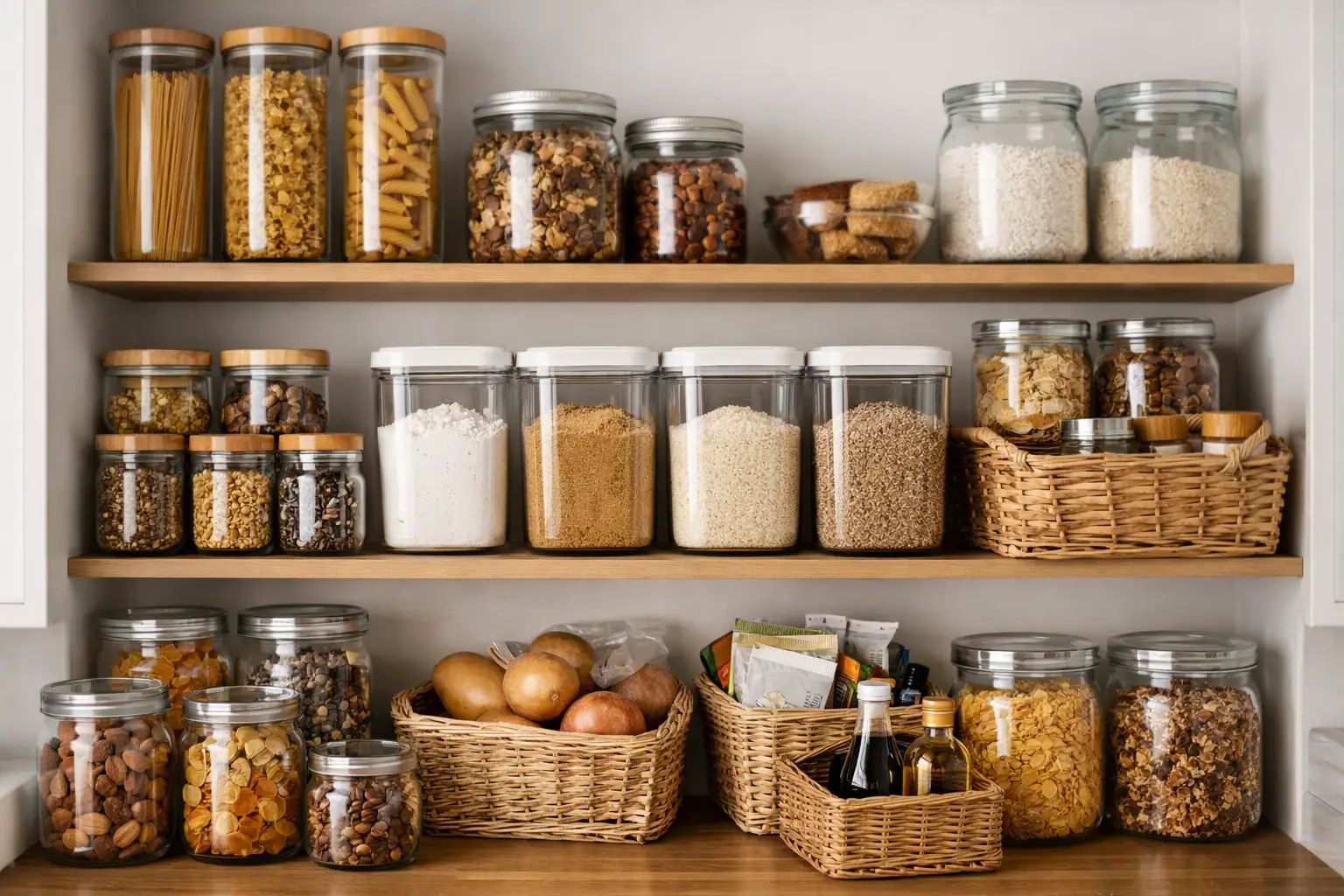
A pantry usually falls apart one pasta box, half-empty bag of rice, and duplicate can of beans at a time. If you’re figuring out how to organize pantry staples, the goal is not a picture-perfect shelf for one day. It’s a setup that makes weeknight cooking easier, keeps food visible, and helps your kitchen feel calmer every time you open the door.
The good news is you do not need a walk-in pantry or a full weekend to get there. A few smart decisions about grouping, storing, and maintaining your basics can make even a small cabinet feel more polished and much easier to use.
Before bins, labels, or matching canisters, pull everything out. It is the fastest way to see what you actually have and where the clutter is coming from. Most pantries collect the same troublemakers – stale snacks, duplicate grains, expired spices, and awkward bags that never stack well.
As you empty shelves, sort items into simple categories: keep, toss, and relocate. Relocate matters more than people think. Baking soda, protein bars, and breakfast oats may technically fit in the pantry, but if they are used somewhere else every day, they may belong closer to the prep zone, coffee station, or breakfast shelf.
Wipe shelves before putting anything back. It sounds basic, but a clean surface changes the whole feel of the space and makes the reset feel worth it.
The easiest answer to how to organize pantry staples is to stop storing by package shape and start storing by use. When similar foods live together, you can scan the shelf and know what you have in seconds.
A practical pantry usually works best with a few broad zones. Think baking, breakfast, pasta and grains, canned goods, snacks, oils and condiments, and dinner helpers like broth, beans, and tomato products. If you cook often, you can get more specific. If your pantry is small, keep the categories broad so they stay manageable.
This is where real life matters more than a pretty diagram. If your household grabs cereal, oatmeal, and peanut butter every morning, make breakfast the easiest zone to reach. If you host often, keep crackers, nuts, olives, and drink mixers together so entertaining feels less like a scavenger hunt.
Eye-level shelves should hold the staples you reach for constantly – flour, sugar, rice, pasta, canned tomatoes, broth, lunchbox snacks, or whatever your household cycles through most. Less-used items such as specialty baking ingredients or backup stock can go higher or lower.
Heavy items belong lower down, especially bulk grains or canned goods. It is safer, easier to lift, and less likely to turn into a shelf avalanche.
Not every pantry item needs to be decanted. That is one of the biggest mistakes people make when organizing. Clear containers look clean and cohesive, but they are most helpful when they fix something specific, like messy bags, poor stacking, or ingredients that are hard to identify quickly.
Flour, sugar, rice, oats, cereal, pasta, and snacks often benefit from containers because they are used often and their original packaging tends to slump, tear, or spill. Meanwhile, canned beans, boxed broth, and sealed pasta sauce are usually fine in their original packaging. Organizing works better when you are selective.
Decant dry staples that are messy, frequently used, or bought in bags. Leave shelf-stable items in original containers when the packaging is sturdy and easy to read. There is a trade-off here. Decanting creates a cleaner visual line and saves space, but it also takes a little more effort each time you restock. If you want a lower-maintenance system, reserve containers for the ingredients that truly earn them.
Airtight canisters are especially useful for baking ingredients and grains because they help preserve freshness while making the pantry look more intentional. A matching set can also make a mixed pantry of boxes, pouches, and bags feel instantly calmer.
Labels should make life easier, not turn the pantry into a craft project. Clear, readable labels on canisters, bins, and shelves help everyone in the house put things back in the right spot.
Simple names are best: flour, sugar, pasta, snacks, baking, breakfast. You do not need ultra-specific wording unless you have a large pantry or store several versions of the same ingredient. In a busy household, less decision-making usually means the system lasts longer.
Shelf labels can help just as much as container labels. A shelf marked canned goods or dinner staples subtly creates boundaries, which is useful if multiple people use the pantry.
Many homes do not have a dream pantry. They have one narrow cabinet, a couple of deep shelves, or an awkward corner that swallows food until it expires. That does not mean you cannot build a better system.
In compact spaces, visibility matters more than volume. Use shelf risers for cans and jars so nothing gets hidden in the back. Turntables can help with oils, vinegars, and sauces, especially on deep shelves. Bins are helpful for corralling pouches, seasoning packets, or snack bars that would otherwise drift around.
If your shelves are deep, avoid lining everything up in one long row. Grouping by bin or category lets you pull out a whole section at once instead of digging. It is a small shift, but it saves time and cuts down on forgotten items.
A tidy pantry is not only easier to use. It also makes the whole kitchen feel more put together. That is why materials and finishes matter more than people expect. Clear storage canisters, neutral bins, and coordinated labels create a cleaner look without making the space feel fussy.
If you enjoy a styled kitchen, pantry organization is one of the simplest ways to bring function and visual order together. A few polished storage pieces can turn everyday staples into part of the room’s design instead of a collection of random packaging. That balance of utility and appearance is often what makes an organized pantry feel satisfying enough to maintain.
Once you have figured out how to organize pantry staples, the next challenge is keeping it that way. The easiest method is to build a light maintenance habit into your weekly routine.
Before grocery shopping, do a quick pantry scan. Check your most-used zones, combine partial packages when it makes sense, and move older items forward. This helps prevent overbuying and makes meal planning easier because you can see what needs to be used up.
A monthly reset is usually enough for most households. Straighten shelves, wipe up crumbs, and toss anything expired. If your pantry tends to get messy fast, that usually means the categories are too narrow, the containers are inconvenient, or the most-used items are not in the easiest spots.
The best pantry system is the one that fits your routine, not someone else’s. A parent packing lunches needs a different setup than a weekend baker. An apartment kitchen may need stackable canisters and compact bins, while a larger home can support wider category zones and backup storage.
That is why flexibility matters. You may start with neat rows of grains and baking staples, then realize your real challenge is snack overflow or canned goods taking over two shelves. Adjusting the system is part of the process. Good organization is not rigid. It responds to how your household cooks, shops, and stores food.
If you want your kitchen to feel easier, calmer, and a little more elevated, the pantry is a smart place to start. A few thoughtful storage upgrades and clearer zones can change the pace of everyday cooking in a very real way. Kitchen Bay is built around that kind of practical polish – the little improvements that make home routines work better and look better at the same time.
A well-organized pantry does not need to be elaborate to feel rewarding. When your staples are easy to find, easy to store, and easy to use, cooking at home feels less like a chore and more like something you can actually enjoy.








Leave a comment