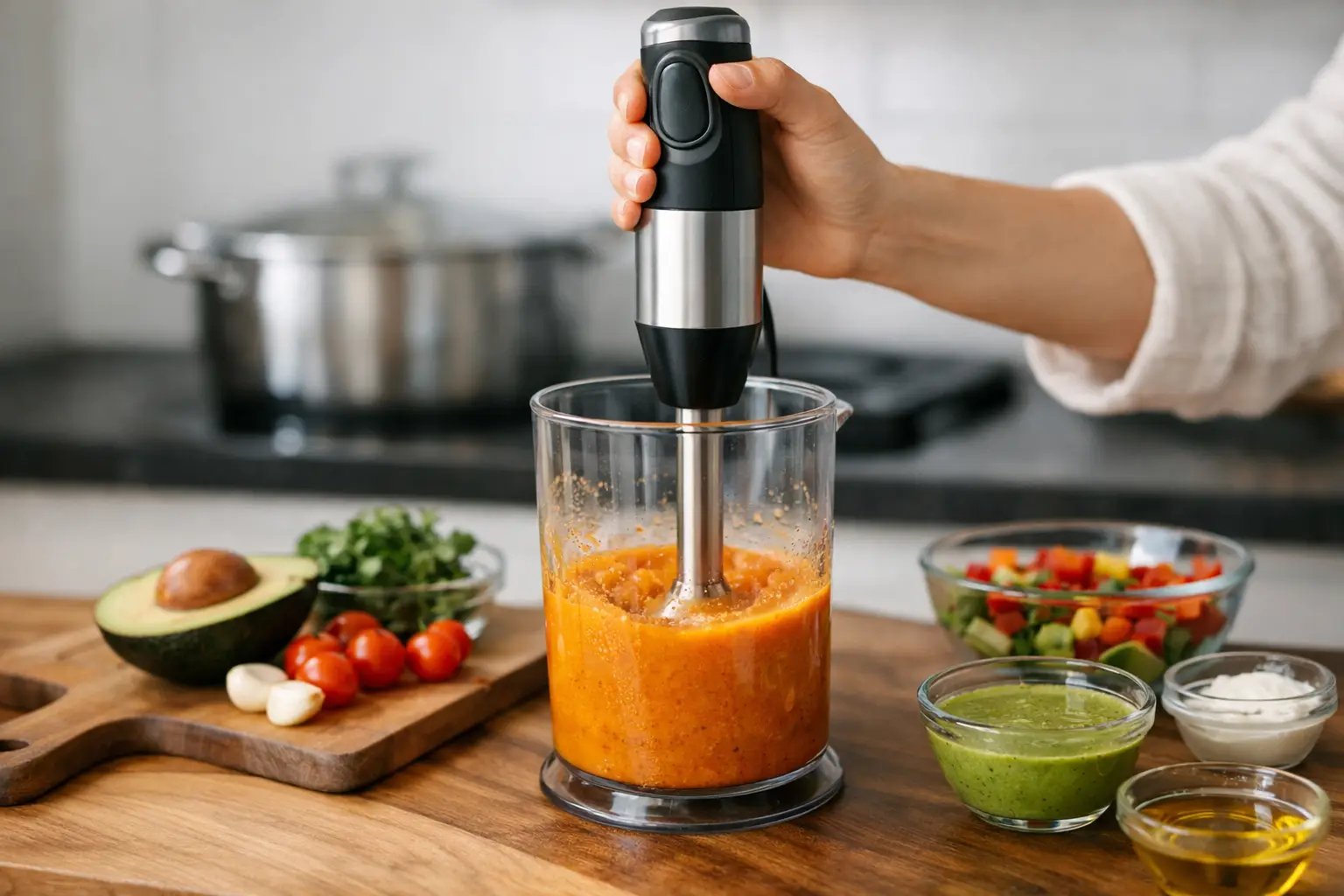
A pot of hot soup on the stove is exactly when many people realize they should learn how to use an immersion blender. Instead of transferring everything to a full-size blender in batches, you can blend right where you cook. It is faster, less messy, and a lot more practical for everyday meals.
That convenience is the real appeal. An immersion blender is one of those kitchen tools that earns its spot because it helps with weeknight cooking, quick sauces, small-batch dressings, and even a morning smoothie when you do not want to wash a bulky pitcher. Once you know the basics, it starts to feel less like a specialty gadget and more like a go-to essential.
The first rule is simple: keep the blade fully submerged before you turn it on. If the blade is too close to the surface, it can splash hot liquid surprisingly far. That matters with tomato soup, but it matters even more with anything simmering.
Hold the blender at a slight angle rather than straight up and down. That helps pull food toward the blade and creates a smoother circulation. Start on a low speed if your model has speed settings, then increase only if the mixture needs more power.
It also helps to use a deep container whenever possible. A tall mixing cup, deep bowl, or stockpot gives the food room to move without jumping out. If you are blending in a shallow pan, work slowly and keep the blender head near the bottom.
One habit worth building early is turning the blender off before lifting it out of the food. It sounds obvious, but it is the difference between a tidy countertop and a splattered one.
Immersion blenders are best for soft or liquid-heavy ingredients. Think creamy soups, pureed vegetables, sauces, whipped cream, pancake batter, baby food, salad dressings, and simple smoothies. They are especially useful when you want a smooth finish without hauling out a larger appliance.
They are less ideal for very thick doughs, large quantities of frozen fruit, or hard raw vegetables with very little liquid. In those cases, the motor can strain, and the final texture may be uneven. If your recipe is dense, adding a little broth, milk, or water often helps the blender move more easily.
This is where expectations matter. An immersion blender can make a silky but rustic soup beautifully. It can also handle homemade mayo or a quick marinara. But if you want an ultra-airy frozen drink or need to crush a lot of ice, a countertop blender may still do the better job.
For soup, let the pot cool slightly if it is actively boiling. Very hot liquid can splash, and steam can build pressure around the blade. Once the soup settles, place the immersion blender into the pot and blend in short bursts, moving slowly around the pan until the texture looks right.
If you like some texture, do not blend the entire pot evenly. Blend more in the center and less around the edges, or stop before every chunk disappears. That gives you a soup that feels homemade instead of overprocessed.
For sauces, the method is similar but usually quicker. Tomato sauce, gravy, cheese sauce, and pan sauces often need only a minute or two. Keep the head moving gently so one area does not become too smooth while another stays lumpy.
Smoothies work best in a tall cup or blending beaker. Add liquid first, then softer ingredients, then frozen fruit or ice in smaller amounts. That order helps the blade catch and circulate everything more easily. If the mixture stalls, tilt the cup slightly and pulse instead of running the motor continuously.
For whipped cream or eggs, use a narrow container and a lighter touch. Overmixing can happen fast, especially with small amounts.
If you are new to the tool, a repeatable routine makes everything easier. Set up your container first, making sure it is deep enough for blending. Cut larger ingredients into manageable pieces if needed, especially cooked vegetables.
Next, insert the blender head into the food before switching it on. Start low, pulse a few times, and then blend steadily while moving the blender in small circles or up-and-down motions. Keep the blade under the surface the whole time.
Pause occasionally to check texture. That is especially helpful with soups and sauces, because the difference between smooth and overblended can happen quickly. When you are finished, switch the blender off first, then lift it out.
This routine takes less time than assembling many larger appliances, which is exactly why so many home cooks end up using an immersion blender more often than they expected.
The container affects both performance and cleanup. A deep pot is great for soup, but for dressings, whipped cream, or smoothies, a tall narrow cup usually works better than a wide bowl. Narrow containers keep ingredients close to the blade, which means faster blending and a smoother texture.
Material matters too. If you are blending in nonstick cookware, be careful with metal blade guards. Some immersion blenders are designed to be pan-safe, but it still pays to use a light hand. Scraping or pressing down hard can wear the finish over time.
Glass jars can work for cold mixtures, though they are not always ideal for very hot ingredients. If you regularly make soups and sauces, a sturdy blending cup or deep heat-safe vessel is the easier choice.
The biggest mistake is blending too close to the surface. That causes splatter and uneven results. The fix is simple: submerge the blade fully and slow down.
Another common issue is expecting the blender to process ingredients that are too large or too firm. If cooked potatoes are in big chunks, or if your smoothie has large frozen pieces, the blade may struggle. Smaller pieces and a bit more liquid usually solve the problem.
Overblending is another one. Potatoes, beans, and some starchy soups can turn gluey if blended too long. In those cases, pulse gently and stop as soon as the texture is smooth enough.
Then there is heat. Blending a boiling pot immediately can be risky, not because the tool cannot handle warmth, but because splashing hot food is never worth it. Let food cool for a few minutes first.
Cleanup is one of the best parts of owning one. In many cases, you can rinse the blending shaft right after use before food dries on it. For a deeper clean, detach the shaft if your model allows it and wash according to the product instructions.
A quick trick for creamy soups, sauces, and smoothies is to fill a cup with warm water and a drop of dish soap, then run the blender in it for a few seconds. That loosens residue fast. After that, rinse thoroughly and let it dry.
Take extra care around the blade. It is compact, which makes it convenient, but also easy to underestimate when washing by hand.
For storage, keep the attachments together in one drawer or cabinet bin so the tool is easy to grab. The more convenient it is to reach, the more often you will use it. That is true for almost any kitchen essential, and especially for tools designed to simplify everyday cooking.
For many kitchens, yes. It saves time, reduces dishes, and makes small jobs feel easy instead of annoying. If you cook soups, sauces, dressings, dips, or simple blended drinks with any regularity, it quickly proves its value.
It is not the right tool for every task, and that is part of using it well. A countertop blender still has advantages for bigger batches and tougher ingredients. But for practical, everyday cooking, an immersion blender often wins on speed and convenience.
That balance is what makes it such a smart addition to a well-used kitchen. A good one helps you cook with less friction, clean up faster, and feel a little more confident trying homemade versions of the things you already love. Kitchen Bay celebrates tools like that because they make everyday meals feel easier, better, and just a bit more polished.
Once you get comfortable with it, you will start seeing more chances to use your immersion blender than you expected – and that is usually when a kitchen tool becomes a favorite.







Leave a comment