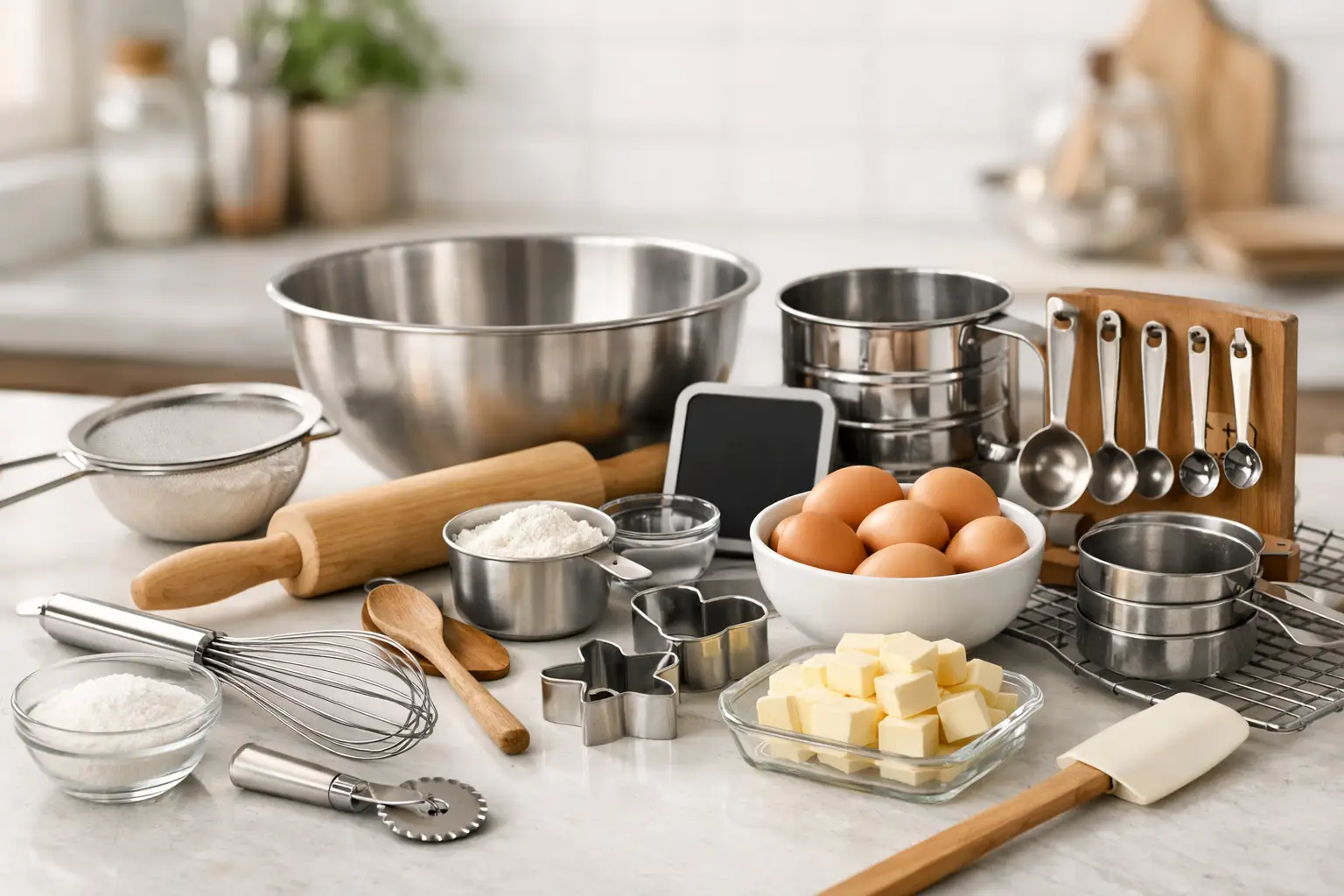
Fresh cookies should feel like a weekend win, not a search through crowded drawers for a missing measuring spoon. A thoughtful best baking tools list gives you the reliable essentials for everyday muffins, birthday cakes, loaf cakes, pie crusts, and the kind of warm-from-the-oven treats that bring everyone into the kitchen.
You do not need a professional pastry setup to bake with confidence. The right tools simply make each step more predictable: ingredients are measured accurately, batter mixes evenly, pans release cleanly, and your finished bake gets the presentation it deserves. Start with the pieces you will use often, then add specialty favorites as your recipes and hosting plans grow.
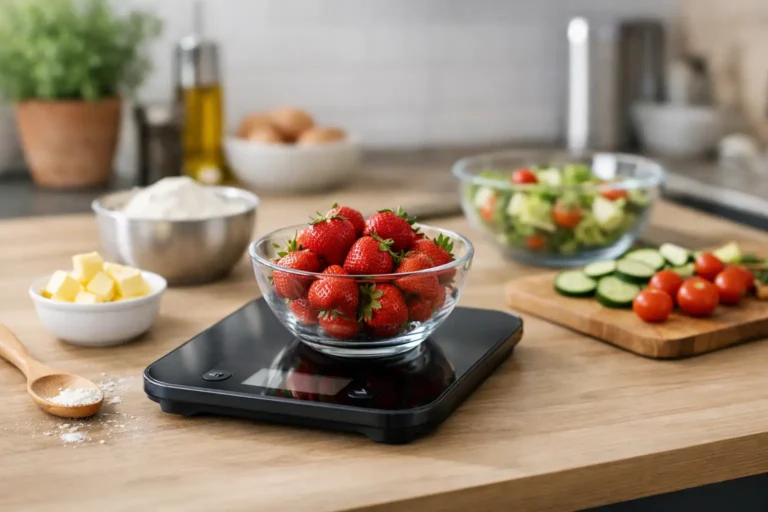
A digital scale is one of the smartest upgrades for home bakers, especially if you make bread, cookies, or layer cakes. Measuring flour by weight is more consistent than scooping it with a cup, which helps prevent dry cookies and dense cakes. It also means fewer dishes to wash when you can weigh ingredients directly into a bowl.
Look for a scale with an easy-to-read display, a tare function that resets to zero, and measurements in both grams and ounces. It is a small countertop tool with a big impact on repeatable results.
A scale is excellent, but measuring cups and spoons still earn their drawer space. They are ideal for quick weekday baking, small amounts of baking soda or vanilla, and recipes written in cups. Choose sturdy nested sets with clear markings that will not fade after a few washes.
For dry ingredients, use individual cups that let you level flour easily. A liquid measuring cup with a pour spout is useful for milk, oil, melted butter, and sauces. Having both types keeps your process cleaner and more accurate.
Baking has a way of spreading across the counter. A set of mixing bowls gives every ingredient a place, whether you are whisking a simple glaze, folding berries into batter, or preparing dough for a family brunch.
Stainless steel bowls are lightweight and durable, while glass bowls make it easy to see what is happening as you mix. A medium bowl is often the workhorse, but a large bowl is worth having for cookie dough, frosting, and doubled recipes. Bowls with non-slip bases are especially helpful in smaller kitchens where every bit of counter stability matters.
These are the quiet heroes of a well-stocked baking drawer. A balloon whisk quickly blends dry ingredients, smooths out eggs, and brings together dressings or glazes. Silicone spatulas scrape bowls thoroughly, so your cake batter ends up in the pan instead of stuck to the sides.
Keep at least two spatulas if you bake regularly: one standard size for batters and one smaller version for jars, frosting, and detail work. Heat-resistant silicone is practical for both baking and everyday cooking, making these tools easy to reach for again and again.
A stand mixer can be wonderful, but it is not a requirement for a home baker. A hand mixer handles whipped cream, buttercream, brownies, cookie dough, and simple cake batter without taking up permanent counter space. It is a particularly sensible choice for apartment kitchens or occasional bakers.
If you make yeast breads, large batches of cookies, or elaborate celebration cakes every month, a stand mixer may become a worthwhile upgrade. Until then, a hand mixer, whisk, and a little patience can take you very far.
A pair of rimmed baking sheets is the foundation for cookies, roasted fruit, sheet cakes, granola, and more. The raised edge matters because it keeps melted butter, juices, and runaway ingredients from reaching the bottom of your oven.
Two matching sheets make baking more efficient. You can rotate pans between oven racks, prep the next batch while the first one bakes, or serve warm cookies without waiting for a single hot pan to cool. Light-colored metal tends to encourage more even browning, while darker pans can brown the bottoms faster.
For most homes, two round cake pans and one rectangular baking pan create a flexible starting point. Round pans cover layer cakes and single-layer celebrations, while a rectangular pan is ideal for brownies, snack cakes, bars, and potluck desserts.
Nonstick pans are convenient for easy release, but they still benefit from a light coating of butter or baking spray when a recipe calls for it. If you love making loaves, add a loaf pan for banana bread, pound cake, and homemade sandwich bread. Build your collection around what you genuinely like to bake, rather than buying every pan at once.
Parchment paper is one of those simple kitchen supplies that makes cleanup feel almost magical. Line pans before baking cookies, use it to prevent cake layers from sticking, or create a sling for lifting brownies from a pan. It also makes it easier to transfer delicate baked goods without breaking them.
Reusable silicone baking mats are a good alternative for frequent cookie bakers. They reduce disposable waste and create a nonstick surface, though parchment is often the better choice for recipes that need a crispier bottom or easy trimming to fit a particular pan. Many kitchens benefit from keeping both on hand.
Taking a pan out of the oven is not the final step. A cooling rack lets air circulate beneath cookies, cakes, and quick breads so steam can escape. Without it, bottoms can turn soft or damp as the bake cools on a solid surface.
Choose a rack with a stable, close-set grid. It should support small cookies as comfortably as a loaf cake. A rack that fits inside a rimmed baking sheet can also double as a handy station for glazing doughnuts or drizzling chocolate, keeping the mess contained.
Oven dials are not always as accurate as we hope. Even a small temperature difference can change how cookies spread, how evenly cake layers rise, or how quickly pie crust browns. An inexpensive oven thermometer helps you see the real temperature before your carefully mixed batter goes inside.
This is a particularly useful tool if your recipes often seem to bake too quickly or take longer than their stated time. Check the thermometer after the oven has fully preheated, then adjust your setting as needed.
If pie dough, sugar cookies, biscuits, or pizza night are part of your routine, a rolling pin is essential. A classic smooth pin is versatile and approachable, while a French-style tapered pin offers more control for bakers who enjoy working with pastry. The best choice is the one that feels comfortable in your hands and fits your storage space.
Pair it with a bench scraper. This flat-edged tool lifts and divides dough, gathers flour from the counter, and helps portion sticky mixtures with less fuss. It is useful well beyond baking, making it an easy addition to a practical kitchen.
An offset spatula creates a polished finish without requiring professional decorating skills. Use it to spread frosting on a birthday cake, smooth batter in a pan, loosen baked goods from the edges, or lift cookies from a tray. The angled blade keeps your knuckles away from the surface, which makes smoothing easier.
A small offset spatula is enough for most everyday decorating. If layer cakes are your signature dessert, add a longer version for broader, smoother strokes.
Flour, sugar, oats, chocolate chips, and sprinkles are easier to use when they are visible and neatly stored. Clear canisters help you spot what needs replenishing, protect ingredients from everyday kitchen moisture, and make a baking shelf look as inviting as it feels functional.
You do not need to decant every ingredient. Start with the staples you reach for most, then label each container with the ingredient name and, if helpful, the date it was opened. A more organized pantry makes spontaneous baking far more likely.
The most useful baking collection reflects your habits. If your family loves cookies, prioritize baking sheets, parchment, a cooling rack, and a reliable scoop. If you are the friend who brings birthday cakes, focus on cake pans, a hand mixer, and an offset spatula. For bread lovers, a scale, loaf pan, bench scraper, and oven thermometer will quickly prove their value.
Kitchen Bay makes it easy to choose pieces that support both the practical side of baking and the pleasure of serving something beautiful. Start with dependable basics, choose designs you will be happy to leave within reach, and let your collection grow alongside the recipes that become part of your home.







Leave a comment