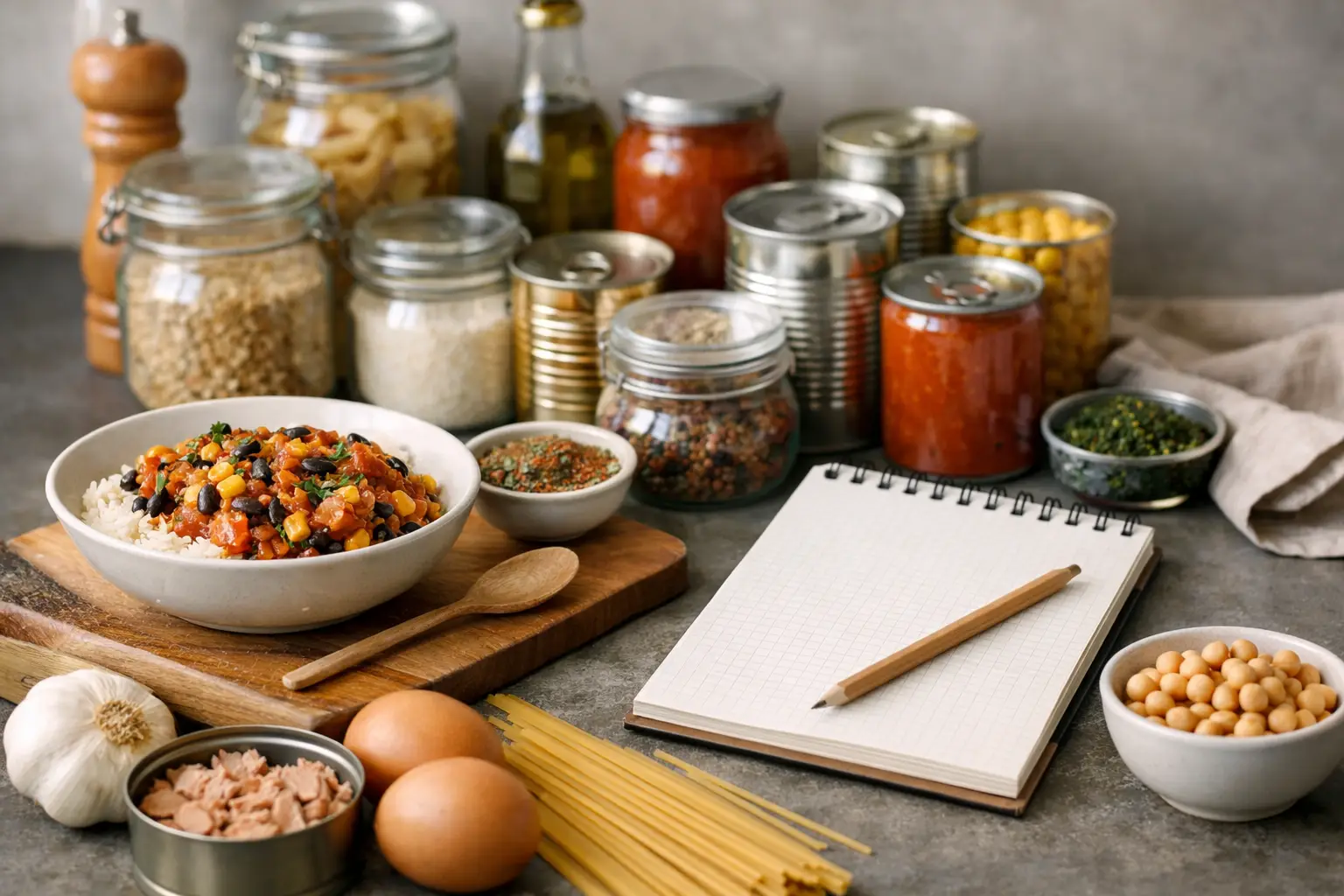
A nearly empty fridge does not have to mean takeout. When you know how to plan pantry meals, a can of beans, a box of pasta, and a few flavorful basics can become a dinner that feels thoughtful, comforting, and fully worth sitting down for. The goal is not to stock a restaurant-sized pantry. It is to keep a small, organized collection of ingredients that gives you options on the nights when a grocery run is not happening.
A useful pantry is built around the way you actually eat. Before adding more cans or dry goods to your cart, think about the dinners your household reaches for again and again. Maybe that is pasta with a quick tomato sauce, rice bowls, soup and grilled cheese, breakfast for dinner, or a tray of roasted vegetables with a grain.
Choose four or five meal types that feel realistic for your schedule, then identify the shelf-stable ingredients that support them. This approach keeps the pantry from becoming a collection of one-time ingredients with unclear expiration dates. It also makes planning feel less like a project and more like setting up your future self for an easier evening.
For most kitchens, a dependable foundation includes pasta, rice, canned beans, canned tomatoes, broth, oats, nut butter, flour, and a few favorite sauces. Add spices you genuinely use, such as garlic powder, chili flakes, cumin, Italian seasoning, or smoked paprika. Olive oil, vinegar, soy sauce, and a jarred condiment or two do a surprising amount of work when a meal needs brightness, salt, or richness.
The best list will depend on your household. A family that loves taco night may use tortillas, black beans, corn, salsa, and rice constantly. Someone cooking for one may prefer smaller packages, quick-cooking grains, tuna, and shelf-stable soup. Planning around your own habits prevents waste and keeps pantry meals appealing instead of repetitive.
Rather than collecting a long list of recipes, build meals from a flexible formula: choose a base, add a protein, bring in vegetables or fruit, then finish with a flavorful sauce, seasoning, or topping. It is an easy pattern to remember, and it works with what you have.
A base might be pasta, rice, couscous, polenta, potatoes, or oats. For protein, consider beans, lentils, canned fish, eggs, tofu, or nut butter. Vegetables can come from the freezer, a can, or the last fresh items in the crisper drawer. The finish might be tomato sauce, pesto, broth, cheese, lemon, hot sauce, toasted breadcrumbs, or a well-chosen spice blend.
Here are four reliable pantry-first dinner ideas to keep in rotation:
These are starting points, not rules. If you have chickpeas instead of white beans, use chickpeas. If you are out of rice, serve the filling over baked potatoes or toast. Pantry cooking gets easier when you see ingredients as parts of a meal rather than items assigned to one specific recipe.
A practical meal plan uses three layers of ingredients. The pantry provides the backbone, the freezer adds staying power, and a small amount of fresh food brings contrast and texture. You do not need a fully stocked refrigerator to make this work.
When you shop, begin by checking what is already on hand. Then choose a few fresh ingredients that can appear in more than one meal. Onions, garlic, lemons, carrots, spinach, mushrooms, and cheese are especially useful because they work across many cuisines. If a busy week is ahead, frozen vegetables are a smart bridge between fresh produce and pantry staples. They are ready when you are, with no pressure to use them immediately.
Try planning two pantry-forward dinners, two meals that use fresh ingredients, and one flexible night for leftovers, breakfast-for-dinner, or a freezer favorite. This leaves room for changing schedules without abandoning the food you bought. It also means the pantry is there to support your week, not to replace every fresh meal.
You cannot plan with ingredients you cannot see. A few small organization habits make a major difference, especially in apartment kitchens or busy family homes where cabinets fill up fast.
Group foods by purpose instead of squeezing them into any open space. Keep grains and pasta together, place canned beans and tomatoes in another zone, and create a small section for sauces, oils, and seasonings. Clear storage canisters can make frequently used staples easier to spot and scoop, while labels help everyone in the household know where things belong. At Kitchen Bay, practical storage pieces can also help a hardworking pantry look calm and considered.
Put older items toward the front and newer purchases behind them. This simple first-in, first-out habit reduces waste without requiring a complicated system. Once a month, take five minutes to scan dates and make a meal around anything that has been waiting too long. A can of pumpkin may become pancakes or pasta sauce; a half-used bag of rice can anchor a stir-fry or soup.
It helps to keep a short pantry inventory on your phone or a note near the kitchen. Do not try to list every spice. Track the ingredients that shape dinner decisions, such as canned beans, pasta, rice, broth, tomatoes, tuna, and frozen vegetables. Update it before shopping so you do not come home with three more jars of the one thing you already have plenty of.
The difference between a pantry meal that feels like a backup plan and one you look forward to is often flavor. Keep a few easy flavor directions in mind, then use the same staples in fresh ways.
For Italian-inspired dinners, reach for tomatoes, garlic, olive oil, oregano, basil, cheese, and chili flakes. For Tex-Mex-style bowls and soups, use cumin, chili powder, salsa, black beans, corn, and lime when available. Soy sauce, sesame oil, rice vinegar, peanut butter, and ginger create a quick savory-sweet base for noodles, rice, and vegetables. Curry powder or paste, coconut milk, lentils, and chickpeas can turn one shelf into several cozy dinners.
You do not need every ingredient in each flavor family. Start with the condiments and seasonings your household loves most, then replenish them before they run out. A well-placed sauce can make plain beans and rice feel intentional, while a squeeze of lemon or sprinkle of crunchy topping can wake up a simple soup.
The most useful meal plan respects your energy. Save recipes with more chopping or hands-on cooking for nights when you have time to enjoy them. Put the fastest pantry meals on the calendar for late workdays, kids’ activities, or the evening before a trip.
You can also make prep work feel lighter by cooking one versatile component ahead. A pot of rice, roasted vegetables, or a simple vinaigrette can show up in multiple meals without turning Sunday into a marathon. If batch cooking is not your style, skip it. Keeping the ingredients visible and the meal ideas simple is enough.
Pantry meals are not about settling for less. They are a way to create a warm, capable kitchen rhythm with what is already within reach. Keep a few ingredients you love, store them where you can see them, and let dinner be flexible enough to meet the day you actually had.







Leave a comment