A bag of flour tucked behind the cereal box and a half-open bag of brown sugar can turn a simple baking plan into a frustrating scavenger hunt. Learning how to store flour and sugar gives your pantry a cleaner look, helps ingredients stay dependable, and makes it much easier to reach for homemade cookies, pancakes, or a quick weeknight sauce when the mood strikes.
The good news is that a polished pantry does not require a restaurant-size storage room. A few well-chosen containers, a cool shelf, and a simple labeling habit can protect the staples you use most while making everyday cooking feel more put together.
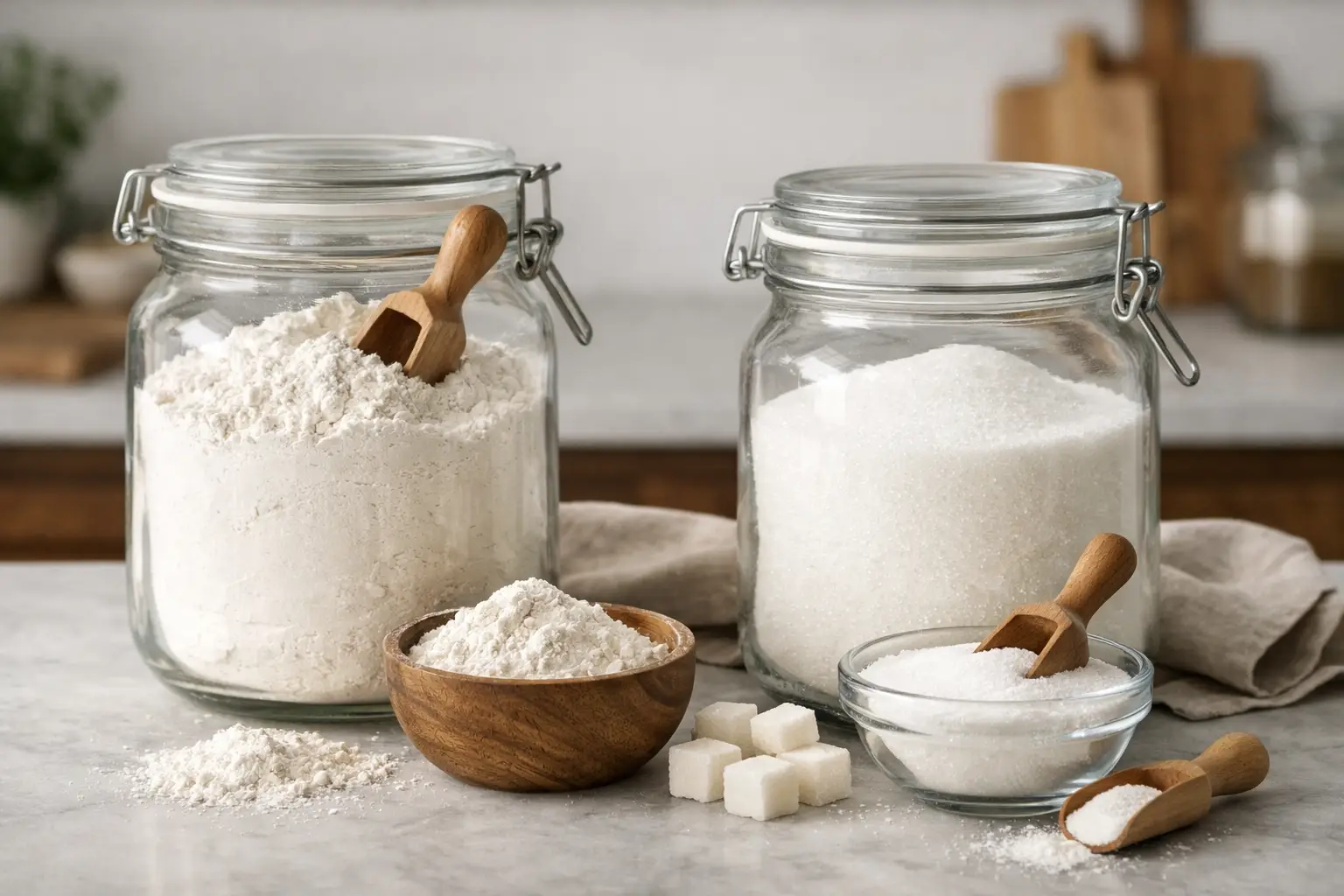
For both flour and sugar, the best everyday storage choice is an airtight container with a secure-fitting lid. Glass, ceramic, stainless steel, and food-safe plastic can all work beautifully. What matters most is that the container closes tightly enough to block humidity, pantry odors, and insects.
Choose a container that is large enough to hold an entire bag when possible. Pouring a new bag into a clean, dry canister means there is no loose packaging to tear, topple, or collect flour dust. It also makes measuring smoother, especially when the container has a wide opening that leaves room for a measuring cup or scoop.
Keep canisters in a cool, dry, dark cabinet or pantry. Heat and moisture are the real troublemakers here. A shelf away from the dishwasher, oven, stovetop, and sunny window is far better than a spot that warms up or steams regularly. Even a lovely countertop arrangement works best only if your kitchen stays relatively cool and the ingredients are used often.
Clear canisters make it easy to see when supplies are running low, while opaque containers offer extra protection from light. Either option can suit your kitchen. If your pantry is dim and you bake often, clear glass canisters are practical and inviting. If flour sits for months between projects, an opaque container in a cabinet gives it a little more shelter.
White flour, powdered sugar, and cornstarch can look nearly identical in a hurry. Labels prevent the kind of mix-up that only becomes obvious after a recipe is halfway finished. Write the ingredient name and the purchase or fill date on each container.
A date is particularly useful for specialty flours, such as whole wheat, almond, oat, rye, or coconut flour. These ingredients may not be part of your weekly routine, so the label helps you use older stock first rather than continually adding a fresh bag to the back of the shelf.
All-purpose flour is fairly shelf-stable, but it still tastes best when it is protected from air, heat, and moisture. In a cool pantry and an airtight container, white flour is generally at its best for about 6 to 12 months. If your home runs warm or humid, lean toward the shorter end of that range.
Whole-grain flours deserve more attention because their natural oils can turn rancid over time. Whole wheat, spelt, oat, buckwheat, and similar flours are better stored in the refrigerator or freezer, especially if you do not use them frequently. Cold storage slows down flavor changes and helps preserve their nutty, fresh character.
If you freeze flour, use a tightly sealed container or freezer-safe bag so it does not pick up odors. Let the flour come to room temperature before opening the container. That small pause prevents condensation from forming inside, which can introduce moisture and create clumps.
Nut flours, including almond flour, should also live in the refrigerator or freezer after opening. Their oils are delicate, and a cool home helps them stay pleasant rather than stale. When in doubt, check the package instructions first, since blends and specialty baking mixes can have their own recommendations.
Flour does not always look spoiled, so use your senses before baking with an older container. Fresh flour should smell mild and neutral. A sour, musty, oily, or play-dough-like smell is a reason to replace it.
Also look for discoloration, damp clumps, or signs of pantry pests, such as tiny beetles, webbing, or larvae. If you see any of these, discard the flour and inspect nearby dry goods. Wipe shelves thoroughly, vacuum cracks and corners, and transfer remaining safe ingredients into sealed containers before restocking.
Granulated white sugar lasts a very long time when it stays dry. It does not spoil in the same way flour can, but humidity can turn it into a hard, lumpy mass. Store it in an airtight container at room temperature, and keep wet utensils far away from the canister.
Avoid storing granulated sugar in the refrigerator or freezer. The temperature changes can create condensation after the container comes back into the kitchen, and moisture is exactly what sugar does not need. A dry pantry shelf is the simple answer.
Brown sugar has a different challenge: it tends to dry out and harden because it contains molasses. It needs a genuinely airtight container, not just a clip on the original bag. If you use brown sugar regularly, a canister with a snug silicone seal is a useful upgrade that keeps it soft and scoopable.
For brown sugar that has already hardened, place a food-safe brown sugar saver or a small piece of bread in the sealed container for a day or two. The sugar will gradually absorb moisture and soften. Remove the bread once the sugar is usable again, and do not add it if there are any signs of mold or excess moisture.
Powdered sugar should also stay airtight, especially because it absorbs moisture easily and can develop stubborn lumps. Before using a container that has been stored for a while, give it a quick stir or sift if your recipe calls for a perfectly smooth finish.
Storage works best when it fits the way you actually cook. If you bake muffins every weekend, keep all-purpose flour, granulated sugar, brown sugar, and powdered sugar together at an easy-to-reach height. Add a dedicated scoop to each canister, but make sure it is clean and completely dry before it goes back inside.
A simple baking zone can include baking powder, baking soda, cocoa, vanilla, chocolate chips, and spices nearby. Grouping these staples saves time, reduces duplicate purchases, and makes a small kitchen feel more intentional. Stackable canisters are particularly helpful for apartment pantries, while wide glass jars bring a warm, organized look to open shelving.
There is one rule that makes a noticeable difference: never pour fresh flour or sugar directly on top of an older supply without checking it first. Finish what is in the container, wash and dry the canister, then refill it. If you need to combine bags, place the older ingredient on top and label the container with the earlier date so it gets used first.
Paper and thin plastic bags are easy for pantry pests to enter, which is one reason sealed containers are worth the shelf space. Buy dry goods from stores with good turnover, inspect packages before putting them away, and clean up spills promptly. Flour dust and sugar crystals can attract unwanted visitors faster than you might expect.
Use dry measuring cups only. A damp spoon can introduce enough moisture to affect sugar, while flour can pick up odors and humidity if its container is left open during a long prep session. Open, measure, close, and move on.
If you bring home flour in bulk or are especially concerned about pantry pests, freezing the unopened flour for a few days can be a helpful extra step. Afterward, let it return to room temperature before transferring it to its pantry container. This is optional for most households, but it can offer peace of mind when stocking up.
A well-organized flour and sugar station is more than a tidy pantry detail. It is an invitation to cook, bake, and share something good without hunting through crumpled bags. With attractive airtight canisters and a routine that keeps moisture out, your everyday staples can stay ready for whatever you feel like creating at Kitchen Bay.








Leave a comment