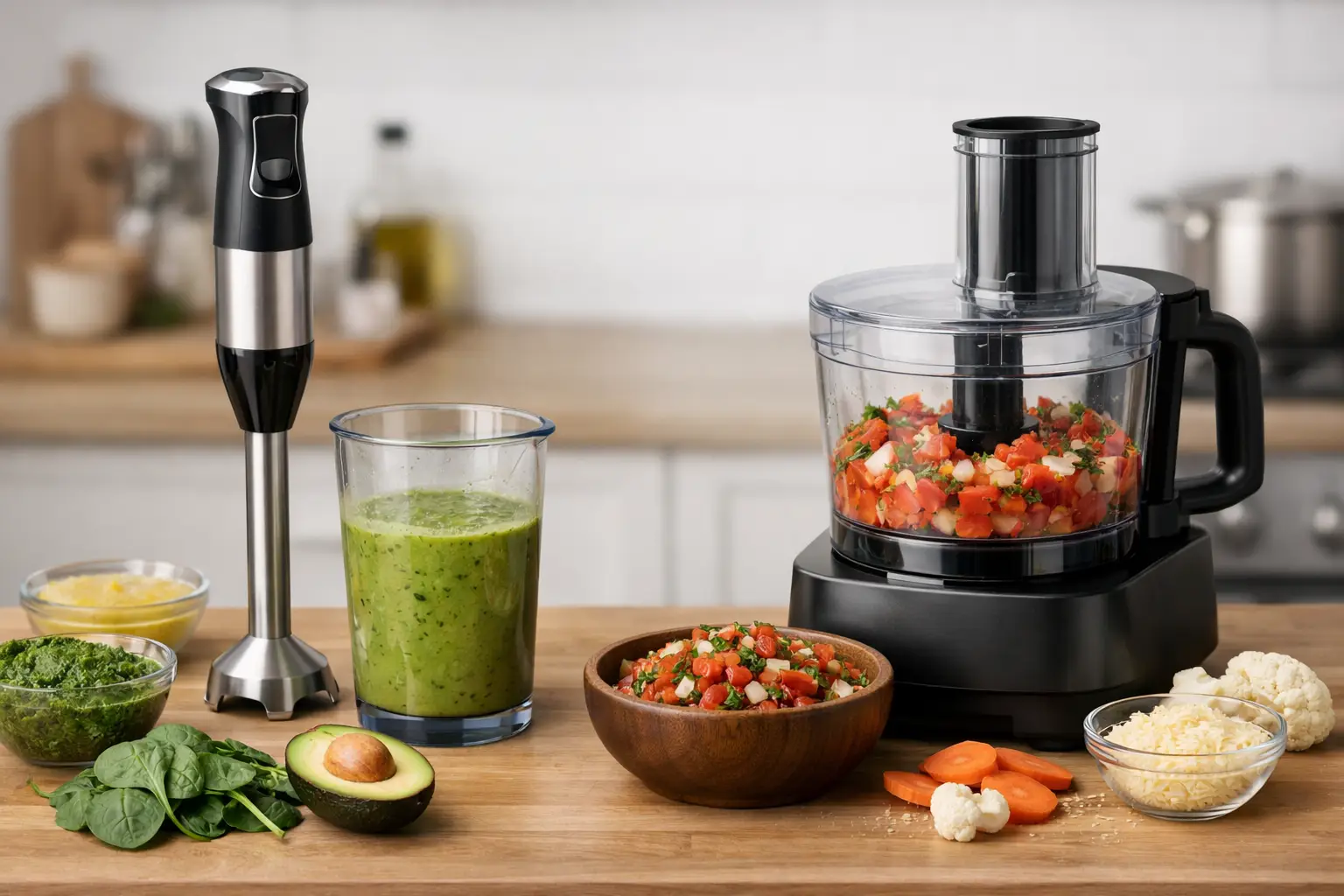
A pot of tomato soup is bubbling, dinner is almost ready, and you want a silky finish without pouring hot liquid into another appliance. That is where the immersion blender vs food processor question becomes very practical. Both tools make prep faster, but they do different kinds of work – and choosing the right one can make weeknight cooking feel far less complicated.
For many home kitchens, this is not about buying the most powerful gadget. It is about choosing a tool that suits the meals you actually make, the storage you have, and the cleanup you are willing to handle after a busy day. Here is how to decide with confidence.
An immersion blender, also called a hand blender or stick blender, is designed to blend directly in a pot, bowl, cup, or pitcher. Its long shaft and compact blending head make it especially useful for soups, sauces, smoothies, and small batches. You move the blender through the food, controlling exactly where and how much you blend.
A food processor works inside a larger bowl with a blade, lid, and feed tube. It is built for chopping, shredding, slicing, mixing, and pureeing bigger quantities. Rather than blending food in its cooking vessel, you add ingredients to the processor bowl and let its broad blade do the work.
Think of an immersion blender as the quick, close-at-hand tool for soft foods and smooth textures. A food processor is the prep station for ingredients that need to be chopped, grated, broken down, or combined in volume.
An immersion blender earns its keep when you want fewer dishes between you and dinner. Blend a creamy potato soup right in the stockpot, turn canned tomatoes into a simple pasta sauce, or make a quick vinaigrette in a tall measuring cup. There is no need to wait for hot food to cool or transfer it in batches.
This convenience matters in smaller kitchens, too. An immersion blender takes up little drawer or cabinet space, and many models come with a beaker for smoothies, dressings, or small portions of whipped cream. It is a smart fit for apartment dwellers, new cooks, and anyone who likes a clear counter after meal prep.
Immersion blenders are at their best with cooked vegetables, tender fruit, and liquids. They create smooth soups, creamy bean dips, baby food, sauces, salad dressings, milkshakes, and single-serve smoothies with minimal fuss. They are also handy for emulsifying mayonnaise or blending a small amount of pesto when you do not want to pull out a large appliance.
Because you control the movement, you can leave a soup a little rustic or blend it until completely velvety. For creamy soups, keep the blending head below the surface and move it slowly around the pot. This helps reduce splatters and gives the ingredients time to break down evenly.
A stick blender is not the strongest choice for dry, hard, or chunky ingredients. It will not neatly dice onions, shred cheese, slice cucumbers, or turn cold butter and flour into a pie crust. It can also struggle with thick mixtures, large quantities, and fibrous vegetables unless they are well cooked and have enough liquid.
Smoothies with frozen fruit can work, but results depend on motor power, the amount of liquid, and how small the ingredients are cut. For a thick smoothie bowl or a large batch of frozen drinks, a countertop blender may be the better match.
A food processor shines before cooking begins. It can chop a pile of onions for chili, shred carrots for slaw, slice potatoes for a gratin, or turn herbs, garlic, nuts, and cheese into pesto in seconds. If you cook for a family, meal prep on weekends, or enjoy hosting, those time savings add up quickly.
The wide bowl gives ingredients room to circulate, while different attachments expand what the appliance can do. A standard blade handles chopping and pureeing. A shredding or slicing disk tackles vegetables and cheese with a more even result than hand grating. Some food processors also knead dough, though a stand mixer may still be preferable for frequent bread baking.
Reach for a food processor when texture is part of the recipe. It makes chunky salsa, cauliflower rice, breadcrumbs, nut butter, hummus, pie dough, biscuit dough, and large batches of dips much easier. It is especially useful when ingredients need to be chopped uniformly, which helps them cook at a similar rate and gives finished dishes a more polished look.
For entertaining, it can be a quiet hero. You can shred vegetables for taco night, make a generous bowl of herby dip, or prepare a quick cookie crust for dessert without spending the whole afternoon at the cutting board.
Food processors are larger, heavier, and made of more parts. The bowl, lid, blade, and attachments need washing, and the sharp blade deserves careful handling. For a small bowl of dressing or a single serving of soup, setting up the processor can feel like more work than the recipe itself.
It is also not always the best tool for very liquid recipes. A processor can puree soup, but hot liquids must be handled carefully, and the bowl should never be overfilled. Steam can build pressure beneath the lid, so work in smaller batches and allow hot ingredients to cool slightly when needed.
The right choice often comes down to three everyday details: the texture you want, how much you are making, and whether cleanup will discourage you from using the tool.
For silky soups and sauces, an immersion blender usually wins. It works directly in the pot, and its small head is easy to rinse or wash after use. For dips that should stay a bit chunky, finely chopped vegetables, or grated ingredients, a food processor offers more control and capacity.
Batch size is equally telling. If you often make a mug-sized smoothie, a small pot of soup, or a few tablespoons of dressing, an immersion blender feels pleasantly simple. If you regularly cook for four or more people, prep lunches ahead, or make party-size recipes, the food processor’s bowl will save time.
Cleanup is not a minor detail. The best appliance is the one you will actually use. An immersion blender is usually faster to wash, while a food processor rewards you when it replaces several tasks in one cooking session. If you hate hand-chopping vegetables, the extra parts may be well worth it.
Sometimes, but not completely. An immersion blender can make a workable hummus or small batch of pesto, yet it will not replace the slicing and shredding functions of a food processor. A food processor can puree cooked vegetables, but it cannot match the ease of blending soup directly on the stove.
If you are building a kitchen one piece at a time, start with the tool that matches your usual meals. Choose an immersion blender if you favor soups, sauces, smoothies, and easy cleanup. Choose a food processor if chopping, shredding, baking, and batch cooking are common in your routine.
If your kitchen and budget allow for both, they make a useful pair rather than competing duplicates. The food processor handles prep, while the immersion blender steps in for a smooth finish. That combination makes it easier to move from chopped vegetables to a creamy soup, from fresh herbs to a quick sauce, and from everyday cooking to a table ready for company.
Before choosing, picture the last five meals you made. If they included soup, pasta sauce, smoothies, or creamy dressings, an immersion blender is likely the better first buy. If they involved chopped vegetables, grated cheese, dough, slaw, salsa, or meal-prep components, a food processor may bring more value.
For an immersion blender, look for a comfortable grip, a sufficiently long blending shaft for your favorite pot, and variable speeds if you want greater control. A detachable blending arm makes cleaning easier. For a food processor, consider bowl capacity, storage for attachments, and whether you will genuinely use slicing and shredding disks.
At Kitchen Bay, the goal is to help everyday cooking feel more capable and more enjoyable, not more crowded with tools. Choose the appliance that removes the step you dread most. When a useful tool fits your routine, a simple homemade meal starts to feel like a ritual worth repeating.







Leave a comment