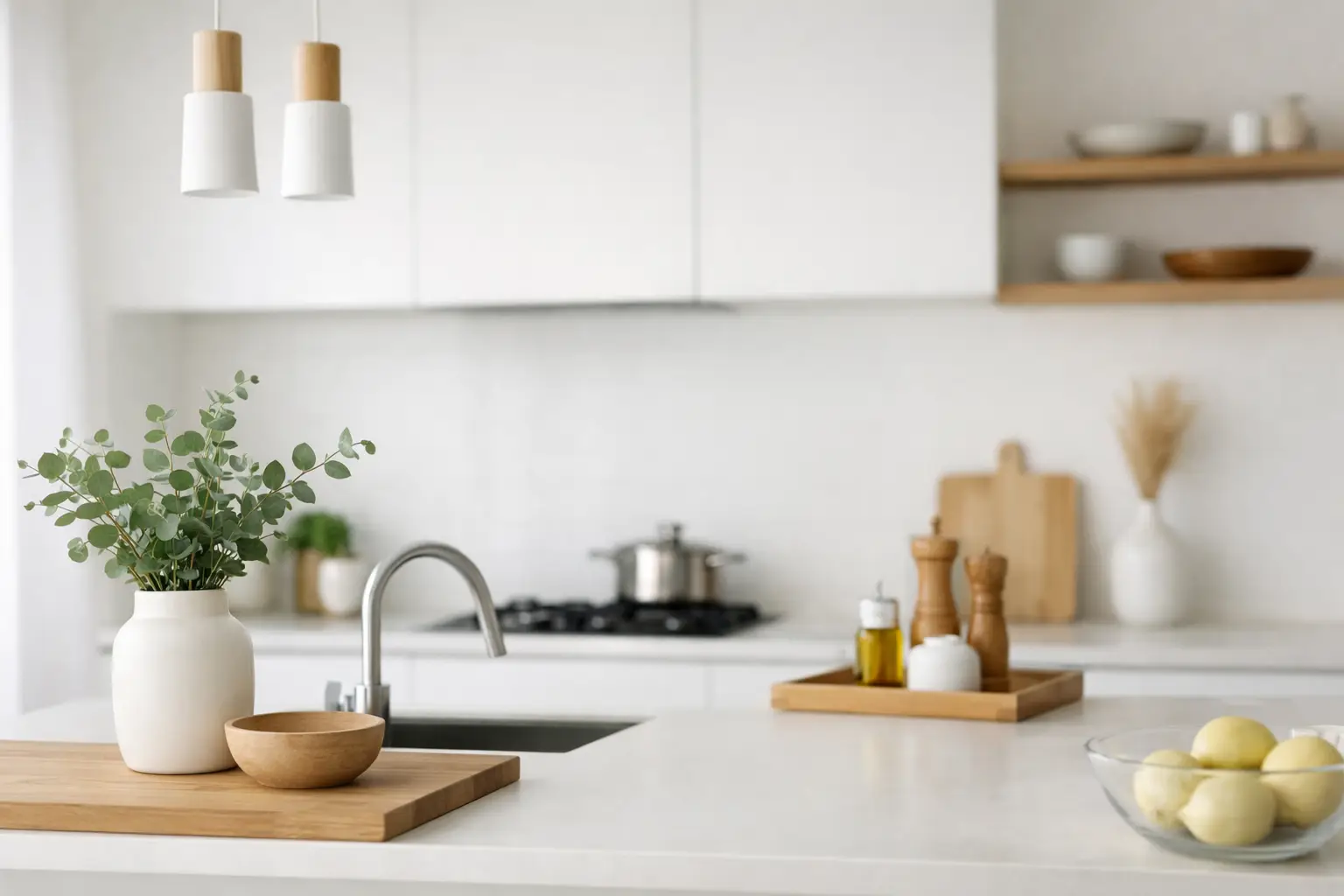
A minimalist kitchen should not feel like a room where no one cooks. The best minimalist kitchen decor ideas make the morning coffee routine smoother, the dinner table more inviting, and the counter easier to wipe down after a busy weeknight meal. The goal is less visual noise, not less personality.
For apartment kitchens, growing family homes, and everything in between, a polished minimal look starts with choosing useful pieces you genuinely enjoy seeing every day. A beautiful kettle, a set of matching canisters, or a soft tablecloth can earn its place because it supports the way you cook, create, and celebrate.
Minimalism is often mistaken for empty countertops. In a real kitchen, that approach can be frustrating. The better question is: what do you reach for often enough to deserve a permanent spot?
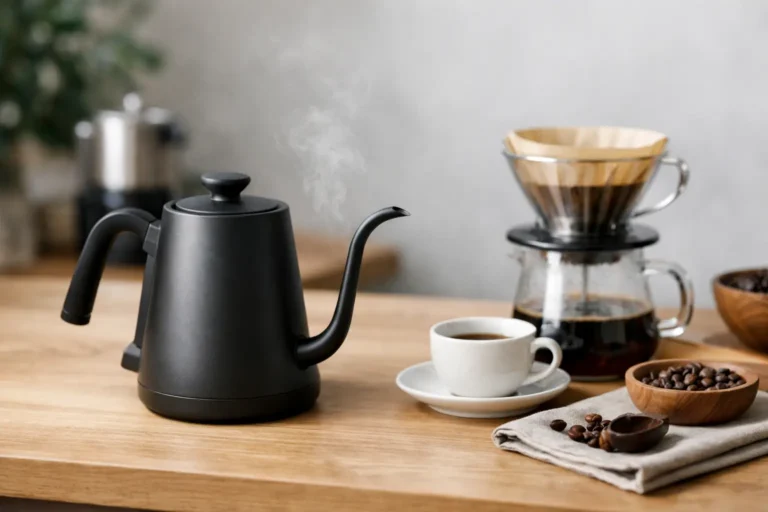
Keep only your daily-use essentials visible, such as a kettle, a utensil crock, a cutting board, or a compact blender. Then choose versions that share a finish, color family, or simple shape. When the objects work together, even a small kitchen feels more intentional.
Before buying anything new, clear one surface completely. Wipe it down, then return only what you use at least several times each week. This quick reset shows you where a decorative touch will actually help and where open space is the best choice.
Choose two or three foundation colors and repeat them throughout the room. Warm white, sand, charcoal, soft gray, pale wood, and matte black are easy starting points. A limited palette makes mixed materials look collected rather than cluttered.
If your cabinets are already colorful, let them lead. Neutral linens and simple drinkware can calm a bold cabinet color without asking you to repaint the entire kitchen.
A small tray gives loose items a clear boundary. Use it to hold cooking oil, salt, pepper, and a spoon rest near the stove, or place it beside the coffee maker with mugs and sugar. Suddenly, the items you need are grouped into one clean visual moment.
Wood, ceramic, and metal trays all work. Pick a finish that complements your hardware or faucet so the tray feels connected to the room.
Clear or softly tinted storage canisters bring order to dry goods while making a pantry shelf feel more considered. Flour, oats, coffee, tea bags, and everyday snacks are good candidates because they are replenished regularly.
There is a trade-off here: decanting every ingredient can become another chore. Focus on a small group of staples, and use matching labels if they make your routine easier. The goal is a useful system, not a picture-perfect pantry that is difficult to maintain.
A wood cutting board can be both a prep tool and a piece of decor. Lean one medium board against the backsplash or layer a smaller board in front of it. The natural grain breaks up sleek tile, stone, or painted cabinets without introducing extra color.
Avoid creating a board collection on the counter. One or two well-sized pieces look relaxed and useful; a stack of five can start to feel like storage.
A simple tablecloth, runner, or set of placemats can change the mood of a kitchen dining area in minutes. Look for solid colors, narrow stripes, or subtle texture rather than high-contrast prints. Linen-look fabrics and woven materials add warmth while keeping the table visually quiet.
For a compact eat-in kitchen, placemats may be the smarter choice because they are easy to remove before homework, crafts, or a larger meal. A tablecloth creates more impact when the table is primarily used for dining and hosting.
You do not need open shelves full of matching dishes to get the look. A small set of clear glasses, neutral mugs, or simple carafes can look beautiful on one shelf or in a glass-front cabinet.
Keep the display edited. Store backups elsewhere and show the pieces that make an ordinary glass of water, iced tea, or weekend brunch feel a little more special.
Colorful packaging is one of the fastest ways for a kitchen to feel chaotic. You do not have to hide every product, but you can move the most visible items into canisters, a lidded basket, or a closed cabinet.
Think in materials as much as colors: smooth glass, pale wood, brushed metal, and matte ceramic create a calm mix. Repeating two or three materials across the kitchen gives the room depth without adding more stuff.
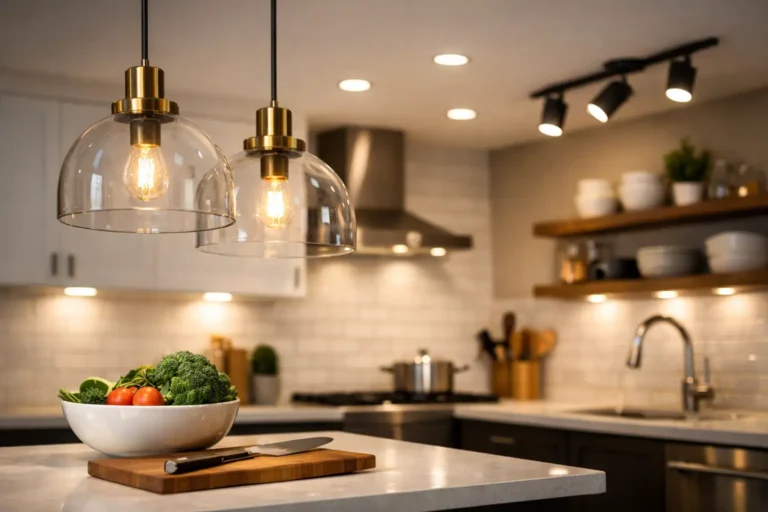
A warm lamp on a nearby counter or a small cordless light on a kitchen shelf can make an all-white or neutral kitchen feel lived in after sunset. Lighting is especially helpful in apartments where overhead fixtures can be harsh.
Keep scale in mind. A petite accent light works best on a larger counter or sideboard, while a tiny kitchen may only need warmer bulbs and a clear, uncluttered window ledge.
One open shelf can feel airy. Several shelves packed with mismatched items can create more work than charm. If you have a shelf to style, use a restrained mix: a few everyday bowls, a small plant or branch in a vase, and one useful serving piece.
Leave gaps between objects. That negative space is part of the decor, and it keeps the shelf from becoming a place where random items land.
A small herb pot, a leafy plant, or a bowl of lemons adds freshness that minimalist spaces sometimes miss. Choose one location with appropriate light and keep the vessel uncomplicated. A plain ceramic pot or clear bowl usually does more than an overly decorative container.
If plants are not practical for your routine, seasonal fruit is an easy alternative. It looks welcoming, encourages easy snacking, and can be refreshed during your weekly grocery trip.
The sink is a hardworking area, which means it is often where clutter gathers first. A matching soap dispenser, a tidy dish brush, and a neatly folded towel can make it feel much calmer without changing how you clean.
Choose a towel in a neutral shade or a quiet pattern that repeats your kitchen colors. Skip extra countertop accessories here unless they solve a real need.
Minimal decor does not have to live only on countertops. A pair of placemats, cloth napkins, and simple glassware can turn takeout, Tuesday pasta, or Sunday pancakes into a small ritual. Keep the setting uncomplicated enough that you will actually use it.
This is where practical tabletop pieces shine. They add a sense of occasion without requiring a centerpiece, a special event, or an hour of prep.
A restrained kitchen can still tell a story. Maybe it is a hand-thrown bowl used for fruit, a cookbook you return to every winter, or a favorite mug beside the kettle. Personal items belong in the room when they are useful, meaningful, or genuinely beautiful to you.
The key is giving those pieces room to be noticed. Instead of scattering small decor across every surface, choose one or two moments that feel personal. A framed recipe on a narrow shelf or a ceramic bowl on the table can say more than a dozen decorative objects.
When considering a new kitchen accessory, ask whether it improves a daily task, brings warmth to an empty area, or helps you host with more ease. If the answer is no, it may be something to admire rather than bring home.
Kitchen Bay believes the most inviting kitchens are made for use, not for looking untouched. Start with one counter, one shelf, or one table setting, then let your choices support the meals and memories you want to make there. A minimalist kitchen becomes truly beautiful when it leaves more room for life to happen.







Leave a comment