A batch of chocolate chip cookies should not require a cabinet full of specialty pans. If you are asking, “what bakeware do I need?” the best answer starts with the recipes and routines you actually enjoy – not a picture-perfect collection you may use once a year. A few well-chosen pieces can handle weeknight roasted vegetables, birthday cakes, weekend muffins, and the kind of warm dessert that makes guests linger at the table.
The goal is a flexible bakeware foundation: dependable enough for everyday cooking, attractive enough for serving, and sensible for the space you have. Start with the essentials, then add specialty pieces when a favorite recipe gives you a real reason to bring one home.
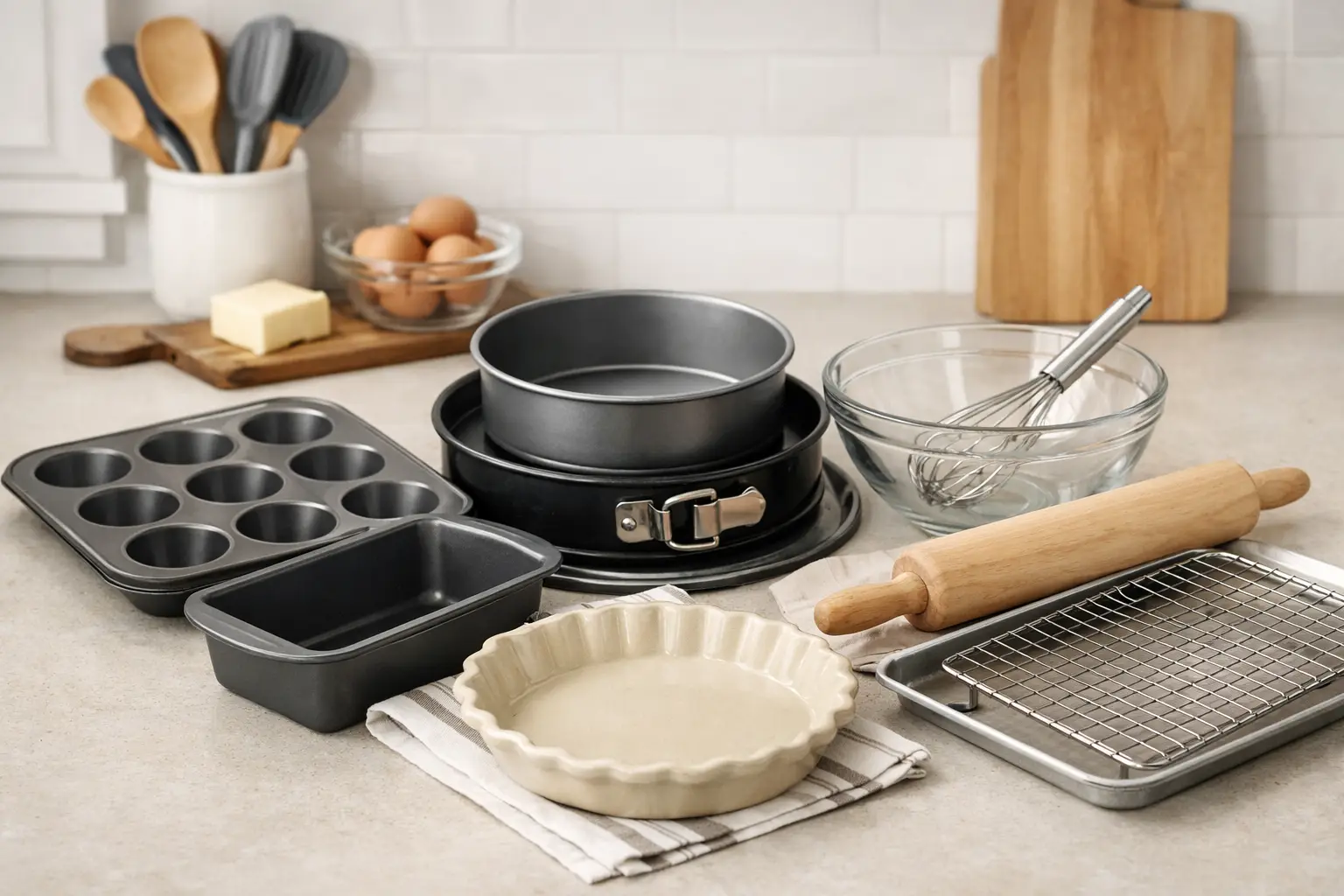
For most home kitchens, eight pieces cover a surprisingly wide range of baking, roasting, and easy entertaining. You do not need to buy every item at once, especially if you have a compact apartment kitchen or are building your first home setup. Choose sturdy, versatile pieces first, then let your cooking habits guide the next addition.
A rimmed baking sheet is the workhorse of the set. Use it for cookies, sheet-pan dinners, roasted vegetables, bacon, granola, warming appetizers, and even catching drips beneath a pie. The raised edge matters: it keeps oil, juices, and melted butter from traveling across your oven.
One half-sheet pan is a smart beginning, while two make cooking easier when you want to rotate cookie trays or roast a main dish and vegetables at the same time. Look for a sturdy pan that resists warping. A lighter-colored metal surface is especially helpful for cookies, since darker pans can brown bottoms more quickly.
This is the pan that earns its shelf space at potlucks, family dinners, and casual Sunday meal prep. A 9-by-13-inch dish handles brownies, baked pasta, enchiladas, casseroles, cobblers, coffee cake, and crowd-friendly dips.
Glass and ceramic dishes can go straight from oven to table with a welcoming, homemade look. They are wonderful for casseroles and desserts, though they may bake differently from metal and can retain heat longer. Metal is lighter and often better for recipes that need crisp edges or quicker browning. If you bake brownies often, a metal pan may be your favorite; if you love baked ziti and fruit crumble, a ceramic or glass dish can feel more at home in your routine.
Two 8- or 9-inch round pans make layer cakes far less fussy. Instead of baking one layer, waiting, washing, and repeating, you can bake both layers at once. They also work for cornbread, cinnamon rolls, small savory pies, and chilled icebox cakes.
Choose 8-inch pans for taller, more classic-looking layers, or 9-inch pans for slightly wider, thinner cakes that bake a bit faster. A pair with straight sides gives your finished cake neat edges and makes frosting easier for beginners.
A standard 12-cup muffin pan is one of the most useful ways to make breakfast and snacks feel organized. It is ready for blueberry muffins, cupcakes, egg bites, mini meatloaves, baked oatmeal cups, and individual brownie bites.
Nonstick pans make release easier, but they still benefit from paper liners or a light coating of oil when a recipe calls for it. Avoid aggressively cutting or scraping inside a nonstick pan, since that can shorten its lifespan. If cupcakes are your frequent go-to, keep liners in a favorite color or pattern nearby – small details can make homemade treats feel ready to celebrate.
A 9-by-5-inch loaf pan is a quiet kitchen essential. Banana bread may be its most famous assignment, but it is equally useful for pound cake, sandwich bread, meatloaf, quick breads, and small baked casseroles.
Loaf pans come in several sizes, so check a recipe before assuming every pan is interchangeable. A batter designed for a smaller 8 1/2-by-4 1/2-inch pan may rise differently in a larger one. For the most reliable results, choose a standard size and make a note of its dimensions for future baking.
A pie dish is not only for holiday pumpkin pie. It makes quiche, fruit crisps, pot pies, savory tarts, and summer galettes feel a little more special. A 9-inch dish is the most flexible choice for a first purchase.
Glass lets you see whether the bottom crust has browned, while ceramic offers beautiful oven-to-table presentation and holds warmth nicely. If pie is an occasional tradition rather than a weekly ritual, this is still a worthwhile piece because it brings plenty of savory possibilities to the table.
An 8-inch square pan is ideal for brownies, blondies, snack cakes, cornbread, small cobblers, and recipes made for two to four people. It is especially useful when a 9-by-13-inch dish would leave you with more leftovers than you want.
Metal pans tend to produce the cleanest brownie edges and more even baking, while ceramic or glass brings a polished serving look. Either can work beautifully – just follow the material guidance in the recipe and begin checking doneness early when using glass or ceramic, which hold heat after leaving the oven.
It may not look like bakeware at first glance, but a cooling rack protects the texture you worked for. Cookies left on a hot pan keep baking from the residual heat. Cakes and quick breads can become damp underneath if steam has nowhere to go.
Choose a rack that fits inside or over your sheet pan if possible. That pairing is handy for glazing cakes, draining roasted foods, or crisping chicken wings. It is a small addition with a big payoff in better results and easier cleanup.
Bakeware material affects more than appearance. It can change browning, baking time, cleanup, and how comfortably a dish moves from oven to table.
Aluminum and aluminized steel are reliable choices for everyday baking. They heat efficiently and are especially good for cookies, cakes, and brownies. Light-colored metal is generally forgiving for beginners because it is less likely to over-brown delicate baked goods.
Nonstick bakeware offers convenient release and easy cleanup, making it appealing for muffins, loaf cakes, and sticky bar cookies. The trade-off is that nonstick coatings need gentler care. Use silicone, wood, or nylon tools rather than metal utensils, and replace pans when the surface becomes damaged.
Glass and ceramic are excellent for casseroles, cobblers, baked pasta, and dishes you want to place directly on the dining table. They retain heat well, which keeps food warm for serving, but that same quality means they can continue cooking food after removal from the oven. They are also heavier, so consider storage and handling before choosing a full collection.
Silicone bakeware is flexible, lightweight, and especially useful for muffins or shaped treats. It can be a fun addition, though it is not the only material you need. Softer silicone pans may need a baking sheet underneath for stability, and they usually do not brown baked goods as deeply as metal.
If storage is tight, begin with a rimmed baking sheet, a 9-by-13-inch dish, a muffin pan, and a square pan. That compact group can cover a remarkable number of meals and desserts. Add cake pans if you love baking for birthdays, a loaf pan if quick breads are your comfort bake, or a pie dish if you enjoy brunches and seasonal desserts.
It also helps to think about how you entertain. A beautiful ceramic baking dish can move from the oven to a table set with placemats, drinkware, and a simple tablecloth, making a casual meal feel considered without adding extra effort. For cooks who batch-prep lunches or feed a family, a second sheet pan and another 9-by-13-inch dish may be more useful than a novelty cake mold.
Do not overlook pan size, either. Recipes are written for specific dimensions, and changing the pan changes the depth of the batter and the baking time. Keep a tape measure handy when shopping, and avoid crowding your oven. Air needs to circulate around pans for even browning.
Once your basics are in place, specialty bakeware can make favorite traditions easier. A springform pan is useful for cheesecakes and deep-dish desserts. A roasting pan is helpful for holiday poultry or larger cuts of meat. A Bundt pan turns a simple cake into a centerpiece, while a tart pan offers a polished finish for brunch or dessert.
These pieces are best chosen with intention. Buy the pan that supports the recipe you make repeatedly, not the recipe you merely hope to try someday. A thoughtfully built collection saves space, reduces clutter, and makes every piece feel like part of your kitchen rhythm.
The right bakeware gives everyday cooking more room to become a small occasion. Start with the pan that fits tonight’s plan, preheat the oven, and let the next batch of cookies, baked pasta, or banana bread do the rest.







Leave a comment